Part 5: Business Intelligence (BI), Data Warehouses & Lakehouse Systems
Module Overview
Transactional databases (OLTP) are optimized to handle millions of low-latency writes and updates per second without corrupting row data. However, executing a massive multi-year analytical query (OLAP) directly against an active production OLTP database introduces severe lock contention that degrades user checkouts. In this fifth installment, we analyze the analytical data stack: Business Intelligence (BI), ETL versus ELT pipelines, Dimensional Modeling (Star vs. Snowflake schemas), OLAP Cube operations, and the modern unified Data Lakehouse paradigm.
1. OLTP vs. OLAP: Fundamental Architectural Dichotomy
| Architectural Dimension | Online Transaction Processing (OLTP) | Online Analytical Processing (OLAP) |
|---|---|---|
| Primary Objective | High-concurrency, real-time read/write transaction execution. | Multi-year historical analysis, reporting, and predictive modeling. |
| Data Structure | Normalized relations (3NF/BCNF) to eliminate update anomalies. | Denormalized dimensional schemas (Star, Snowflake, Wide Tables). |
| Storage Orientation | Row-oriented storage (fast whole-row inserts and lookups). | Columnar storage (Parquet, ORC) optimizing compression & vector scans. |
| Query Pattern | Simple point queries fetching small numbers of records via primary key. | Complex aggregation scans over billions of rows across multiple years. |
2. Dimensional Modeling: Star Schema vs. Snowflake Schema
Formulated by Ralph Kimball, dimensional modeling structures data into two distinct table categories:
Fact Tables (The Metrics)
Store numeric, quantitative measurements generated by business events. Contains foreign key pointers referencing dimension tables alongside additive metrics: sales_amount, units_sold, freight_cost.
Dimension Tables (The Context)
Store textual, qualitative contextual descriptors that provide filtering and slicing attributes: Dim_Customer, Dim_Product, Dim_Store_Location, Dim_Date_Time.
Star Schema
A central fact table surrounded by completely denormalized dimension tables. Dimension tables contain redundant text descriptions without sub-table joins, yielding lightning-fast single-hop join query performance.
Snowflake Schema
Normalizes dimension tables into secondary lookup hierarchies (e.g., Dim_Product joins to Dim_Category which joins to Dim_Department). Saves disk storage and eliminates dimension redundancy at the cost of additional relational join overhead.
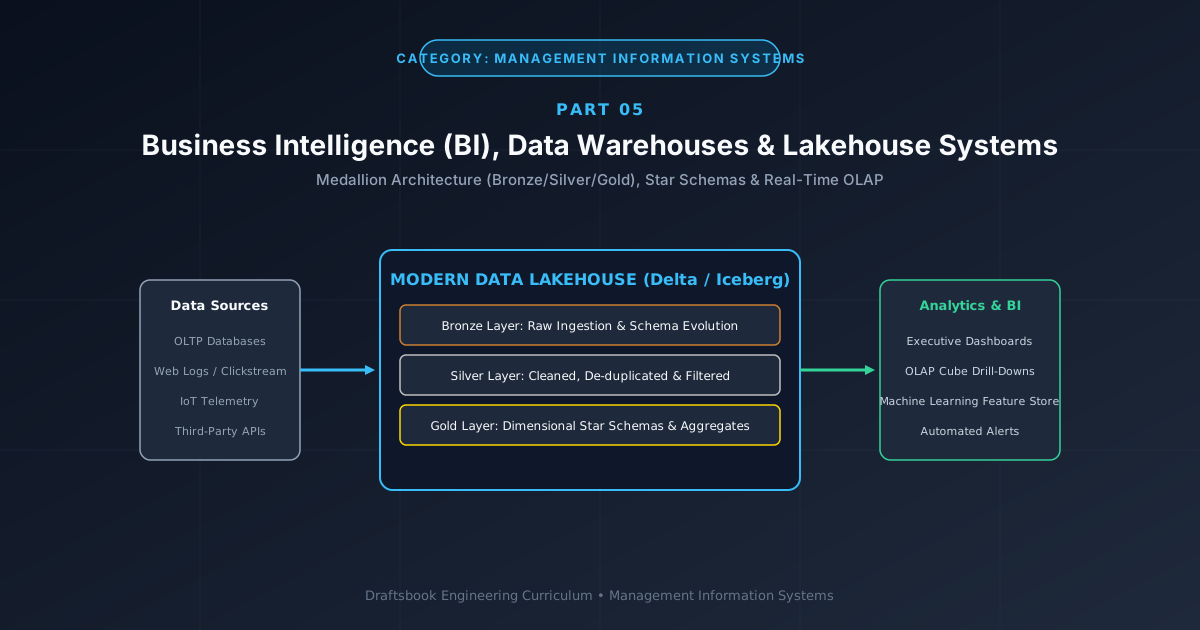
3. Modern Data Lakehouse Architecture (Medallion Pattern)
Historically, enterprises maintained two separate systems: an inexpensive Data Lake (storing unstructured files, JSON, images on object storage like S3) and an expensive Data Warehouse (Snowflake, BigQuery, Redshift).
The modern Lakehouse paradigm (Delta Lake, Apache Iceberg) unifies both using open columnar file formats on cloud object storage with ACID transactional guarantees. Data progresses through a three-tier Medallion Pattern:
- Bronze Layer (Raw Ingestion): Direct append-only landing of raw data in native schema formats without cleaning. Serves as the immutable replay log.
- Silver Layer (Cleansed & Conformed): De-duplicated, schema-validated, and normalized tables with bad records rejected to dead-letter queues.
- Gold Layer (Business Curated): Aggregated star-schema dimensional models optimized for executive BI dashboards and machine learning feature stores.
Next in Curriculum
In Part 6: Managerial Decision-Making: Decision Support Systems (DSS) & AI, we explore Herbert Simon's decision-making phases and how predictive AI enhances managerial judgment.
Related reading
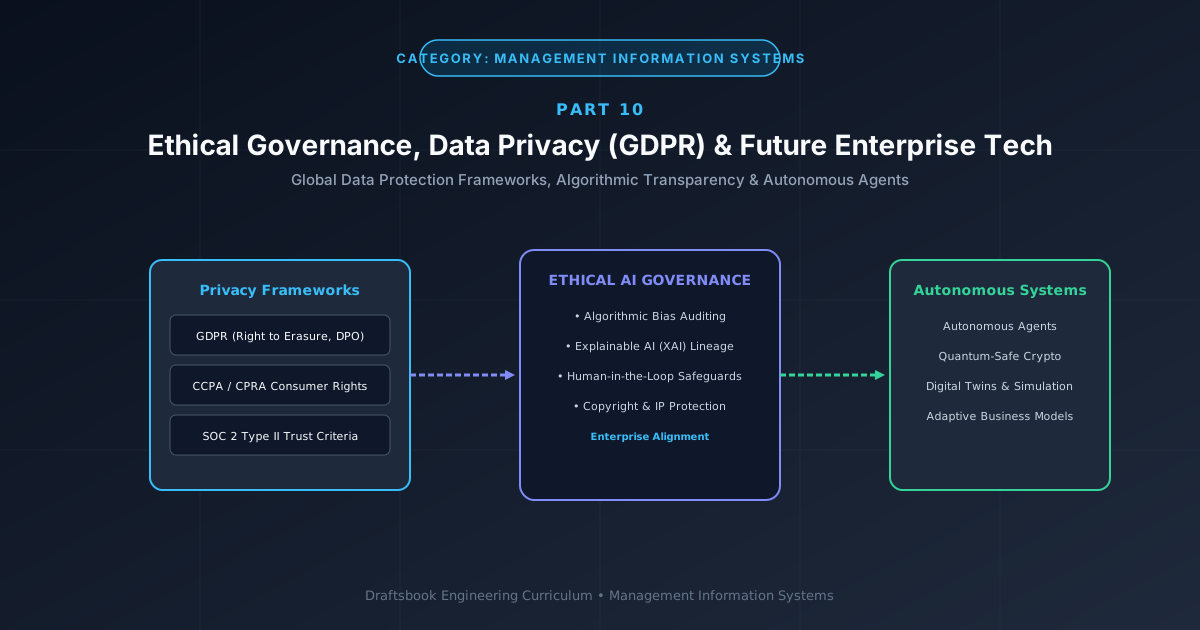
Part 10: Ethical Governance, Data Privacy (GDPR) & Future Enterprise Tech
Examine ethical information governance: GDPR/CCPA data privacy, algorithmic bias mitigation, explainable AI, autonomous digital agents, and quantum crypto.
By Md. Harun-Or-Roshid
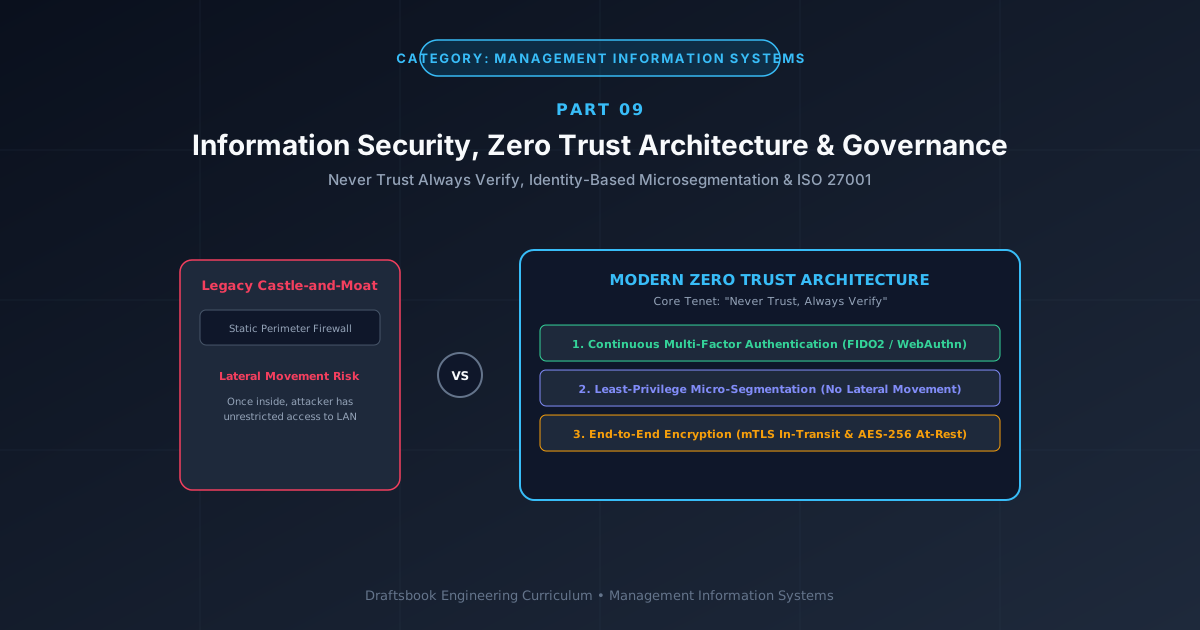
Part 9: Information Security, Zero Trust Architecture & Governance
Explore enterprise cybersecurity: the CIA triad, Zero Trust defense-in-depth, identity access management, SOC2/ISO 27001 compliance, and risk controls.
By Md. Harun-Or-Roshid
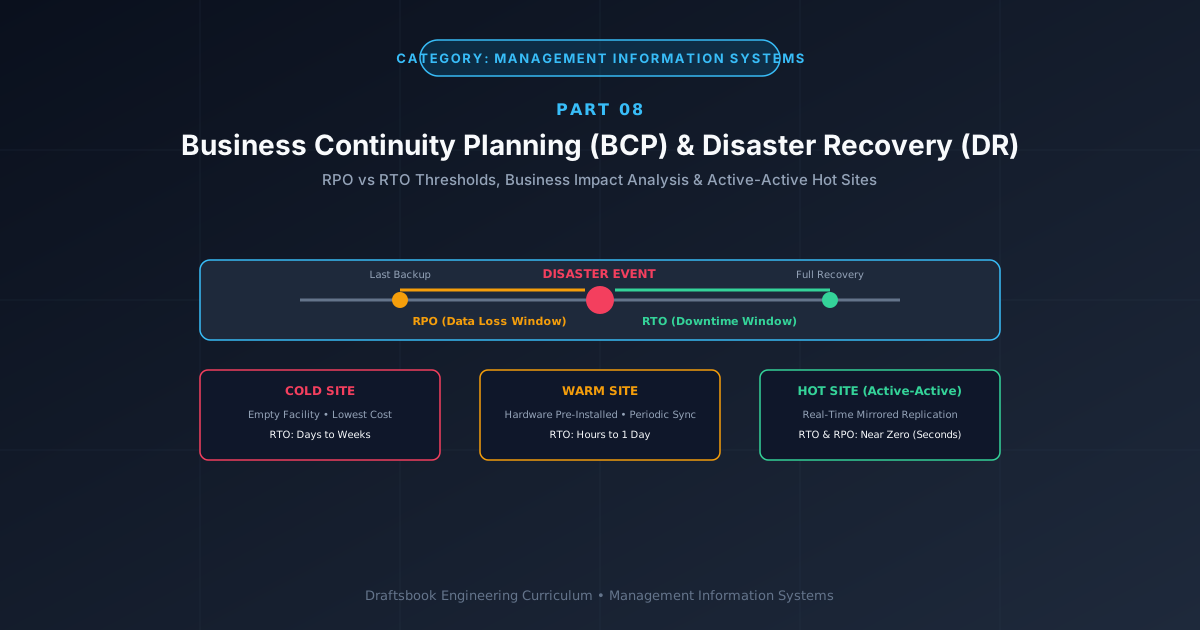
Part 8: Business Continuity Planning (BCP) & Disaster Recovery (DR)
Master Business Continuity Planning (BCP) and Disaster Recovery (DR): Business Impact Analysis, RPO vs RTO metrics, and cold vs hot failover sites.
By Md. Harun-Or-Roshid
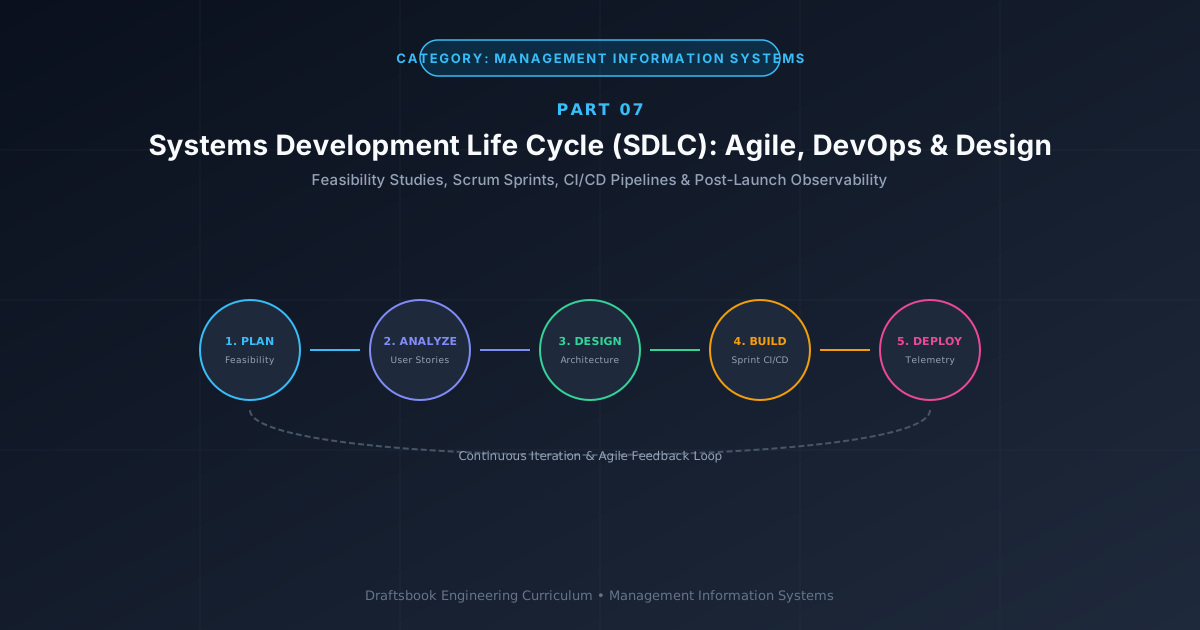
Part 7: Systems Development Life Cycle (SDLC): Agile, DevOps & Design
Master the Systems Development Life Cycle (SDLC): TELOS feasibility, Waterfall vs Agile Scrum, CI/CD automated deployment, and enterprise DevOps.
By Md. Harun-Or-Roshid