Part 9: Information Security, Zero Trust Architecture & Governance
Module Overview
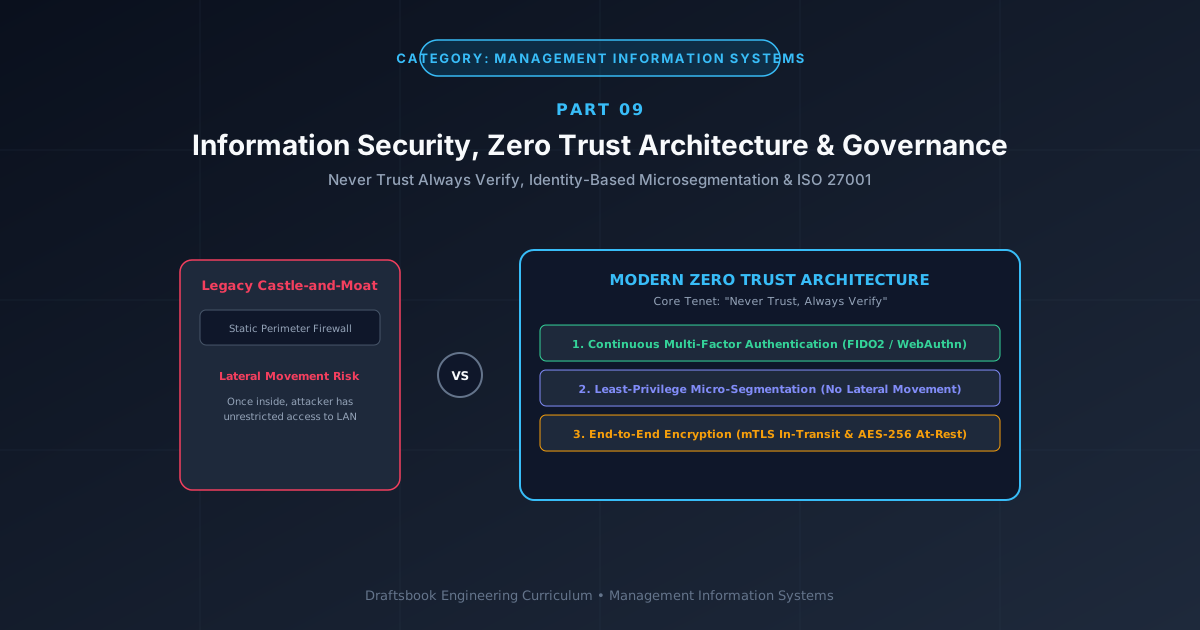
In an era of nation-state cyber warfare, automated ransomware syndicates, and supply chain compromises, perimeter-based security ("castle-and-moat") is fundamentally obsolete. Once an attacker breaches the external firewall, internal corporate networks are vulnerable to lateral movement. In this ninth installment, we analyze modern enterprise cyber defense: the CIA Triad, the paradigm of Zero Trust Architecture (ZTA), Identity and Access Management (IAM), Role-Based Access Control (RBAC), and regulatory compliance (ISO 27001 & SOC 2).
1. The CIA Triad: Core Security Objectives
Confidentiality
Ensuring that sensitive enterprise data is accessible only to authorized personnel. Enforced through cryptographic protocols (AES-256 at-rest, TLS 1.3 in-transit) and granular role-based masking.
Integrity
Guaranteeing that data has not been modified, deleted, or corrupted by unauthorized actors. Enforced through cryptographic hashing (SHA-256), immutable audit logs, and digital signatures.
Availability
Ensuring that computing systems, networks, and databases are operational and accessible to legitimate users when needed. Enforced via DDoS mitigation, load balancing, and active clustering.
2. Zero Trust Architecture (NIST SP 800-207)
The fundamental guiding principle of Zero Trust is: "Never Trust, Always Verify." The system assumes that threats exist both outside and inside the corporate network boundary.
The Three Core Tenets of Zero Trust
- Verify Explicitly: Always authenticate and authorize based on all available data points—including user identity, device health status, geographical location, and anomaly detection heuristics—on every individual request.
- Use Least-Privilege Access: Limit user access with Just-In-Time (JIT) and Just-Enough-Access (JEA) models, reducing risk exposure if a single credential is compromised.
- Assume Breach: Minimize blast radius by micro-segmenting internal networks, enforcing mutual TLS (mTLS) encryption between internal microservices, and continuously monitoring telemetry for lateral movement.
3. Enterprise Access Control: RBAC, ABAC & MFA
Managing enterprise permissions requires structured authorization models:
- Role-Based Access Control (RBAC): Permissions are mapped to standardized functional job titles (e.g.,
Accountant,HR Specialist,Billing Admin). Users inherit rights by group membership, simplifying user offboarding. - Attribute-Based Access Control (ABAC): Dynamically evaluates contextual attributes at runtime (e.g., "Allow user to access payroll records only between 9 AM and 5 PM on a company-managed laptop within domestic IP ranges").
- Phishing-Resistant MFA: Replacing insecure SMS and email verification codes with cryptographic FIDO2 / WebAuthn hardware keys (YubiKeys), preventing credential harvesting.
Next in Curriculum
In our final capstone installment, Part 10: Ethical Governance, Data Privacy (GDPR) & Future Enterprise Tech, we analyze ethical IT leadership, GDPR/CCPA regulations, AI bias, and emerging enterprise technologies.
Related reading
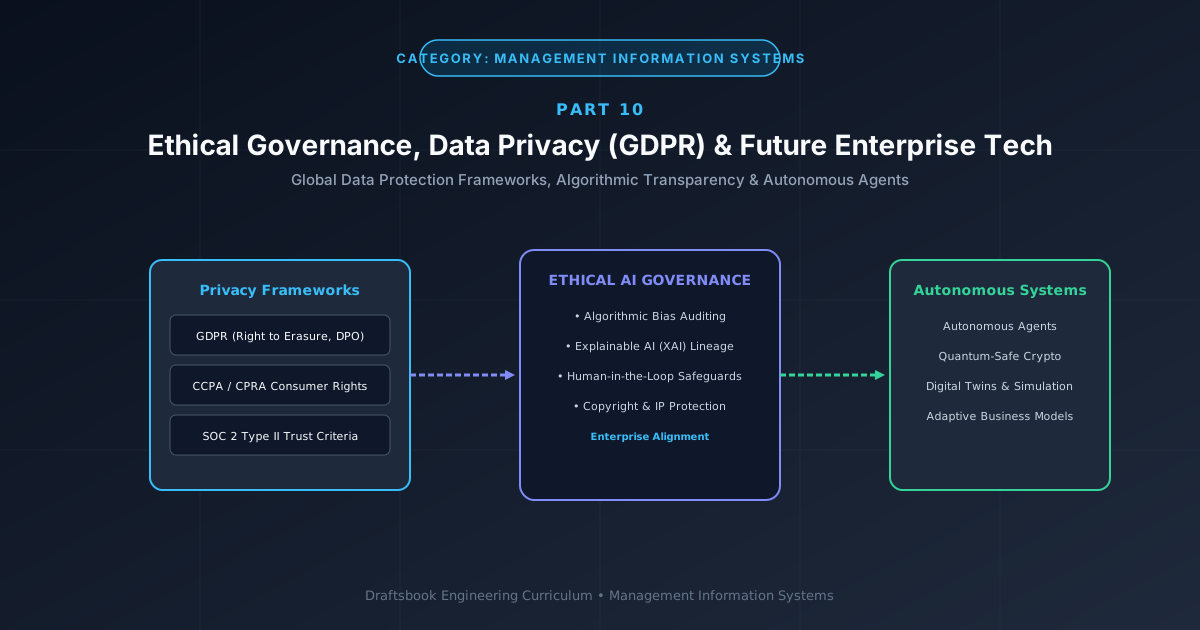
Part 10: Ethical Governance, Data Privacy (GDPR) & Future Enterprise Tech
Examine ethical information governance: GDPR/CCPA data privacy, algorithmic bias mitigation, explainable AI, autonomous digital agents, and quantum crypto.
By Md. Harun-Or-Roshid
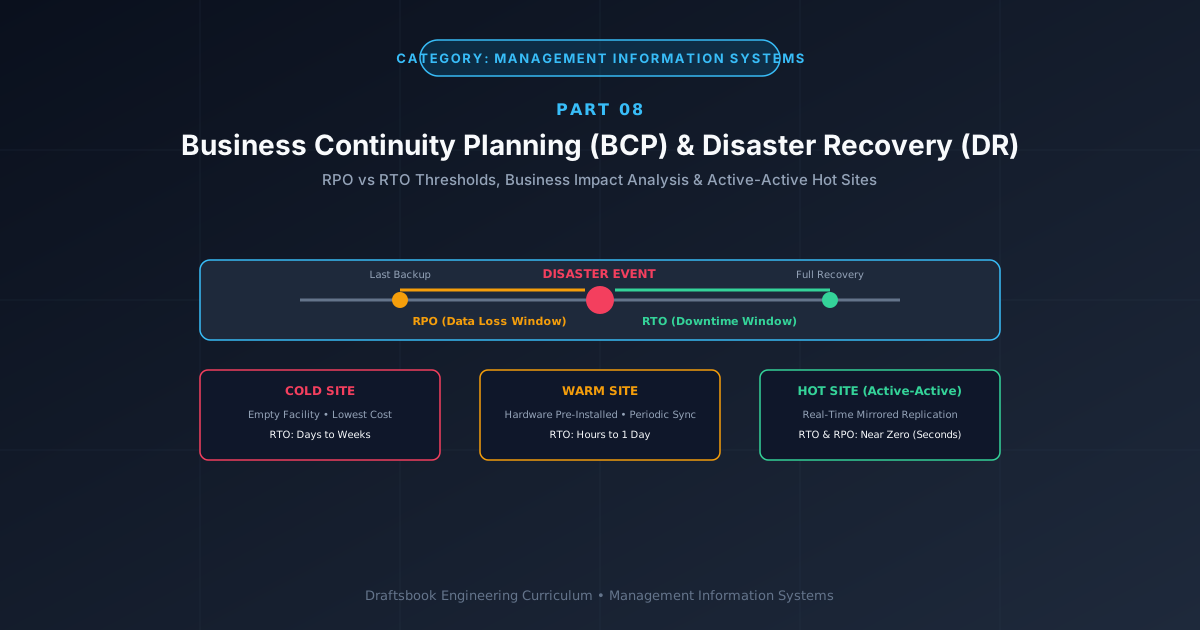
Part 8: Business Continuity Planning (BCP) & Disaster Recovery (DR)
Master Business Continuity Planning (BCP) and Disaster Recovery (DR): Business Impact Analysis, RPO vs RTO metrics, and cold vs hot failover sites.
By Md. Harun-Or-Roshid
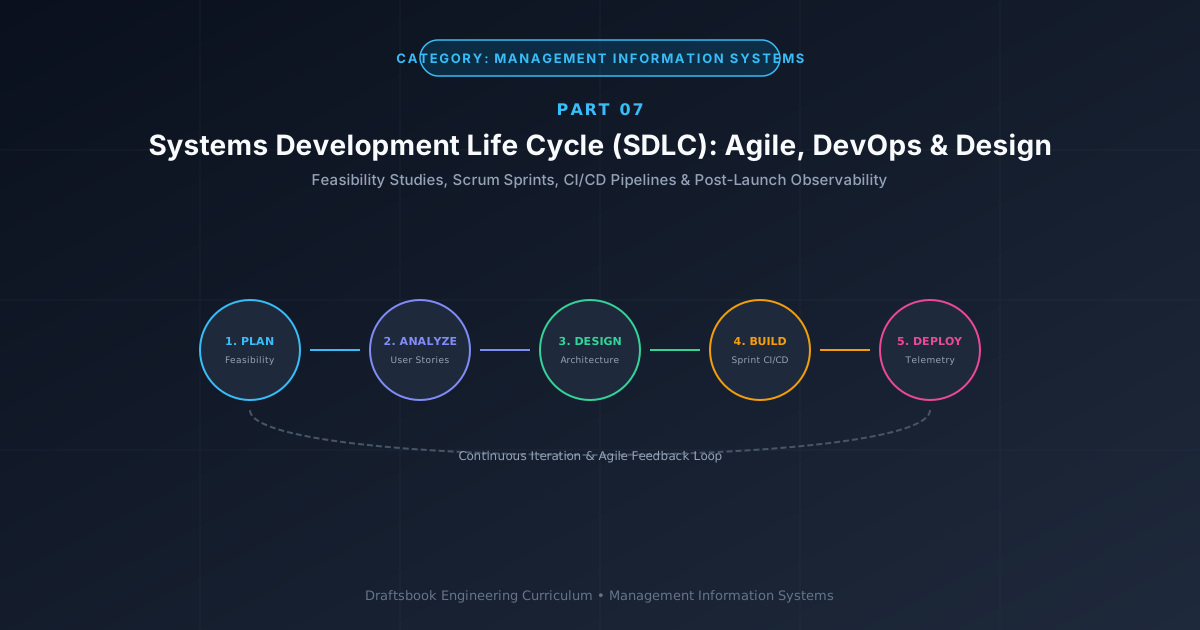
Part 7: Systems Development Life Cycle (SDLC): Agile, DevOps & Design
Master the Systems Development Life Cycle (SDLC): TELOS feasibility, Waterfall vs Agile Scrum, CI/CD automated deployment, and enterprise DevOps.
By Md. Harun-Or-Roshid
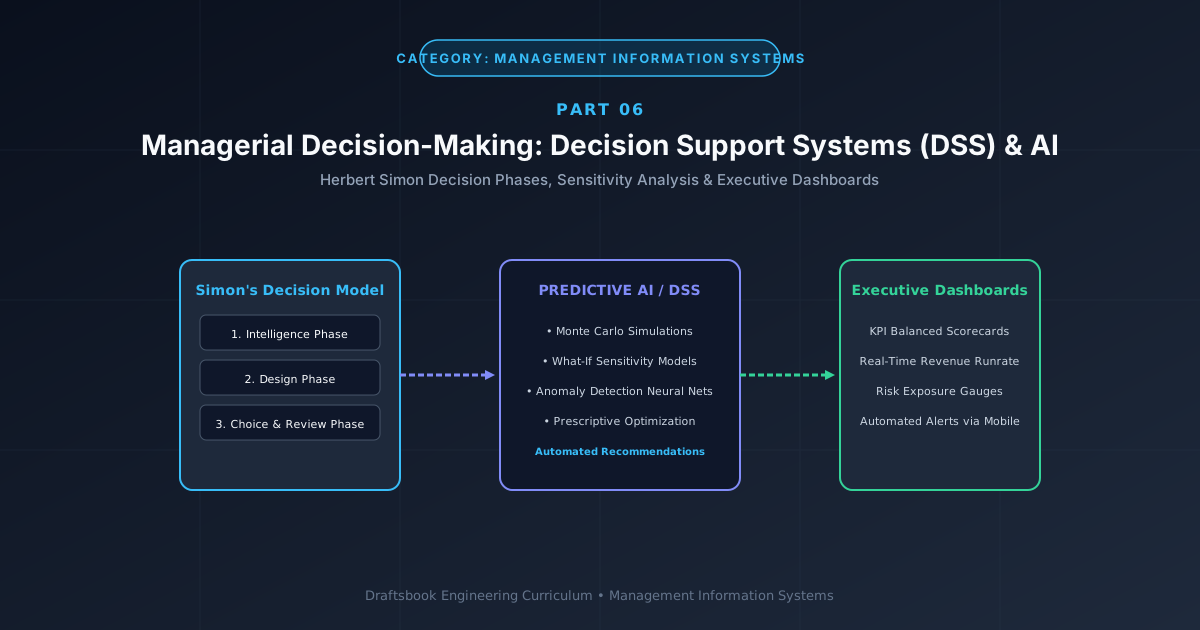
Part 6: Managerial Decision-Making: Decision Support Systems (DSS) & AI
Analyze managerial decision-making: Herbert Simon's decision phases, structured vs unstructured choices, DSS modeling, and predictive analytics engines.
By Md. Harun-Or-Roshid