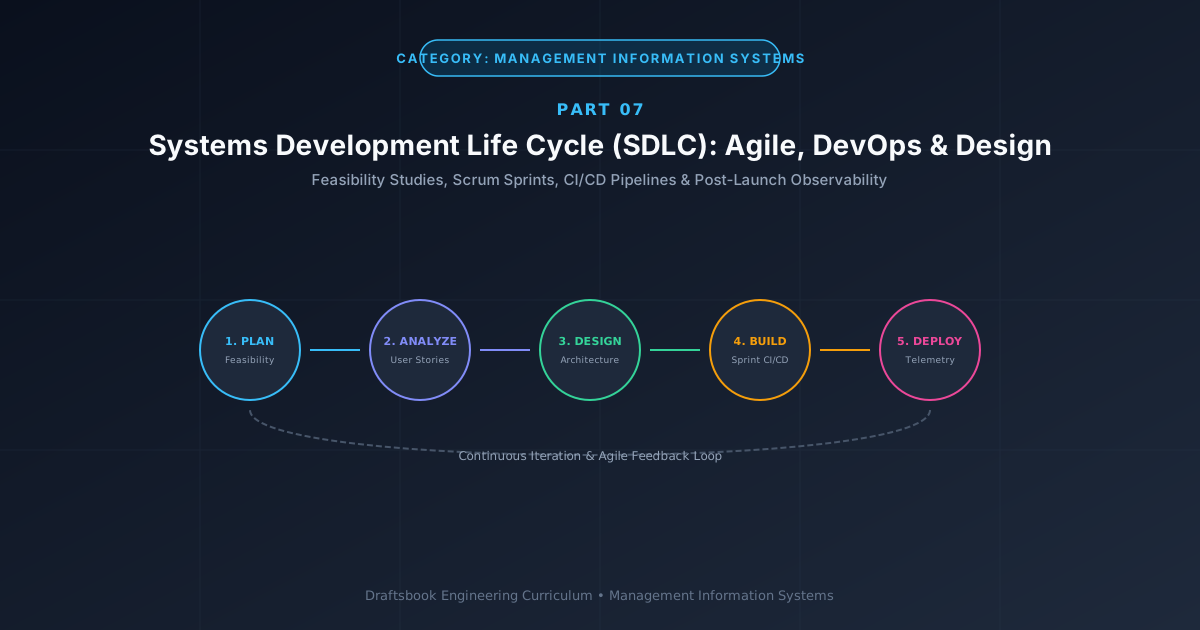
Part 7: Systems Development Life Cycle (SDLC): Agile, DevOps & Design
Module Overview
Building large-scale enterprise information systems is among the most complex engineering endeavors in modern commerce. Without rigorous methodology, projects succumb to catastrophic scope creep, budget inflation, and technical debt. In this seventh installment, we master the Systems Development Life Cycle (SDLC): comparing the classic Waterfall Model against modern Agile Scrum & Kanban frameworks, conducting multi-dimensional feasibility analyses, and exploring continuous integration and delivery (CI/CD) and automated DevOps telemetry.
1. Multi-Dimensional Project Feasibility Analysis
Before investing millions in software construction, an enterprise conducts a rigorous TELOS Feasibility Study across five critical dimensions:
1. Technical Feasibility
Does the organization possess the required engineering capabilities, server infrastructure, and network bandwidth? Can legacy mainframes interface with target cloud APIs?
2. Economic Feasibility
Evaluates Return on Investment (ROI), Net Present Value (NPV), and Total Cost of Ownership (TCO) including maintenance, licensing, and cloud compute charges.
3. Legal & Regulatory Feasibility
Ensures conformance with data residency laws, GDPR, HIPAA healthcare privacy, and industry software licensing agreements.
4. Operational & Schedule Feasibility
Will end-users embrace the new workflow or resist change? Can the critical software modules be deployed before seasonal holiday shopping deadlines?
2. Waterfall vs. Agile Methodologies: The Evolutionary Shift
For decades, corporate IT adhered to the rigid, linear Waterfall Model (Planning $ o$ Analysis $ o$ Design $ o$ Implementation $ o$ Maintenance). In rapidly changing commercial markets, however, Waterfall suffered from severe failure modes: requirements locked down in month one became obsolete by the time the system deployed two years later.
The Agile Scrum Framework
Agile decomposes multi-year development programs into short, fixed-duration iterations (typically two-week Sprints), delivering working, testable software increments continuously:
- Product Backlog: A prioritized list of user stories managed by the Product Owner reflecting changing business values.
- Sprint Planning & Daily Standups: Self-organizing cross-functional engineering teams commit to specific deliverables and resolve blockers daily.
- Sprint Review & Retrospective: Stakeholders inspect live running software at the end of each sprint, providing immediate feedback before the next sprint begins.
3. Continuous Integration & Continuous Delivery (CI/CD) in Enterprise Systems
Modern enterprise IT bridges the gap between software developers and IT operations via DevOps and automated CI/CD pipelines:
- Automated Code Quality & Security Scans: Every pull request triggers automated static analysis (Larastan/SonarQube), unit test suites, and vulnerability scans before merging.
- Blue-Green & Canary Deployments: New versions of services are routed to a small percentage of real production traffic, monitoring error rates before cutover, guaranteeing zero-downtime upgrades.
- Observability & SRE Telemetry: Distributed tracing, centralized log aggregation, and real-time metric alarms detect system degradation before end users experience outages.
Next in Curriculum
In Part 8: Business Continuity Planning (BCP) & Disaster Recovery (DR), we examine how enterprises prepare for extreme events through Business Impact Analyses, RPO/RTO metrics, and hot failover architectures.
Related reading
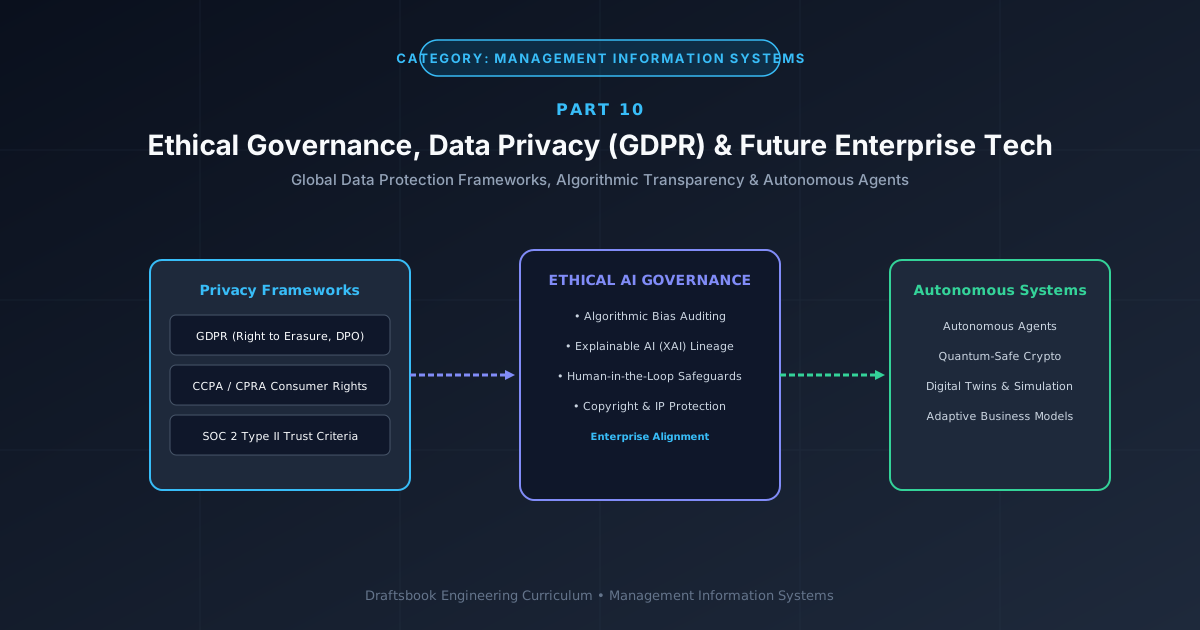
Part 10: Ethical Governance, Data Privacy (GDPR) & Future Enterprise Tech
Examine ethical information governance: GDPR/CCPA data privacy, algorithmic bias mitigation, explainable AI, autonomous digital agents, and quantum crypto.
By Md. Harun-Or-Roshid
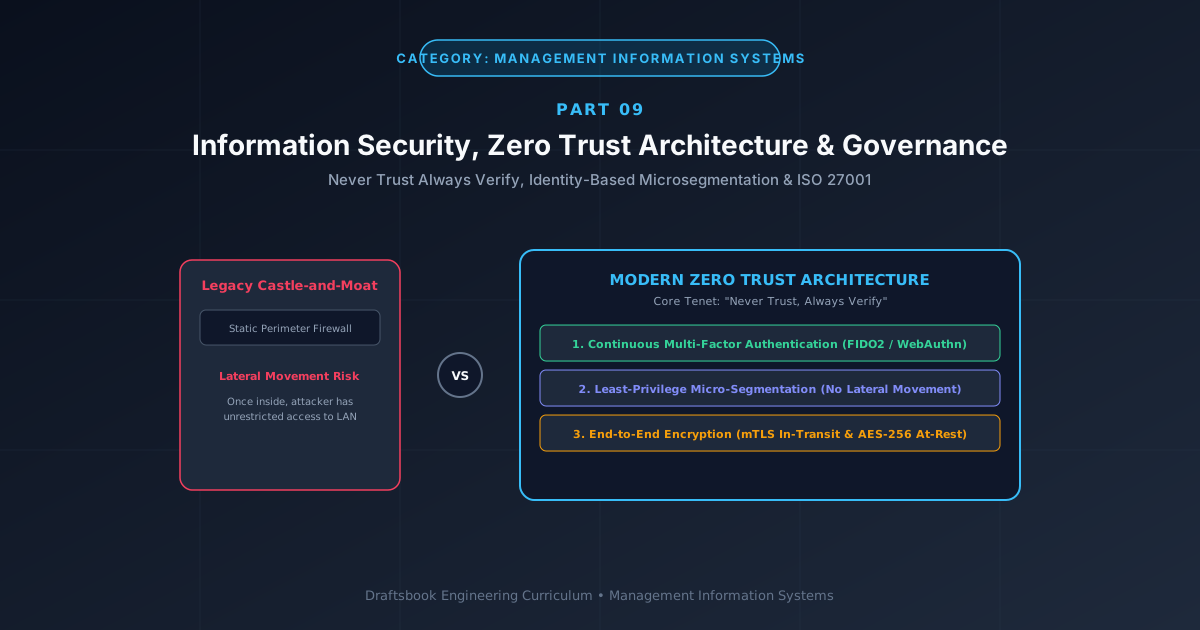
Part 9: Information Security, Zero Trust Architecture & Governance
Explore enterprise cybersecurity: the CIA triad, Zero Trust defense-in-depth, identity access management, SOC2/ISO 27001 compliance, and risk controls.
By Md. Harun-Or-Roshid
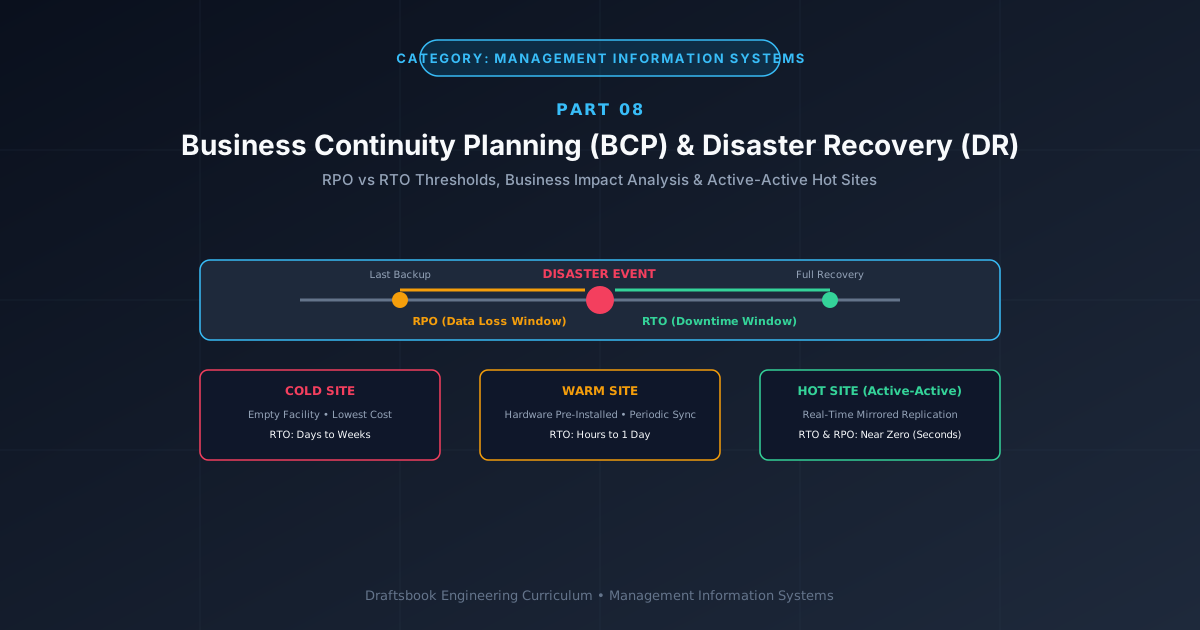
Part 8: Business Continuity Planning (BCP) & Disaster Recovery (DR)
Master Business Continuity Planning (BCP) and Disaster Recovery (DR): Business Impact Analysis, RPO vs RTO metrics, and cold vs hot failover sites.
By Md. Harun-Or-Roshid
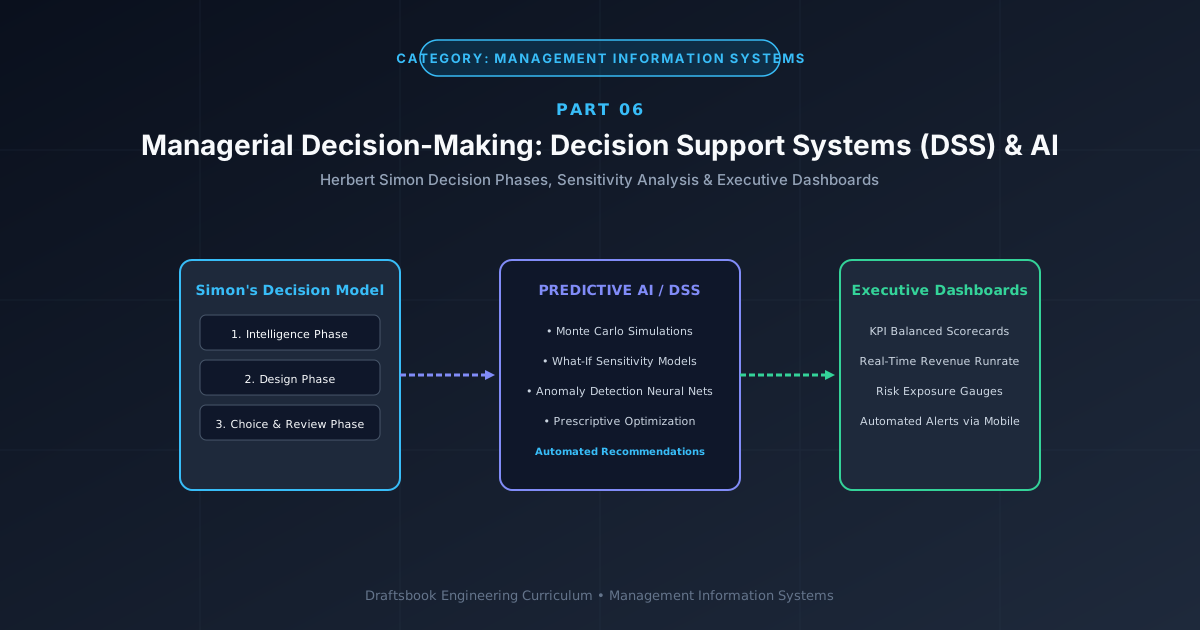
Part 6: Managerial Decision-Making: Decision Support Systems (DSS) & AI
Analyze managerial decision-making: Herbert Simon's decision phases, structured vs unstructured choices, DSS modeling, and predictive analytics engines.
By Md. Harun-Or-Roshid