Part 8: Business Continuity Planning (BCP) & Disaster Recovery (DR)
Module Overview
Natural catastrophes, fiber cable severances, power substation explosions, and ransomware attacks represent existential threats to modern digitized enterprises. An unplanned 48-hour outage can bankrupt a financial institution or hospital network. In this eighth installment, we examine the principles of enterprise operational survival: Business Continuity Planning (BCP) and Disaster Recovery (DR), conducting rigorous Business Impact Analysis (BIA), defining RPO & RTO thresholds, and architecting multi-region failover sites.
1. BCP vs. DR: Strategic Operations vs. Technical Restoration
Business Continuity Planning (BCP)
The comprehensive, organization-wide strategy for sustaining essential business operations during and immediately following an emergency. Covers personnel safety, emergency command hierarchies, alternative physical office space, and manual customer service contingency protocols.
Disaster Recovery (DR)
The technical IT subset of BCP focused on restoring critical digital infrastructure: database replication failover, network routing, SAN storage restoration, and server rebooting following a major disruption.
2. Core DR Metrics: RPO vs. RTO
Every disaster recovery architecture is engineered to satisfy two primary numeric metrics established during executive risk reviews:
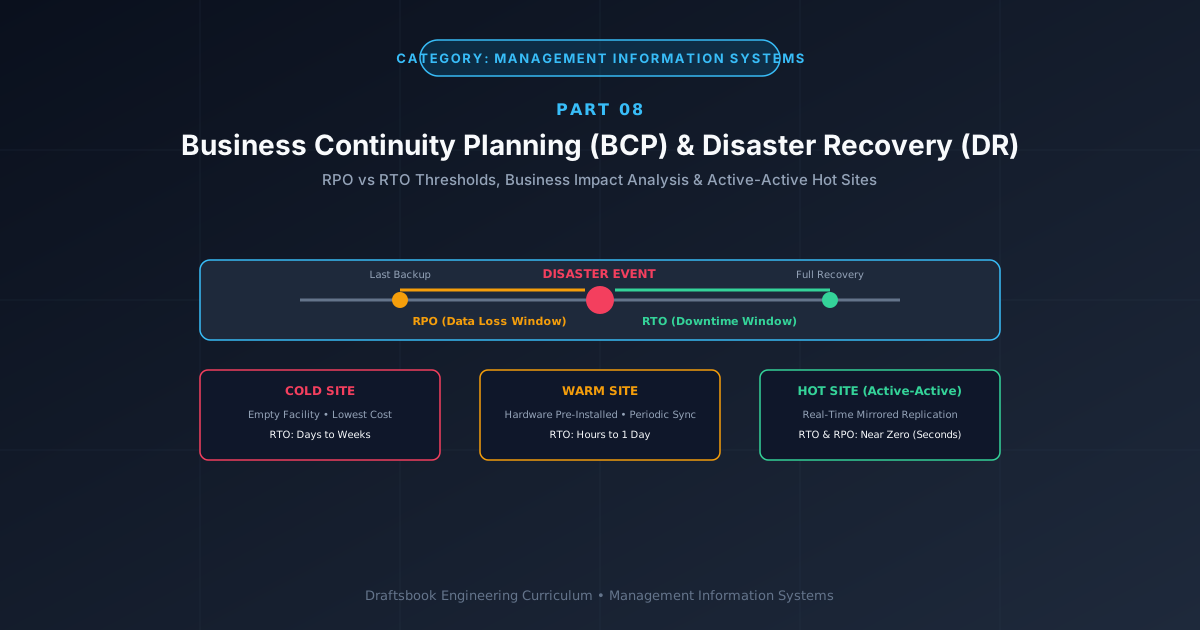
Recovery Point Objective (RPO) — The Data Loss Boundary
The maximum acceptable age of data that can be lost following a disaster, measured backwards in time from the moment of failure. If backups occur nightly at midnight and the system crashes at 2:00 PM, the RPO is 14 hours of lost transactions. For tier-1 banking ledgers, RPO must be strictly zero seconds, achieved via synchronous cross-region database replication.
Recovery Time Objective (RTO) — The Downtime Boundary
The maximum acceptable duration of time permitted to restore full business operations and application availability following an outage. An RTO of 15 minutes means systems must be fully failover-operational within 15 minutes of an incident declaration.
3. Disaster Recovery Site Architectures: Cold, Warm & Hot
| Site Type | Infrastructure State | Typical RTO | Cost Profile |
|---|---|---|---|
| Cold Site | Empty facility shell with power and cooling; servers and network gear must be shipped and installed on-demand. | Days to Weeks | Lowest Cost |
| Warm Site | Pre-installed servers and network switches with periodic data backup restores; requires manual spin-up and synchronization. | Hours to 1 Day | Moderate Cost |
| Hot Site (Active-Active) | Fully configured, identical mirrored facility running synchronously in parallel; traffic fails over automatically via DNS/BGP. | Near Zero (Seconds) | Highest Cost |
Next in Curriculum
In Part 9: Information Security, Zero Trust Architecture & Governance, we transition from physical disaster recovery to digital cyber defense: the CIA triad, Zero Trust, and compliance governance.
Related reading
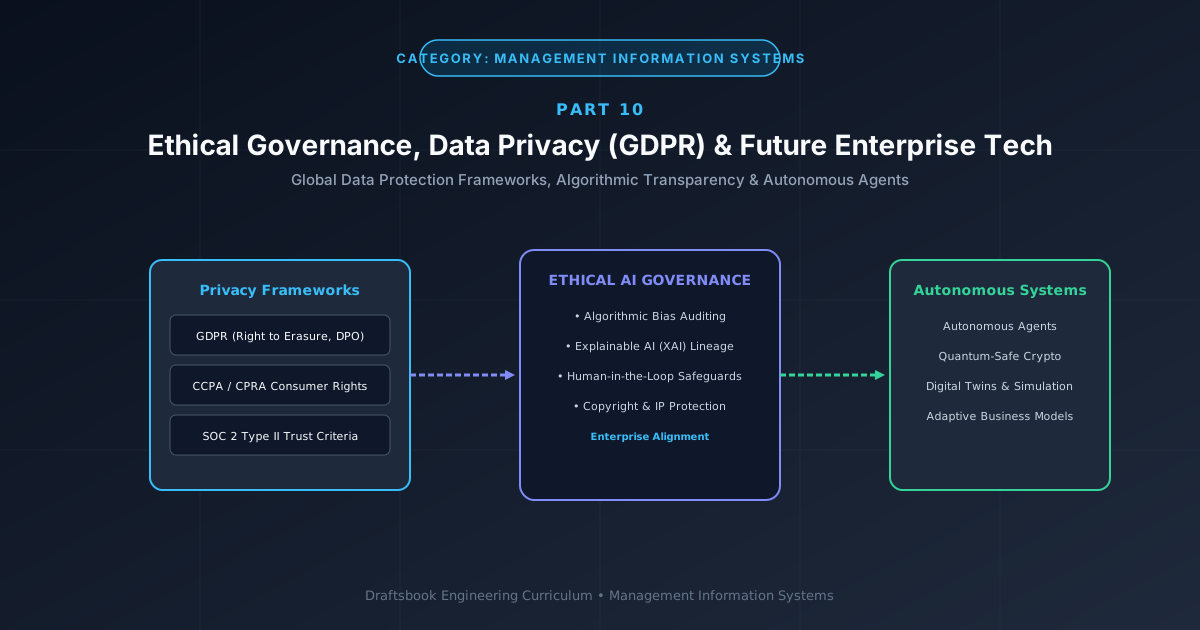
Part 10: Ethical Governance, Data Privacy (GDPR) & Future Enterprise Tech
Examine ethical information governance: GDPR/CCPA data privacy, algorithmic bias mitigation, explainable AI, autonomous digital agents, and quantum crypto.
By Md. Harun-Or-Roshid
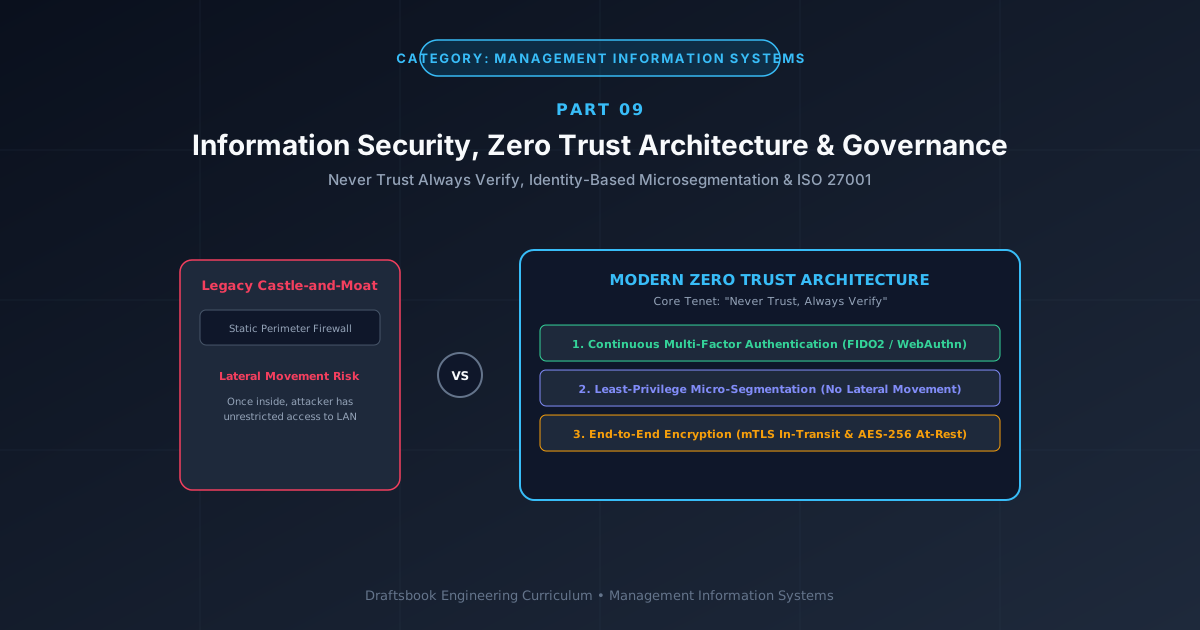
Part 9: Information Security, Zero Trust Architecture & Governance
Explore enterprise cybersecurity: the CIA triad, Zero Trust defense-in-depth, identity access management, SOC2/ISO 27001 compliance, and risk controls.
By Md. Harun-Or-Roshid
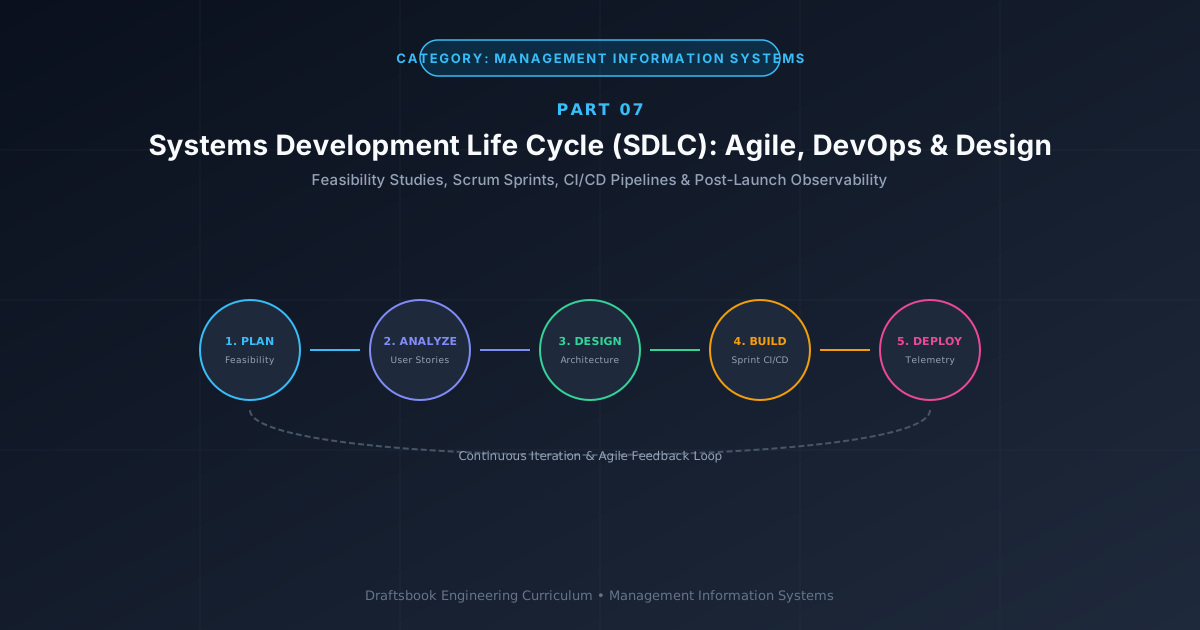
Part 7: Systems Development Life Cycle (SDLC): Agile, DevOps & Design
Master the Systems Development Life Cycle (SDLC): TELOS feasibility, Waterfall vs Agile Scrum, CI/CD automated deployment, and enterprise DevOps.
By Md. Harun-Or-Roshid
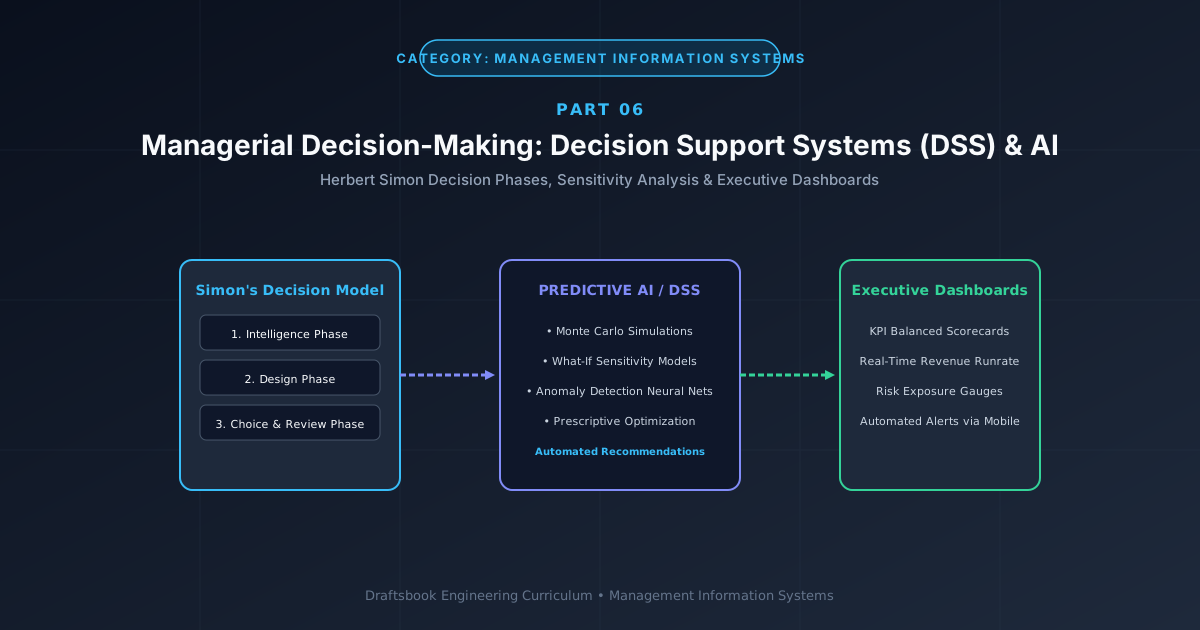
Part 6: Managerial Decision-Making: Decision Support Systems (DSS) & AI
Analyze managerial decision-making: Herbert Simon's decision phases, structured vs unstructured choices, DSS modeling, and predictive analytics engines.
By Md. Harun-Or-Roshid