Part 4: Supply Chain Management (SCM) & Enterprise Integration (EAI)
Module Overview
Modern enterprises operate within intricate, worldwide ecosystems of independent suppliers, contract manufacturers, third-party logistics (3PL) carriers, and retail distribution centers. In this fourth installment, we explore Supply Chain Management (SCM) and Enterprise Application Integration (EAI): analyzing supply chain synchronization, dampening the destructive Bullwhip Effect, implementing B2B protocols (EDI, AS2, REST), and architecting asynchronous event-driven integration hubs.
1. The Supply Chain Topology: Upstream vs. Downstream Flows
A supply chain is an interconnected network of facilities, organizations, and technologies coordinating three fundamental flows:
1. Material / Physical Flow
Downstream movement of physical commodities: raw minerals from Tier 2 suppliers $ o$ refined components $ o$ assembly factories $ o$ regional warehouses $ o$ consumer doorsteps. (Reverse logistics manages customer returns and warranty repairs).
2. Financial Flow
Upstream movement of capital: consumer payments, automated credit reconciliations, letters of credit, factoring, and invoice settlements paid back to suppliers and freight carriers.
3. Information Flow
Bidirectional real-time telemetry: downstream shipment tracking and delivery manifests; upstream demand forecasts, point-of-sale purchase signals, and inventory capacity warnings.
2. The Bullwhip Effect: Root Causes & Information Remedies
The Bullwhip Effect describes an extreme operational pathology where slight fluctuations in retail consumer demand become magnified into massive, wild swings in production orders as they propagate upstream through wholesalers, distributors, and component manufacturers.
Primary Causes of the Bullwhip Effect
- Demand Forecast Updating: Each tier in the chain makes independent safety-stock buffers based on distorted order history rather than true end-consumer demand.
- Order Batching: Placing large, infrequent purchase orders to minimize freight costs rather than continuous replenishment.
- Price Fluctuations: Promotional discounts and volume price breaks trigger artificial forward-buying and hoarding.
- Shortage Gaming: When capacity is constrained, buyers inflate their orders anticipating partial rationing, cancelling phantom orders once supply normalizes.
The MIS Technological Remedy
By implementing Vendor-Managed Inventory (VMI) and real-time electronic data sharing via API gateways, upstream suppliers monitor live POS checkout streams directly. Eliminating intermediaries from demand visibility completely dampens the bullwhip oscillation.
3. Enterprise Application Integration (EAI) Patterns
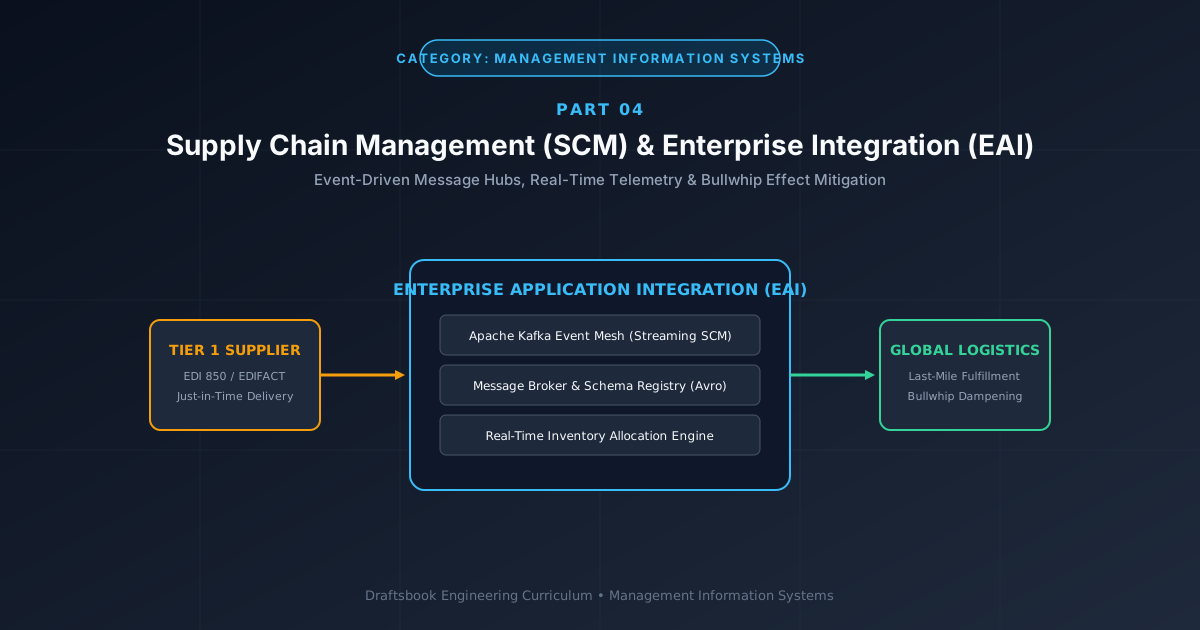
Enterprises deploy hundreds of disparate applications (legacy COBOL mainframes, Salesforce, SAP ERP, custom microservices). Connecting them via point-to-point spaghetti integrations requires $N(N-1)/2$ custom connectors—an architectural nightmare. EAI provides clean integration patterns:
Enterprise Service Bus (ESB) & API Gateways
Centralized mediation bus providing message routing, protocol translation (SOAP $\leftrightarrow$ JSON REST), authentication enforcement, and rate limiting. Each system connects once to the bus.
Event-Driven Architecture (EDA) & Event Mesh
Modern distributed systems replace synchronous blocking HTTP calls with asynchronous message streaming platforms (e.g., Apache Kafka, Apache Pulsar, RabbitMQ). Producing services publish domain events (OrderPlaced, ShipmentDelivered) to durable, partitioned topics; downstream consumers process records independently without tight temporal coupling.
Next in Curriculum
In Part 5: Business Intelligence (BI), Data Warehouses & Lakehouse Systems, we examine how transactional data is aggregated into dimensional warehouses, OLAP cubes, and modern lakehouses for analytical decision-making.
Related reading
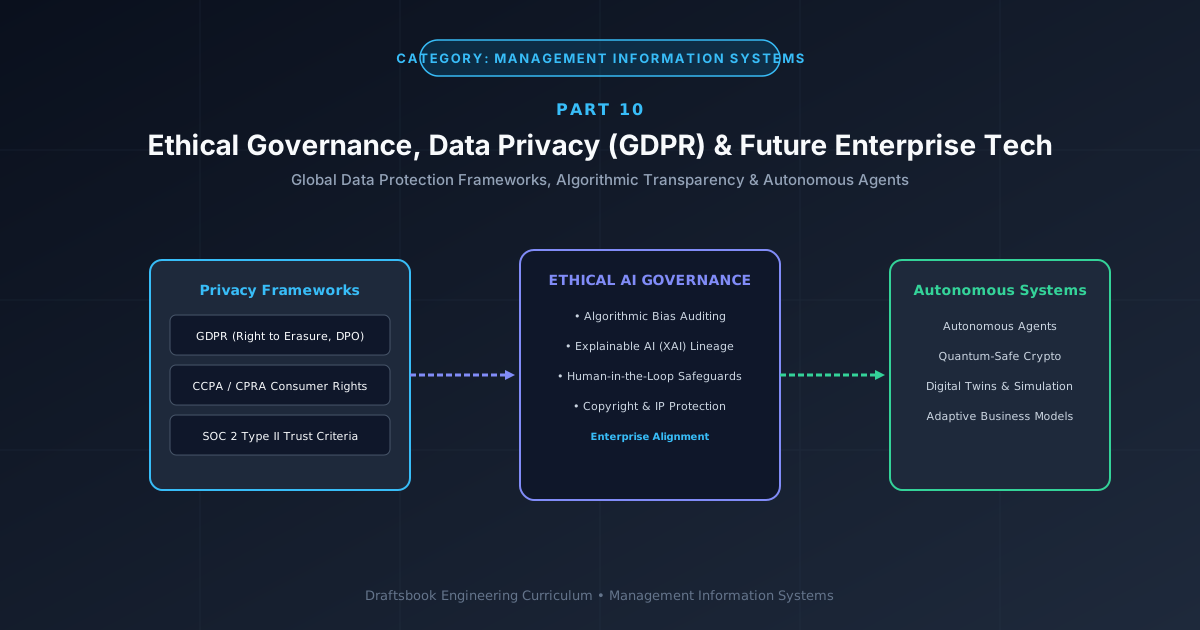
Part 10: Ethical Governance, Data Privacy (GDPR) & Future Enterprise Tech
Examine ethical information governance: GDPR/CCPA data privacy, algorithmic bias mitigation, explainable AI, autonomous digital agents, and quantum crypto.
By Md. Harun-Or-Roshid
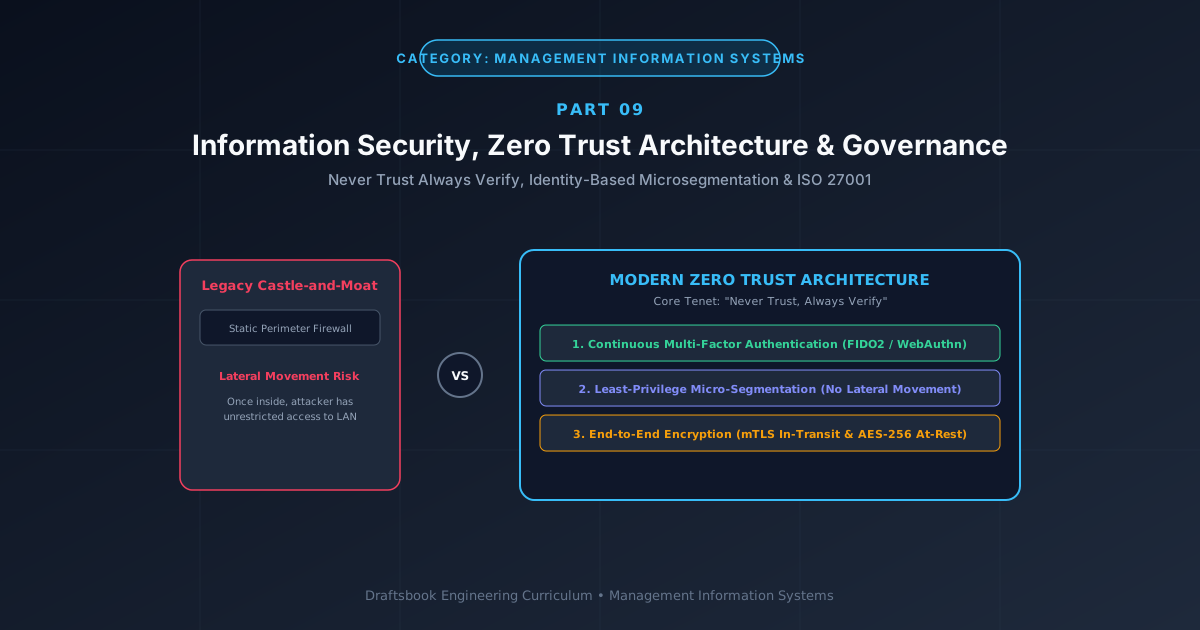
Part 9: Information Security, Zero Trust Architecture & Governance
Explore enterprise cybersecurity: the CIA triad, Zero Trust defense-in-depth, identity access management, SOC2/ISO 27001 compliance, and risk controls.
By Md. Harun-Or-Roshid
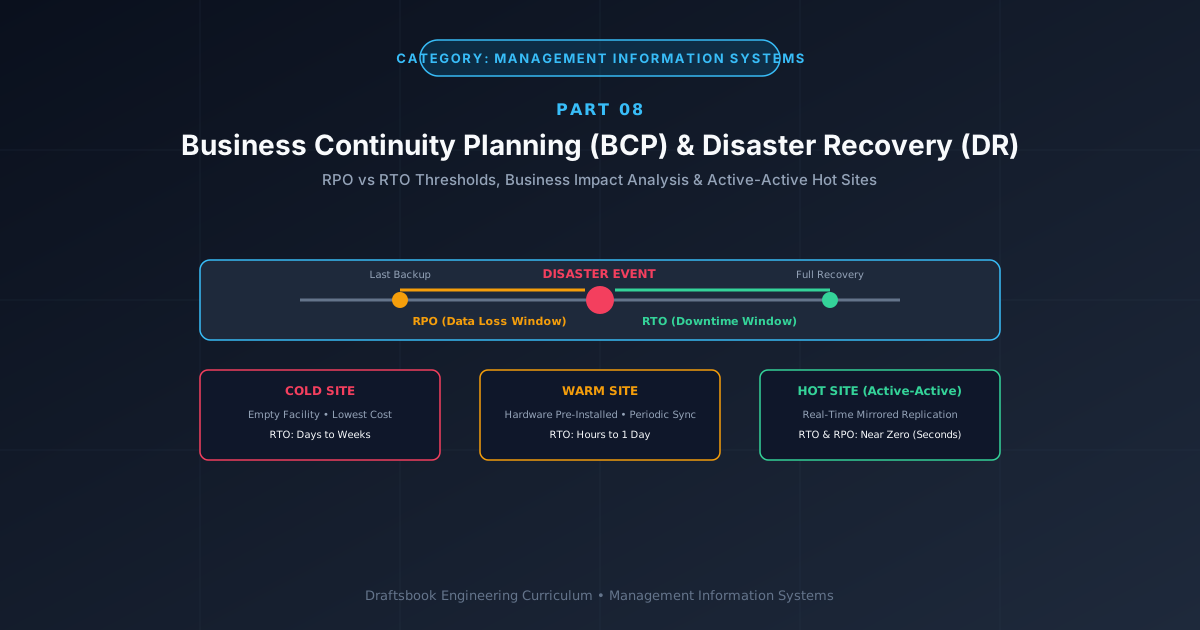
Part 8: Business Continuity Planning (BCP) & Disaster Recovery (DR)
Master Business Continuity Planning (BCP) and Disaster Recovery (DR): Business Impact Analysis, RPO vs RTO metrics, and cold vs hot failover sites.
By Md. Harun-Or-Roshid
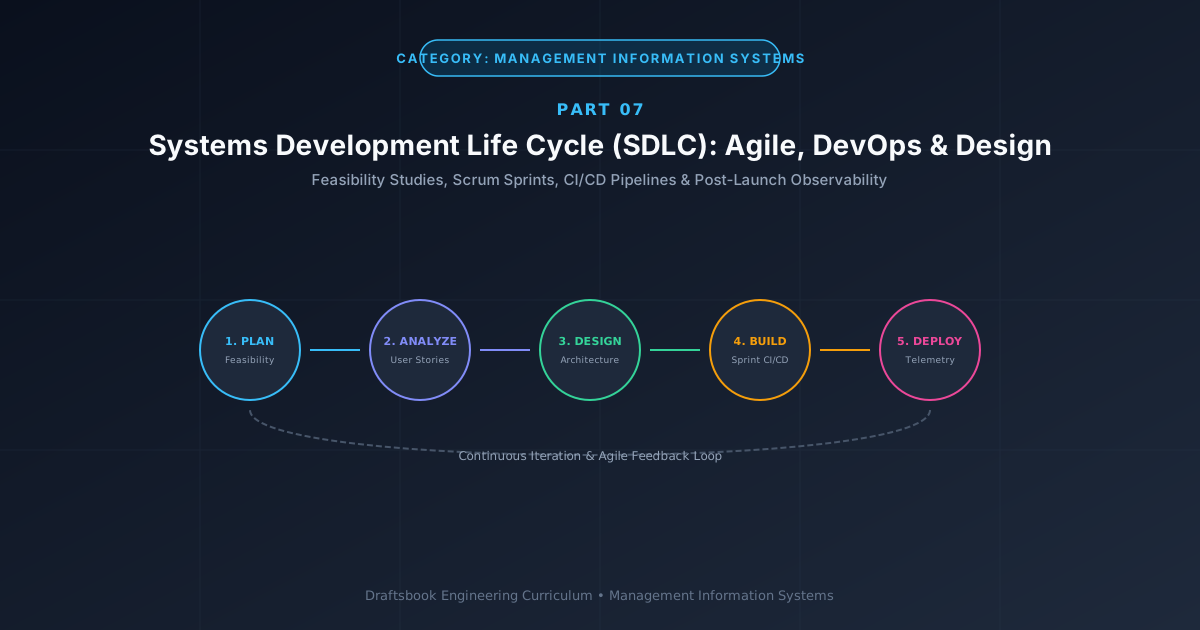
Part 7: Systems Development Life Cycle (SDLC): Agile, DevOps & Design
Master the Systems Development Life Cycle (SDLC): TELOS feasibility, Waterfall vs Agile Scrum, CI/CD automated deployment, and enterprise DevOps.
By Md. Harun-Or-Roshid