Part 3: Enterprise Resource Planning (ERP) & Modern CRM Architectures
Module Overview
Before the emergence of integrated enterprise platforms, corporate departments operated in isolated data silos: accounting maintained its own payroll ledger, warehousing tracked separate inventory spreadsheets, and sales logged orders in disconnected desktop software. In this third installment, we examine the structural backbone of corporate operations: Enterprise Resource Planning (ERP) and Customer Relationship Management (CRM) architectures, dissecting modular schemas, Business Process Reengineering (BPR), and implementation lifecycles.
1. The Core Philosophy of Enterprise Resource Planning (ERP)
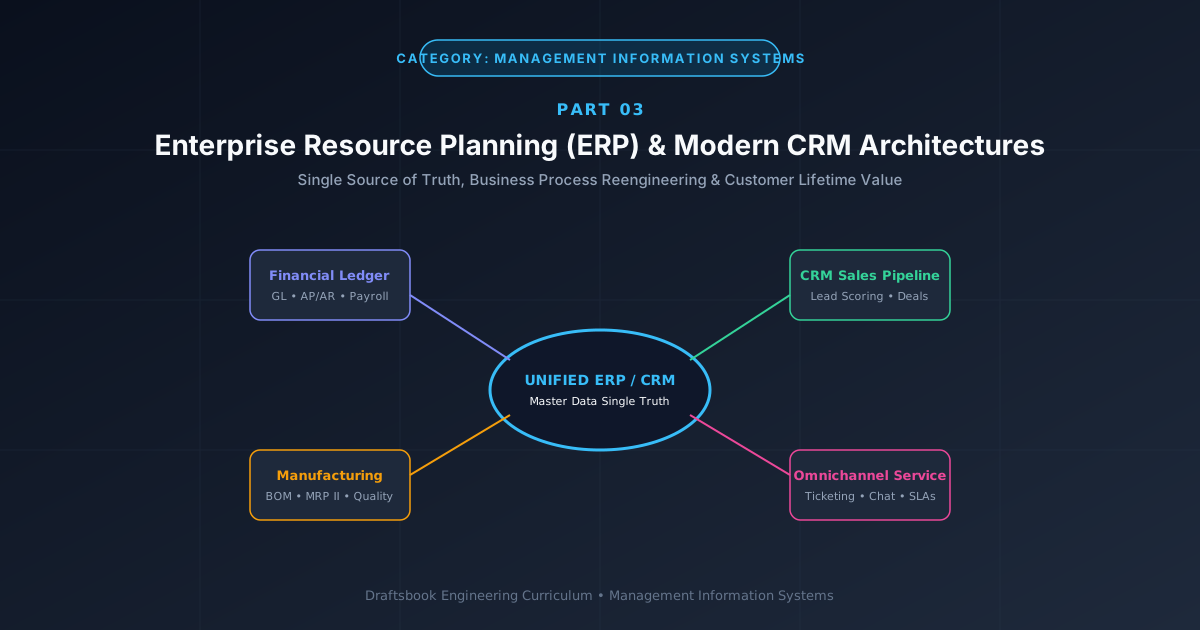
An Enterprise Resource Planning (ERP) system is an integrated suite of software modules operating over a single, centralized database. When a transaction occurs anywhere in the business—such as an e-commerce sale—its ramifications propagate across all corporate departments in real time:
Real-Time Event Propagation Example:
- Sales Module: Records the customer order and issues an invoice receipt.
- Inventory & Warehousing: Decrements stock counts and reserves warehouse pick bins.
- Manufacturing / Production: If inventory falls below safety thresholds, automatically triggers a Bill of Materials (BOM) production work order.
- Procurement: Generates Electronic Data Interchange (EDI) purchase orders for raw parts from suppliers.
- Finance & General Ledger: Automatically credits accounts receivable and debits cost of goods sold (COGS).
2. Core Functional Modules of an Enterprise ERP
Financial Management (FI/CO)
General ledger, accounts payable/receivable, asset accounting, treasury, tax compliance, and automated quarterly financial reconciliation conforming to GAAP and IFRS standards.
Human Capital Management (HCM)
Employee records, talent acquisition, performance reviews, organizational hierarchy trees, payroll processing, tax withholding, and labor regulatory reporting.
Manufacturing & Production (PP)
Material Requirements Planning (MRP II), shop floor scheduling, capacity planning, routing, quality assurance, and scrap tracking.
Supply Chain & Logistics (SD/MM)
Vendor management, purchase requisition workflows, warehouse rack optimization, carrier freight billing, and global customs documentation.
3. Modern Customer Relationship Management (CRM) Architecture
While ERP systems optimize internal operational supply-side workflows, Customer Relationship Management (CRM) platforms manage the customer demand-side lifecycle across every physical and digital touchpoint:
A. Operational CRM
Automates frontline customer interactions: Sales Force Automation (SFA) pipeline tracking, automated lead routing, marketing campaign nurture sequences, and omnichannel contact center ticketing.
B. Analytical CRM
Analyzes customer historical behaviors: Customer Lifetime Value (CLV) calculation, predictive churn modeling, cohort retention curves, and next-best-action recommendation algorithms.
C. Collaborative CRM
Shares structured customer interaction histories across disparate internal business units, ensuring that billing, technical support, and renewal account executives share identical customer context.
4. Business Process Reengineering (BPR) & Implementation Risks
Over 60% of enterprise ERP implementations experience budget overruns or operational disruptions. The fundamental root cause is the tension between custom software modification vs. Business Process Reengineering (BPR):
- The Modification Trap: Trying to alter an off-the-shelf enterprise ERP codebase to mimic legacy, 20-year-old inefficient corporate paperwork practices creates an unmaintainable codebase that cannot receive upstream vendor security patches.
- The BPR Methodology: Successful organizations adapt their internal human workflows to match the battle-tested standard business processes embedded within the platform, retraining personnel rather than rebuilding core tables.
Next in Curriculum
In Part 4: Supply Chain Management (SCM) & Enterprise Integration (EAI), we examine how enterprises link their internal ERPs to global supplier networks using event-driven architectures and message buses.
Related reading
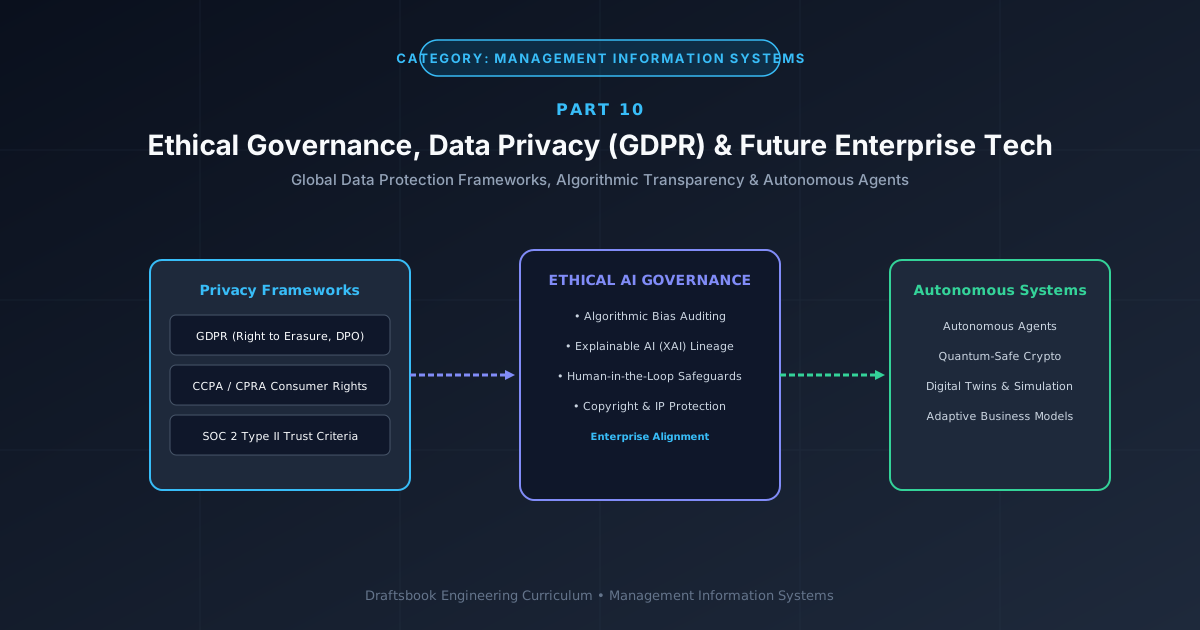
Part 10: Ethical Governance, Data Privacy (GDPR) & Future Enterprise Tech
Examine ethical information governance: GDPR/CCPA data privacy, algorithmic bias mitigation, explainable AI, autonomous digital agents, and quantum crypto.
By Md. Harun-Or-Roshid
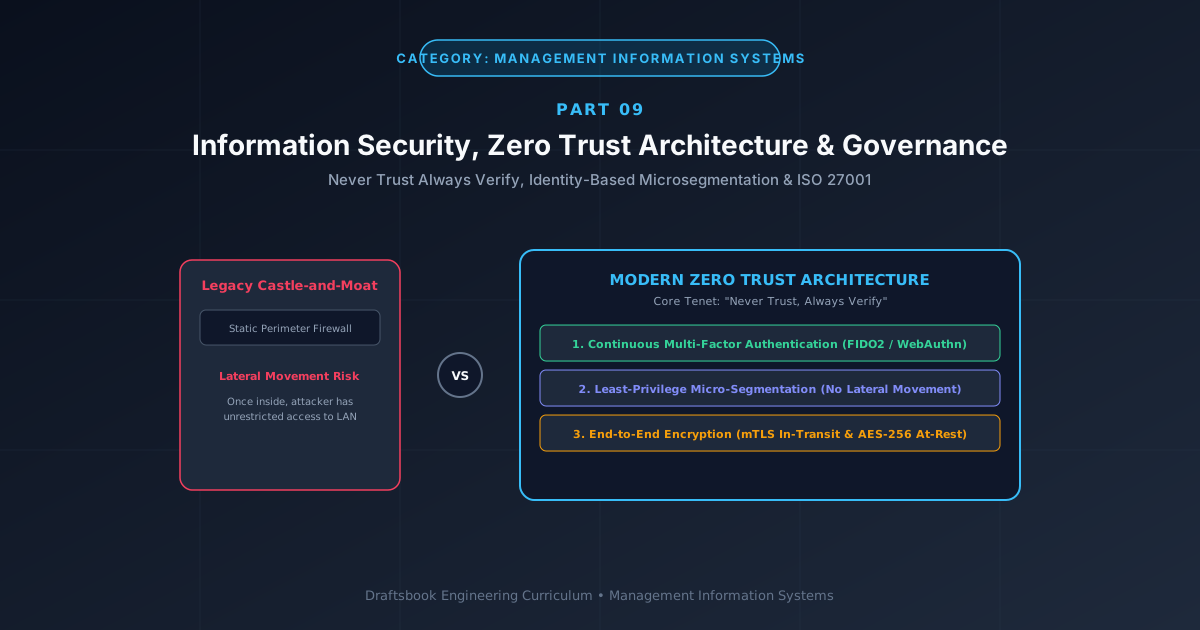
Part 9: Information Security, Zero Trust Architecture & Governance
Explore enterprise cybersecurity: the CIA triad, Zero Trust defense-in-depth, identity access management, SOC2/ISO 27001 compliance, and risk controls.
By Md. Harun-Or-Roshid
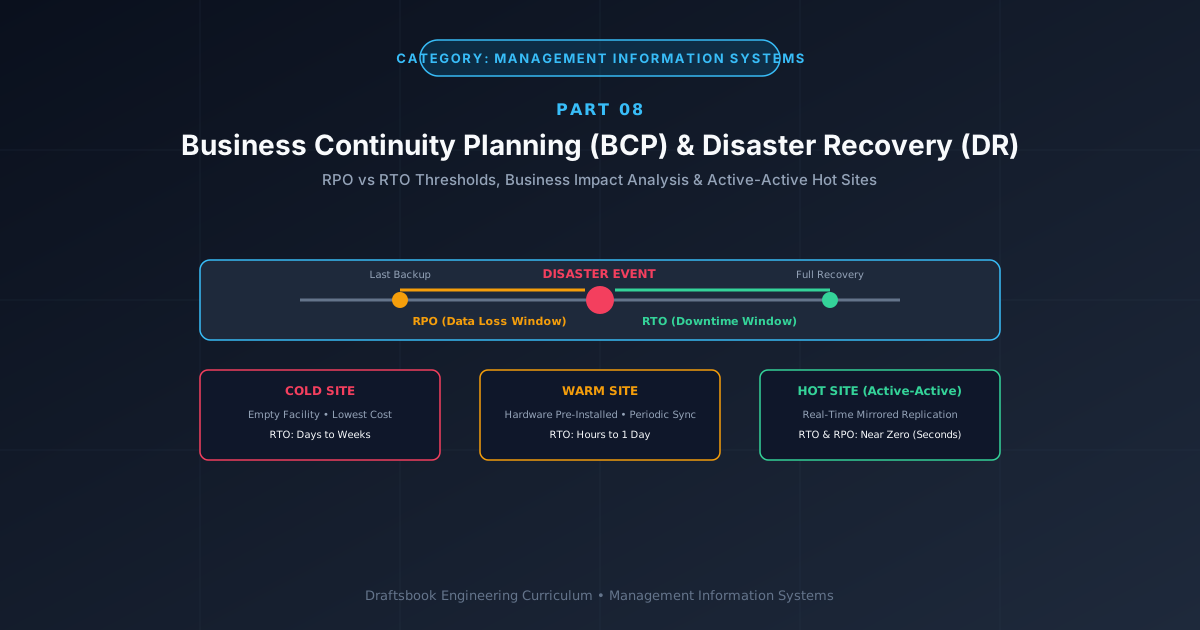
Part 8: Business Continuity Planning (BCP) & Disaster Recovery (DR)
Master Business Continuity Planning (BCP) and Disaster Recovery (DR): Business Impact Analysis, RPO vs RTO metrics, and cold vs hot failover sites.
By Md. Harun-Or-Roshid
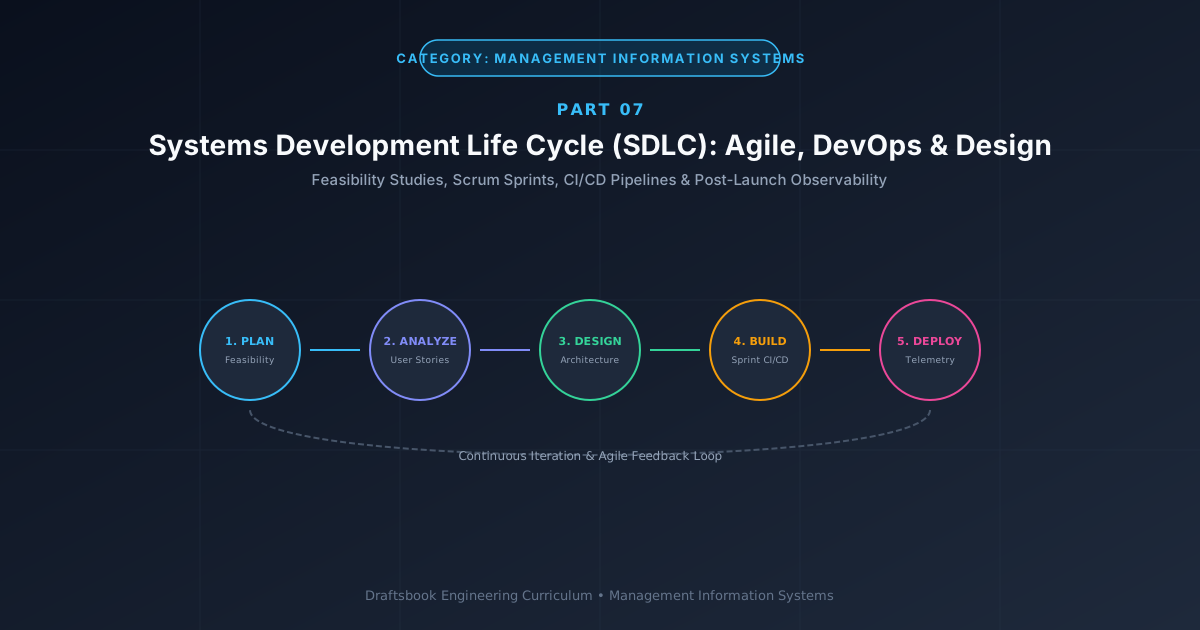
Part 7: Systems Development Life Cycle (SDLC): Agile, DevOps & Design
Master the Systems Development Life Cycle (SDLC): TELOS feasibility, Waterfall vs Agile Scrum, CI/CD automated deployment, and enterprise DevOps.
By Md. Harun-Or-Roshid