Part 2: Cloud Computing Issues, Migration Phases & Deployment Models
Lesson Focus & Objectives
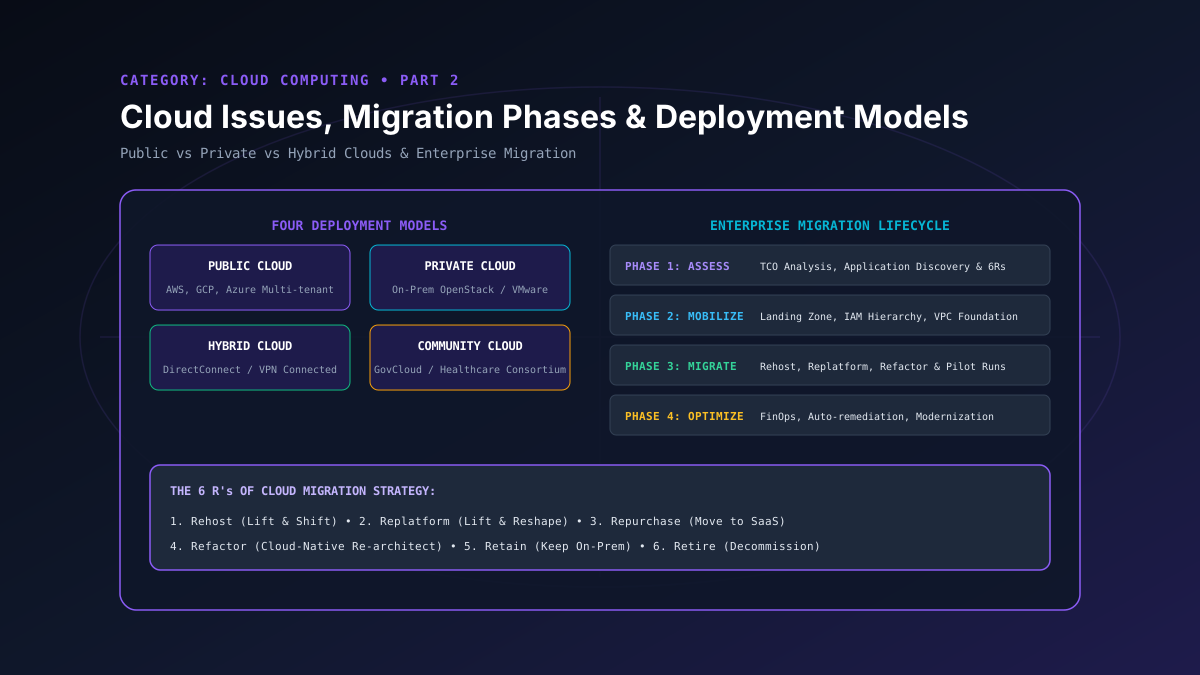
Enterprises migrating legacy monoliths to distributed cloud architectures face critical structural decisions. Which deployment model satisfies internal audit standards while preserving developer velocity? How should an engineering team sequence their migration roadmap? In Part 2 of our series, we analyze the four foundational cloud deployment models (Public, Private, Hybrid, Community), evaluate the four-phase enterprise migration framework, and systematically unpack Gartner's 6 R's of application portfolio migration.
1. The Four Cloud Deployment Models
1. Public Cloud
The cloud infrastructure is provisioned for open use by the general public. It may be owned, managed, and operated by a business, academic, or government organization, or some combination of them. It exists on the premises of the cloud provider (e.g., AWS, GCP, Azure). Offers supreme elasticity, zero infrastructure CapEx, and rapid global deployment.
2. Private Cloud
The cloud infrastructure is provisioned for exclusive use by a single organization comprising multiple consumers (e.g., business units). It may be owned, managed, and operated by the organization, a third party, or some combination of them (e.g., OpenStack, VMware vSphere). Delivers maximum regulatory control, dedicated physical hardware, and zero noisy-neighbor interference at high CapEx cost.
3. Hybrid Cloud
The cloud infrastructure is a composition of two or more distinct cloud infrastructures (private, community, or public) that remain unique entities, but are bound together by standardized or proprietary technology that enables data and application portability (e.g., cloud bursting for load balancing between clouds). Connects via dedicated private circuits (AWS Direct Connect, Azure ExpressRoute).
4. Community Cloud
The cloud infrastructure is provisioned for exclusive use by a specific community of consumers from organizations that have shared concerns (e.g., mission, security requirements, policy, and compliance considerations). Common in national defense networks (AWS GovCloud), municipal healthcare networks, and academic research consortia.
2. The 4-Phase Enterprise Migration Framework
Phase 1: Assess & Discover
Catalog the complete application portfolio, database dependencies, network bandwidth requirements, and licensing constraints. Run Total Cost of Ownership (TCO) calculations against prospective CSP consumption rates.
Phase 2: Mobilize & Foundational Setup
Construct the cloud "Landing Zone": configure the multi-account AWS Organization or Azure Management Groups, establish VPC peering, federate enterprise Single Sign-On (SSO), and deploy automated compliance guardrails.
Phase 3: Migrate & Modernize
Execute workload shifts in prioritized migration waves using continuous data replication agents (e.g., AWS Application Migration Service, Database Migration Service). Validate cutovers during scheduled maintenance windows.
Phase 4: Operate & Optimize (FinOps)
Implement automated resource rightsizing, convert steady-state compute to Savings Plans/Reserved Instances, decommission migration tooling, and establish automated security posture management (CSPM).
3. Gartner's 6 R's of Cloud Migration Strategy
| Strategy | Description & Mechanism | Speed vs. ROI |
|---|---|---|
| 1. Rehost | "Lift-and-shift" virtual machines directly to cloud IaaS without code changes. | Fastest cutover, low immediate cloud optimization |
| 2. Replatform | "Lift-tinker-and-shift": swap self-hosted databases for Amazon RDS or Google Cloud SQL. | Balanced speed with reduced management overhead |
| 3. Repurchase | Discard legacy proprietary software and adopt a modern SaaS solution (e.g., Salesforce). | Eliminates maintenance, requires user retraining |
| 4. Refactor | Full cloud-native re-architecture into microservices, serverless FaaS, and event streaming. | Highest development cost, maximum scalability & efficiency |
| 5. Retain | Keep legacy systems on-premises due to compliance or high depreciation investments. | Zero immediate cost, ongoing data center CapEx |
| 6. Retire | Decommission obsolete or redundant servers discovered during Phase 1 assessment. | Instant cost savings and attack surface reduction |
Related reading
Part 10: Cloud to Fog & Edge: Architecting the Distributed Continuum
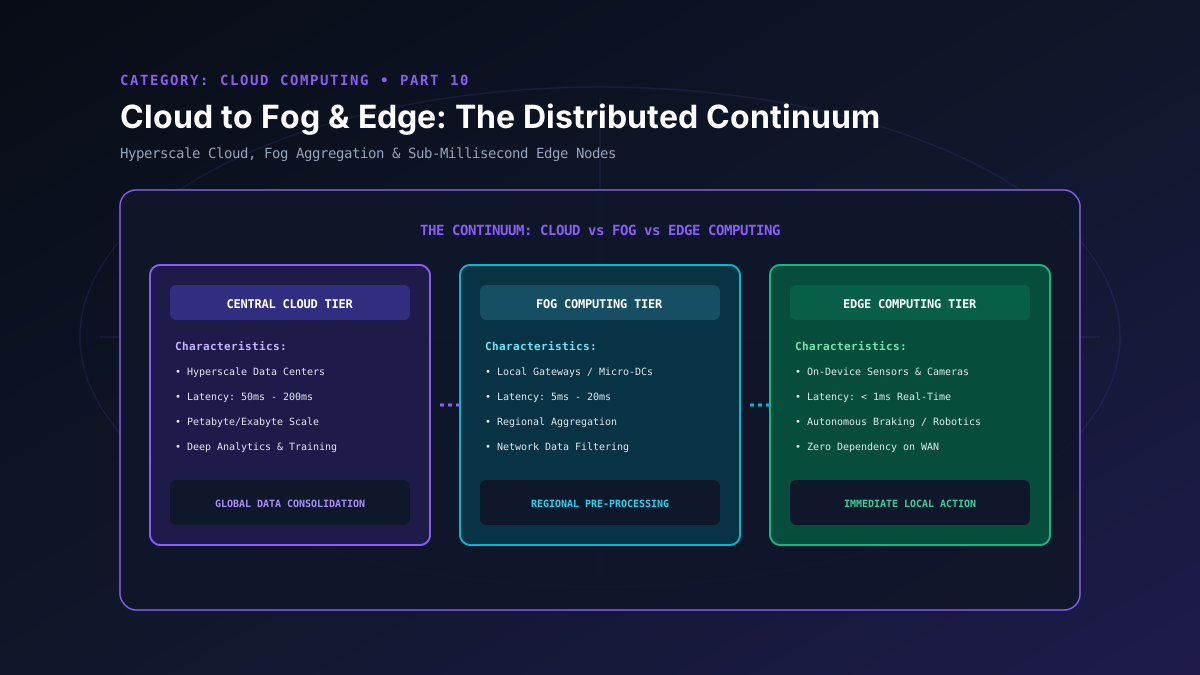
Explore the distributed computing continuum: compare centralized cloud, fog computing gateways, and real-time edge nodes for latency-critical IoT systems.
By Md. Harun-Or-Roshid
Part 9: Mobile Cloud Computing (MCC): Architecture, Offloading & Apps
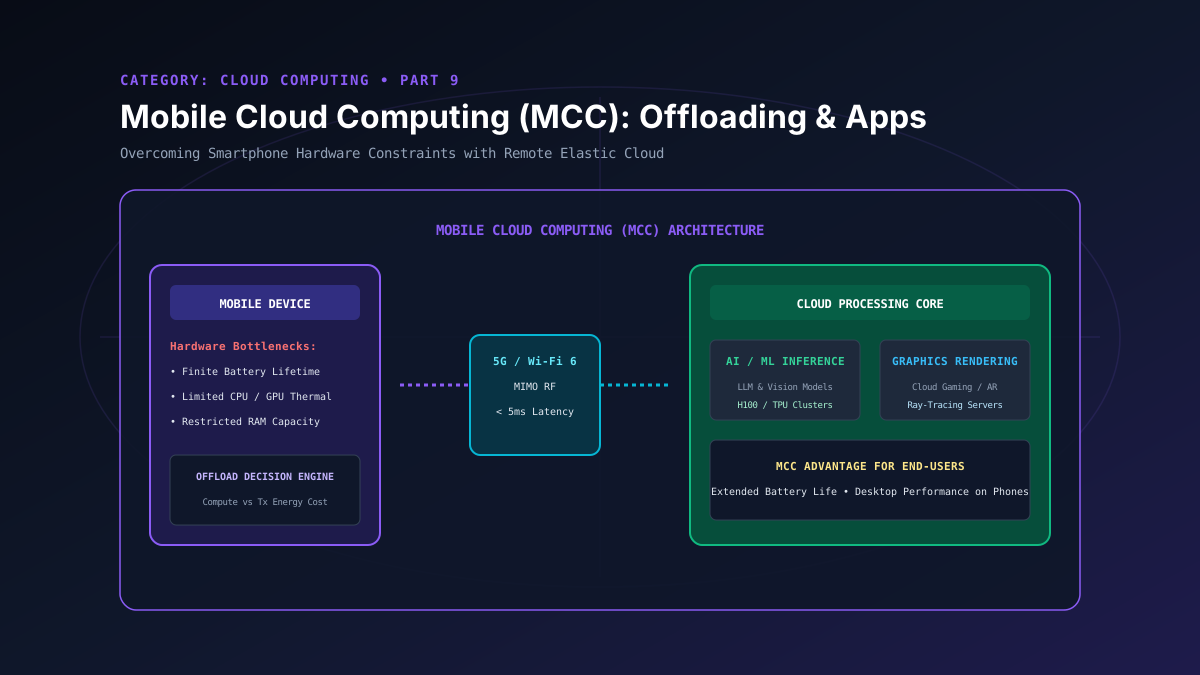
Discover Mobile Cloud Computing (MCC): explore computation offloading algorithms, cloudlets, mobile edge nodes, 5G latency, and battery conservation.
By Md. Harun-Or-Roshid
Part 8: Major Cloud Providers & Strategies to Mitigate Vendor Lock-In
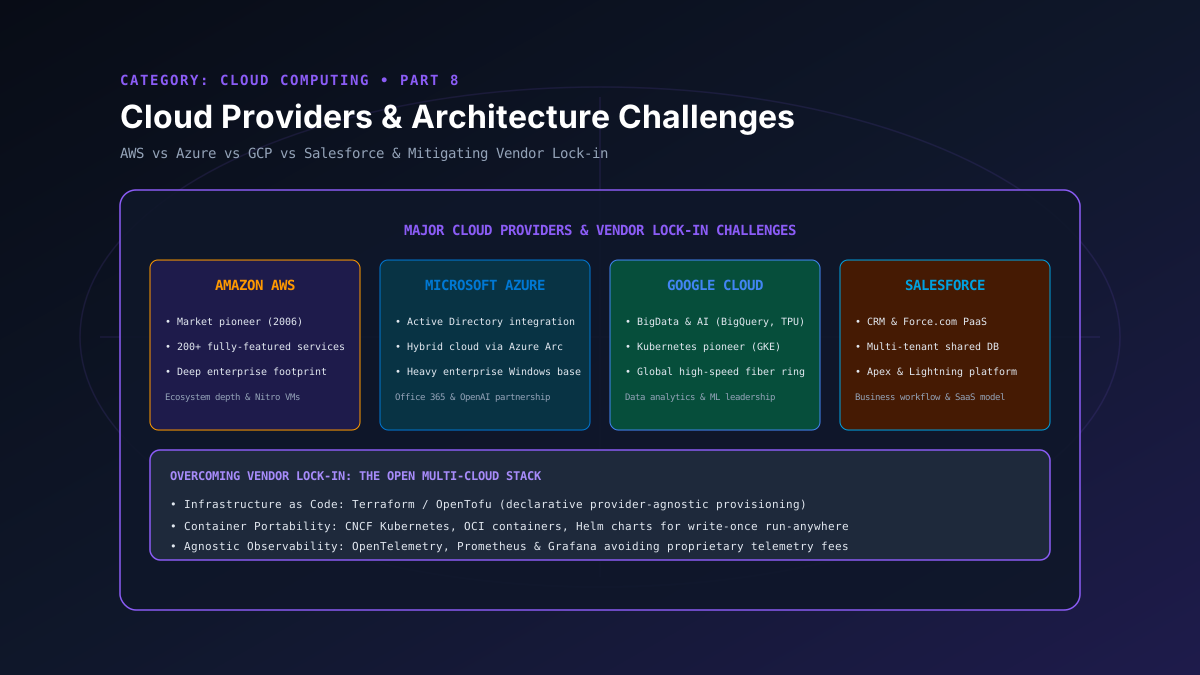
Compare hyperscale cloud providers—AWS, Azure, GCP, Salesforce—and master open strategies to prevent vendor lock-in using Terraform and Kubernetes.
By Md. Harun-Or-Roshid
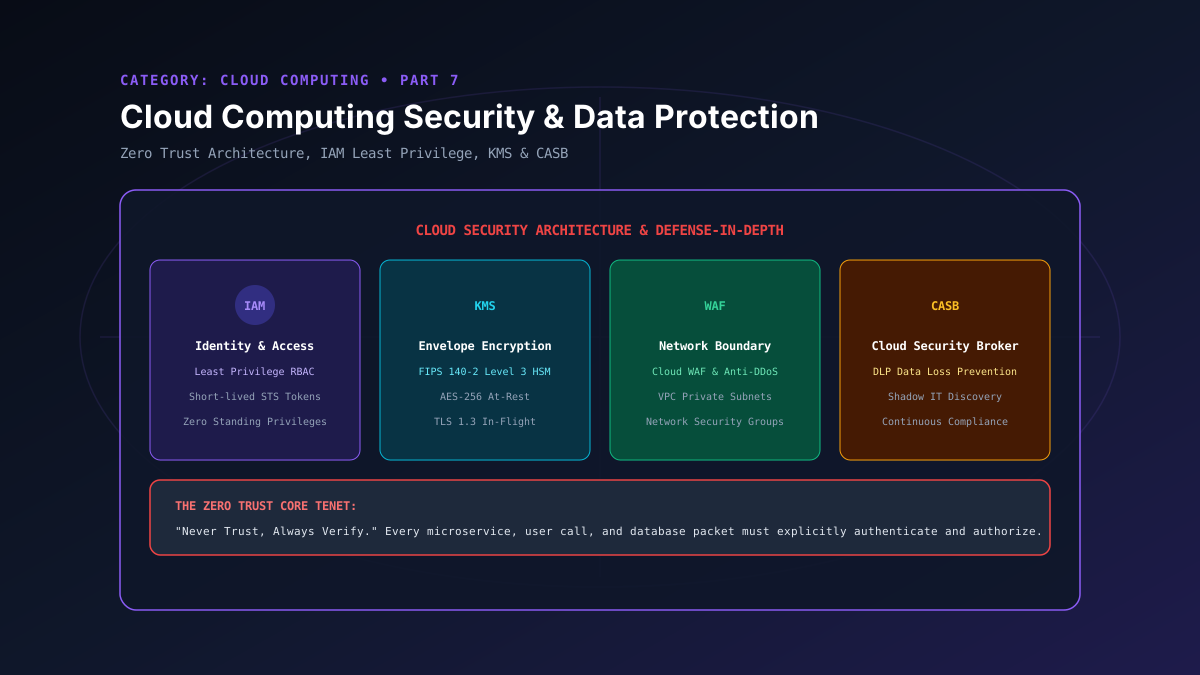
Part 7: Cloud Computing Security, Data Protection & CASB Architecture
A masterclass in cloud security: explore Zero Trust architecture, IAM least privilege, KMS envelope encryption, and Cloud Access Security Brokers (CASB).
By Md. Harun-Or-Roshid