Part 10: Cloud to Fog & Edge: Architecting the Distributed Continuum
Curriculum Capstone & Future Outlook
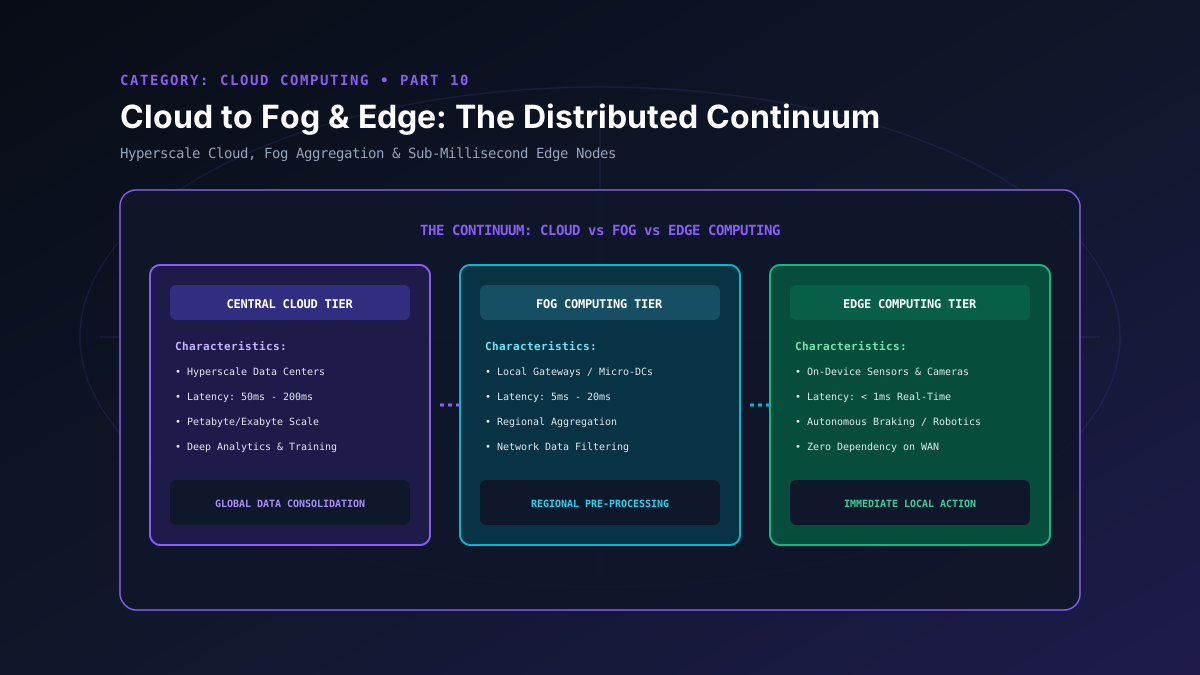
In our final installment of Fundamentals of Cloud Computing, we investigate the architectural evolution beyond centralized hyperscale data centers. While the centralized cloud remains supreme for massive data aggregation and AI training, latency-critical applications—autonomous driving, industrial robotics, robotic surgery, and IoT smart cities—cannot tolerate the 100ms round-trip latency across the Internet backbone. To solve this, computing is spreading into a distributed continuum: Cloud to Fog to Edge. In Part 10, we analyze the technical distinctions, architectural hierarchy, and real-world deployment patterns of this distributed paradigm.
1. The Need for Decentralized Computing
Billions of internet-connected IoT sensors generate hundreds of petabytes of raw telemetry daily. Streaming all raw data to a central cloud data center suffers from three catastrophic bottlenecks:
- Backhaul Bandwidth Saturation: Internet service provider (ISP) uplinks become clogged transmitting redundant or uninformative telemetry.
- Propagation Latency & Speed of Light: Even over pure fiber-optic cables, optical packets require ~5 milliseconds per 1,000 km. An autonomous vehicle travelling at 100 km/h covers nearly 3 meters in 100ms—unacceptable for emergency braking algorithms.
- Intermittent WAN Disconnection: Industrial facilities, offshore oil rigs, and hospital intensive care units cannot halt operations during trans-oceanic fiber cuts or cloud provider outages.
2. Cloud vs. Fog vs. Edge: The Architectural Hierarchy
| Dimension | Edge Computing | Fog Computing | Cloud Computing |
|---|---|---|---|
| Physical Location | Directly on the sensor, camera, or embedded actuator | Local gateway, micro-DC, or cellular base station | Central hyperscale regional data centers |
| Network Latency | < 1 millisecond (Real-Time) | 5ms – 20ms (Near Real-Time) | 50ms – 250ms (High Latency) |
| Compute & RAM Capacity | Extremely constrained (Microcontrollers, Edge TPU) | Moderate (Multi-core rack servers, local NAS) | Virtually infinite (Clusters of thousands of nodes) |
| Data Scope | Immediate sensor sample stream | Regional aggregation & filtering | Global historical archive & deep analytics |
| Core Objective | Instant autonomous reflex & safety-critical action | Bandwidth reduction & local orchestration | Long-term machine learning & global business logic |
3. Multi-Tiered Collaboration in Action
Modern architectures do not choose between cloud, fog, or edge—they deploy an integrated, hierarchical pipeline:
A manufacturing assembly camera runs an on-device quantized neural network. It detects a mechanical fracture on a conveyor belt in 0.4ms and immediately trips an emergency stop relay without accessing any network.
The factory-floor fog gateway collects telemetry from 2,000 factory sensors, filters out 98% of baseline idle telemetry, aggregates anomalous failure metrics, and schedules local maintenance work orders.
The condensed failure logs from 50 global factories are uploaded to the central AWS/GCP data lakehouse. Cloud GPU clusters retrain the predictive computer vision model and push updated weights back to all edge cameras via OTA updates.
4. Series Conclusion & Architectural Synthesis
Throughout this 10-part curriculum, we have progressed from the NIST definitions and economic models of cloud computing, through IaaS/PaaS/SaaS architectures, IDaaS and NaaS infrastructure, virtualization, zero-trust security, and finally to distributed edge networks. As distributed systems continue to evolve, the most successful software engineers will be those who design applications not as isolated code blocks, but as resilient, multi-tiered systems that intelligently distribute computation to wherever latency, cost, and reliability are best optimized.
Related reading
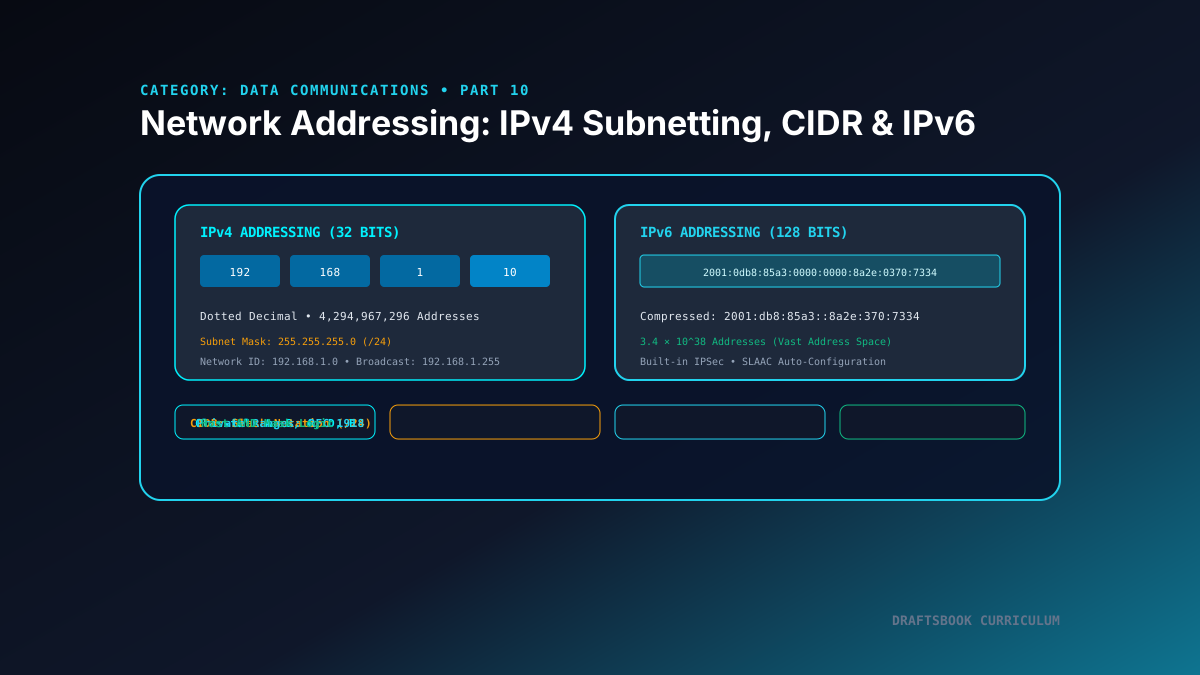
Part 10: Network Layer Addressing: IPv4 Subnetting, CIDR & IPv6 Architecture
Master logical network addressing: explore IPv4 classful ranges, CIDR slash notation, subnet mask bitwise ANDing, and modern 128-bit IPv6 architecture.
By Md. Harun-Or-Roshid
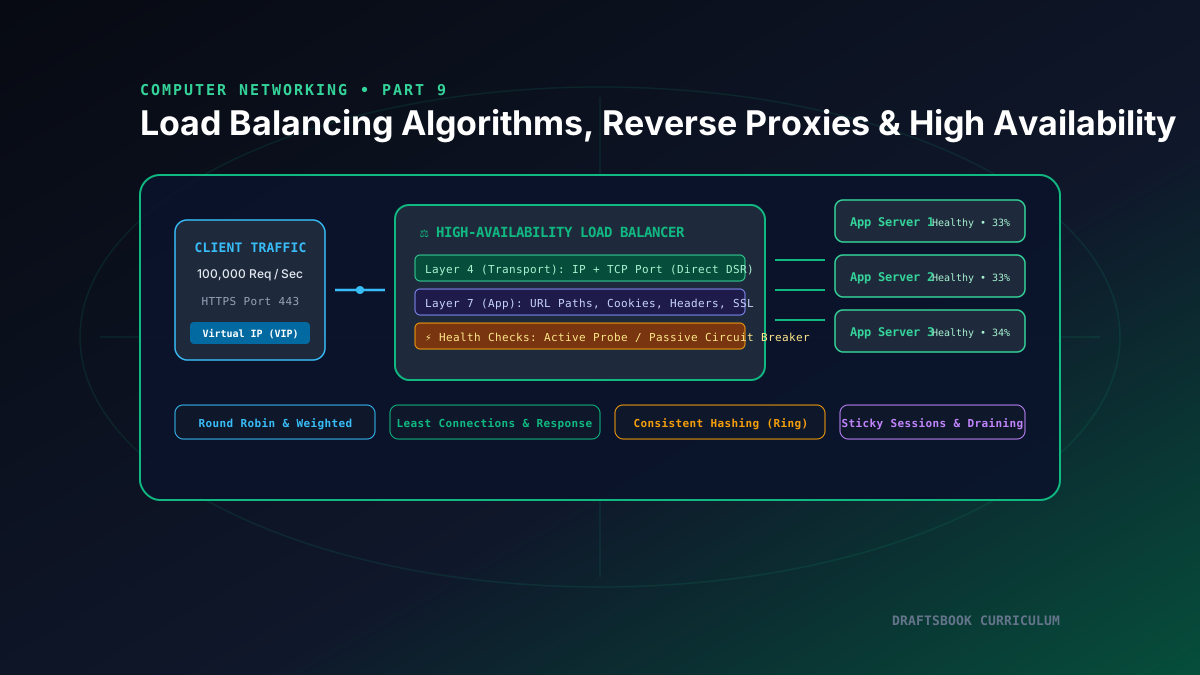
Part 9: Load Balancing: Layer 4 vs Layer 7, Algorithms, Reverse Proxies & High Availability
Master high-availability load balancing, comparing Layer 4 transport vs Layer 7 application routing, consistent hashing rings, and health checks.
By Md. Harun-Or-Roshid
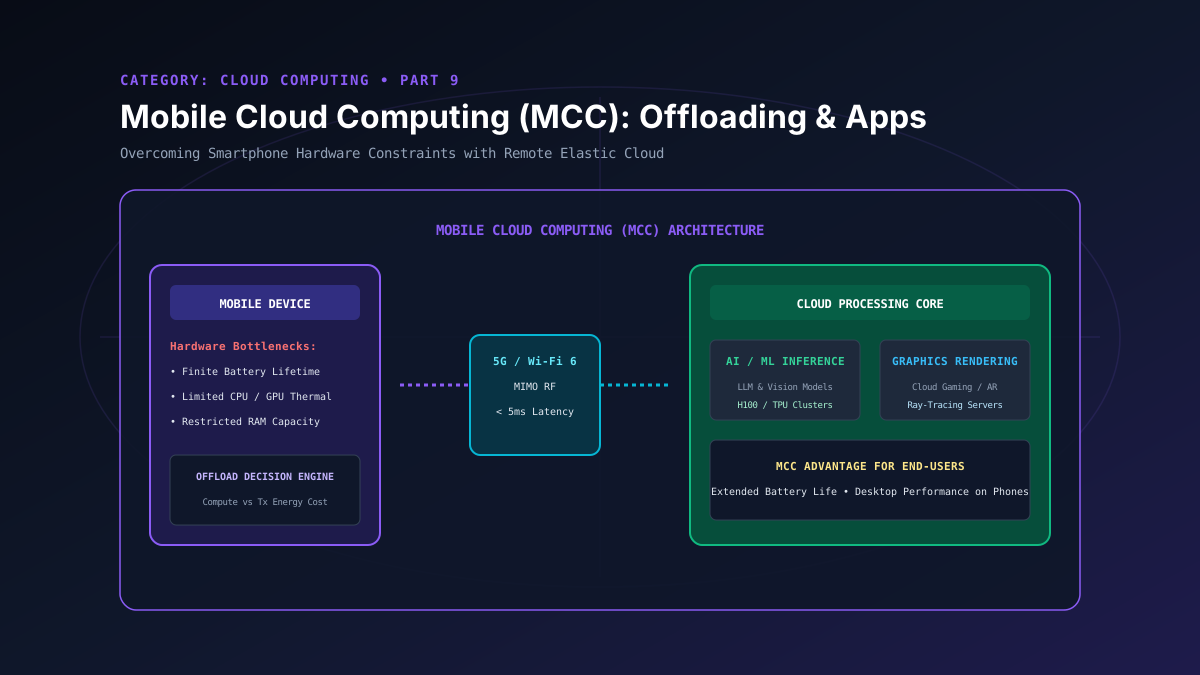
Part 9: Mobile Cloud Computing (MCC): Architecture, Offloading & Apps
Discover Mobile Cloud Computing (MCC): explore computation offloading algorithms, cloudlets, mobile edge nodes, 5G latency, and battery conservation.
By Md. Harun-Or-Roshid
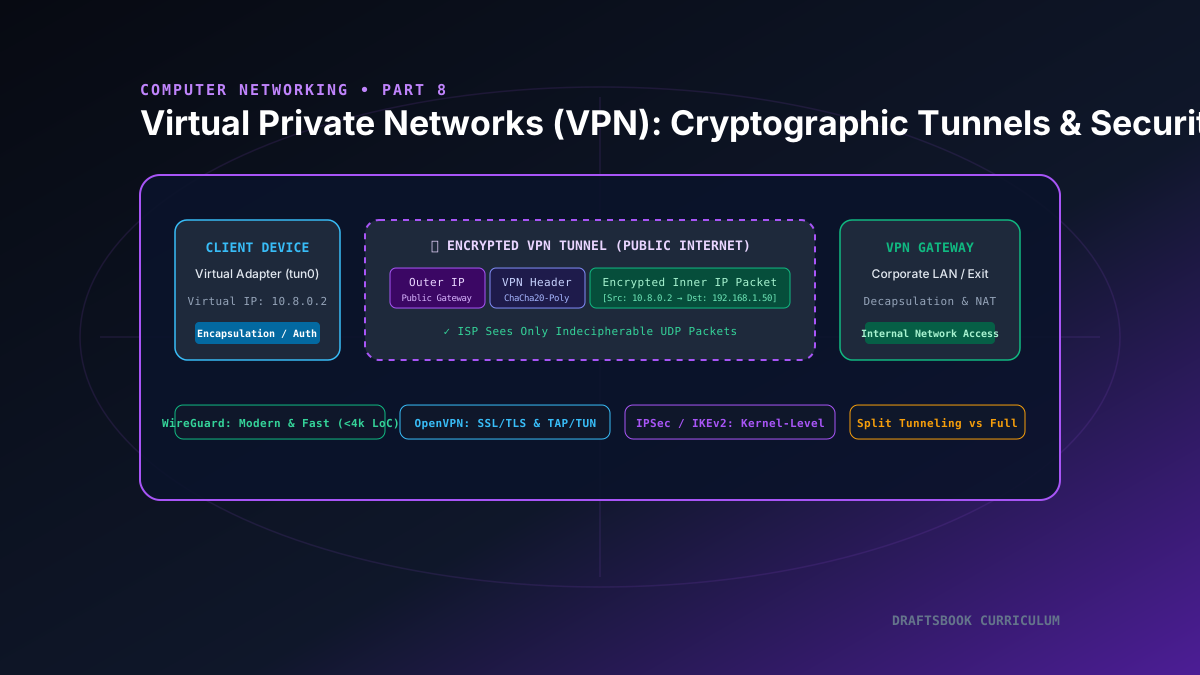
Part 8: VPN Explained: Cryptographic Tunnels, WireGuard, IPSec & Network Privacy
A deep dive into Virtual Private Networks, examining cryptographic packet encapsulation, virtual TUN/TAP adapters, WireGuard, and IPSec.
By Md. Harun-Or-Roshid