Part 8: VPN Explained: Cryptographic Tunnels, WireGuard, IPSec & Network Privacy
Lesson Overview & Learning Objectives
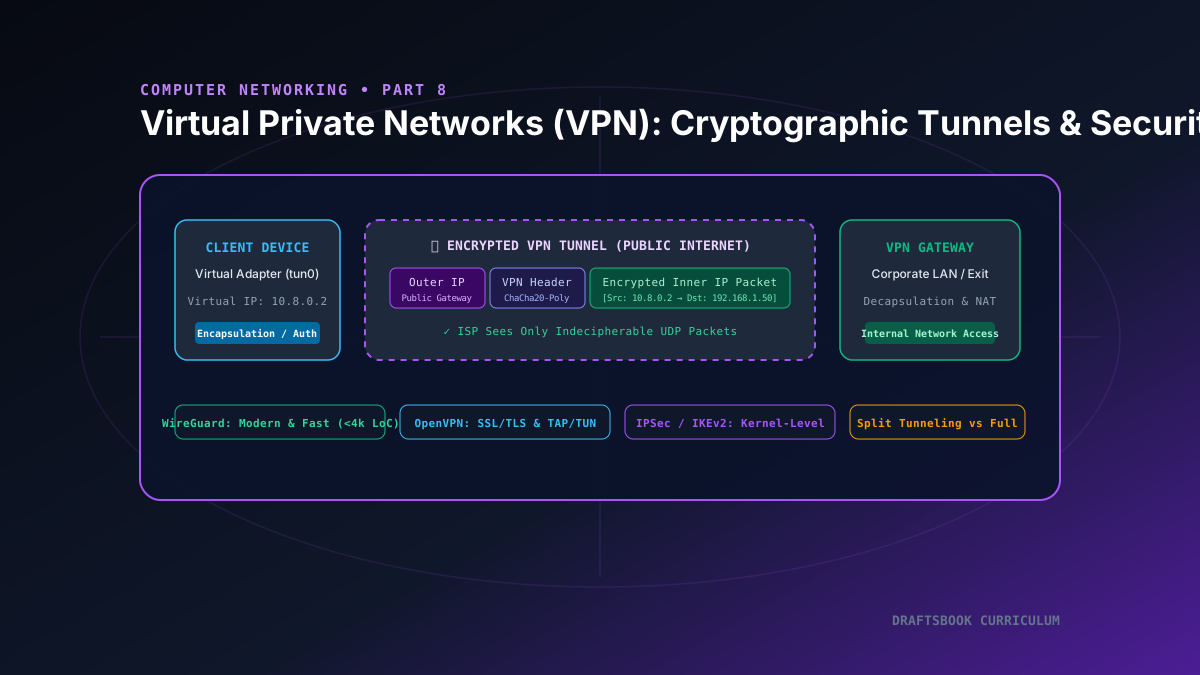
Whether securing remote corporate access to proprietary internal subnets or shielding personal data packets on hostile public Wi-Fi networks, Virtual Private Networks (VPNs) are an essential pillar of modern cybersecurity. At its core, a VPN constructs an encrypted, point-to-point cryptographic tunnel across an untrusted public network. In this installment, we dissect the mechanics of packet encapsulation, inspect virtual kernel TUN/TAP network interfaces, compare WireGuard against IPSec and OpenVPN, and evaluate Split Tunneling architectures.
1. How VPN Tunneling Works: The Packet Inside a Packet
The magic of a VPN lies in Encapsulation. Rather than routing standard IP packets directly to their destination, the operating system wraps entire original packets inside a brand new encrypted payload:
Packet Anatomy Inside the Cryptographic Tunnel:
172.56.21.9 (Your Public Home/Mobile IP) → Dst: 198.51.100.1 (VPN Gateway Server)
• Inner Src:
10.8.0.2 (Assigned Virtual IP)
• Inner Dst:
192.168.1.50 (Internal Corporate Database / Web Host)
• Data: HTTP, SSH, Database query
2. Virtual Network Adapters: TUN vs. TAP
TUN Devices (Network Layer 3)
Simulates a point-to-point network device and operates with Layer 3 IP packets. Because it does not process Layer 2 Ethernet headers or broadcast frames, TUN interfaces are lighter, faster, and used by almost all modern VPN software (WireGuard, OpenVPN routed mode).
TAP Devices (Data Link Layer 2)
Simulates a virtual Ethernet device and operates with raw Layer 2 frames (including MAC addresses). Used when you need to bridge networks, forward non-IP protocols (like IPX), or pass local broadcast traffic (like mDNS or LAN gaming discovery).
3. Protocol Comparison: WireGuard vs. OpenVPN vs. IPSec
| Protocol | Codebase Size | Cryptography | Performance & Battery | Best Use Case |
|---|---|---|---|---|
| WireGuard | < 4,000 lines (Auditable) | ChaCha20, Poly1305, Curve25519, BLAKE2s | Blazing fast; runs in Linux kernel; zero handshake overhead | Modern standard for cloud mesh (Tailscale), mobile, and servers |
| OpenVPN | ~100,000+ lines | OpenSSL / Custom Ciphers (AES-CBC/GCM, RSA) | Moderate (Runs in userland, context switches between kernel/user) | Bypassing firewalls (can disguise traffic over TCP port 443) |
| IPSec / IKEv2 | Large, complex RFCs | AES-GCM, SHA-256, Diffie-Hellman | High (Kernel level, hardware cryptographic offload) | Site-to-site enterprise datacenter interconnects & mobile roaming |
Related reading
Part 10: Cloud to Fog & Edge: Architecting the Distributed Continuum
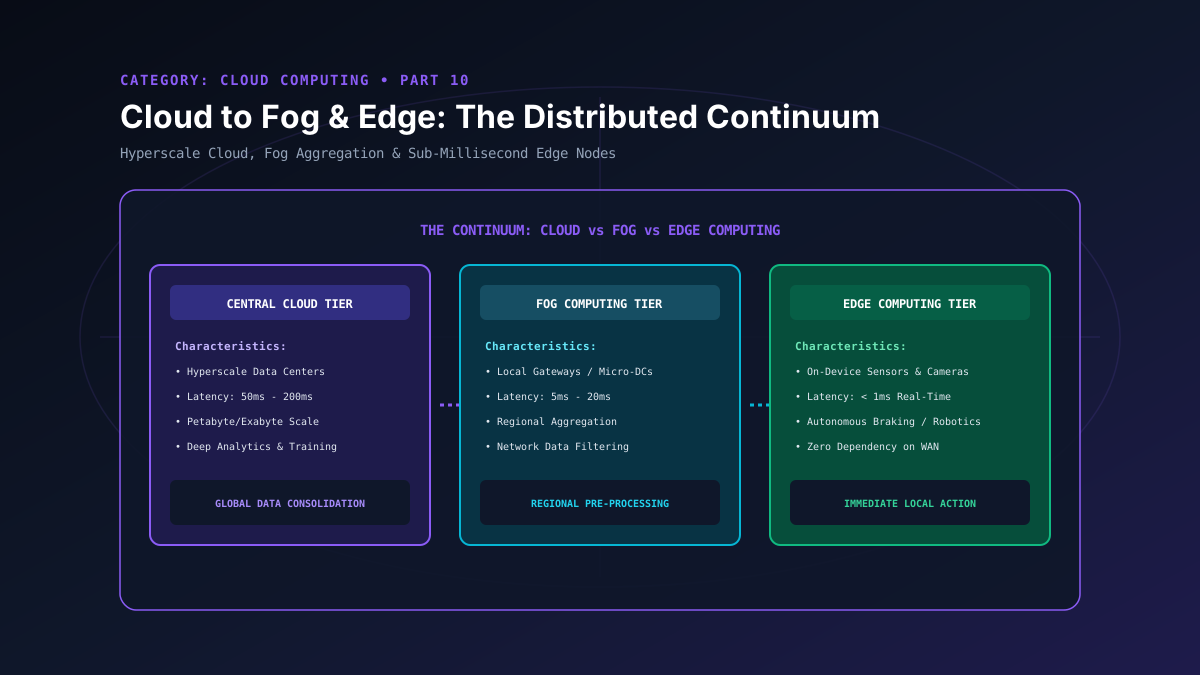
Explore the distributed computing continuum: compare centralized cloud, fog computing gateways, and real-time edge nodes for latency-critical IoT systems.
By Md. Harun-Or-Roshid

Part 9: Load Balancing: Layer 4 vs Layer 7, Algorithms, Reverse Proxies & High Availability
Master high-availability load balancing, comparing Layer 4 transport vs Layer 7 application routing, consistent hashing rings, and health checks.
By Md. Harun-Or-Roshid
Part 10: Network Layer Addressing: IPv4 Subnetting, CIDR & IPv6 Architecture
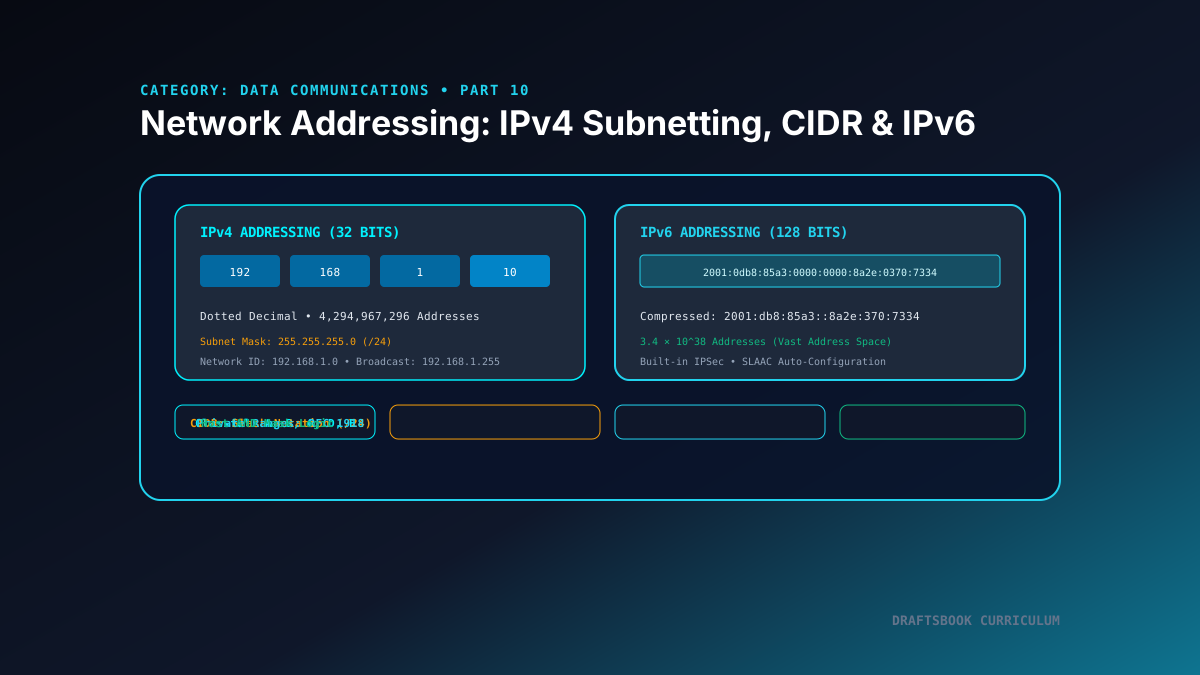
Master logical network addressing: explore IPv4 classful ranges, CIDR slash notation, subnet mask bitwise ANDing, and modern 128-bit IPv6 architecture.
By Md. Harun-Or-Roshid
Part 8: Major Cloud Providers & Strategies to Mitigate Vendor Lock-In
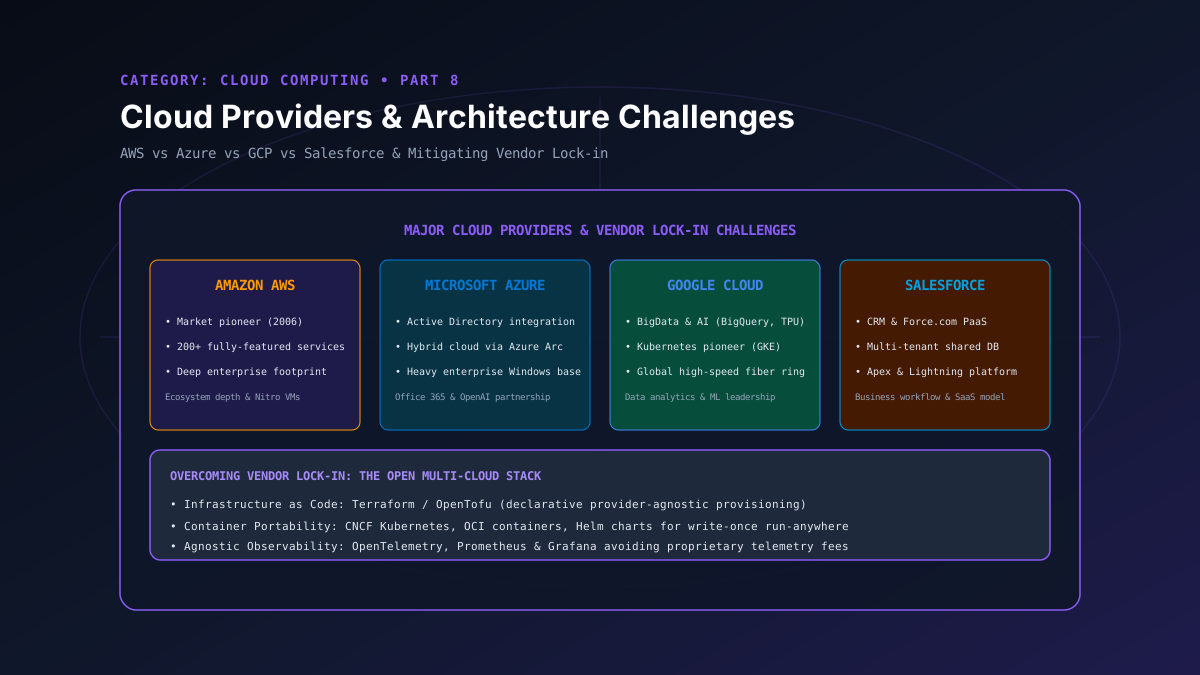
Compare hyperscale cloud providers—AWS, Azure, GCP, Salesforce—and master open strategies to prevent vendor lock-in using Terraform and Kubernetes.
By Md. Harun-Or-Roshid