Part 8: Major Cloud Providers & Strategies to Mitigate Vendor Lock-In
Lesson Focus & Objectives
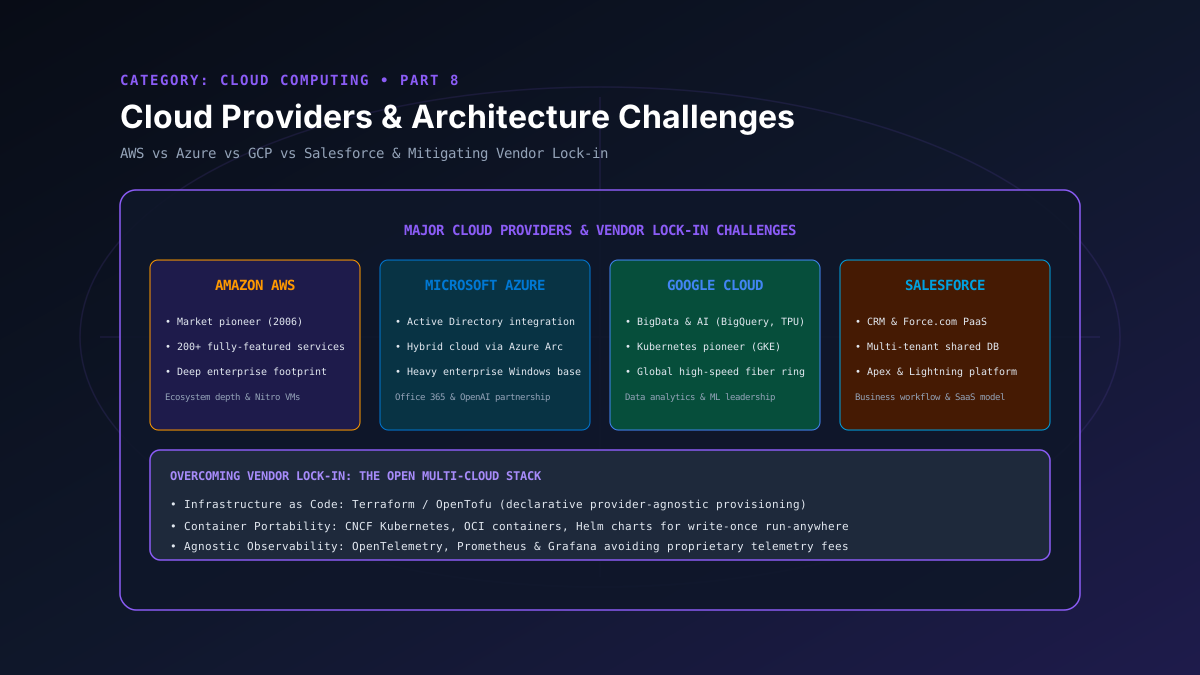
The enterprise cloud market is dominated by hyperscale providers: Amazon Web Services (AWS), Microsoft Azure, Google Cloud Platform (GCP), and enterprise SaaS pioneers like Salesforce. While hyperscalers provide unprecedented global breadth, proprietary service APIs create acute Vendor Lock-In risks that can trap enterprise budgets. In Part 8, we compare the architectural strengths of the major cloud providers and detail modern open standards—Terraform, Kubernetes, and OpenTelemetry—used to build portable multi-cloud systems.
1. Major Cloud Providers Compared
Amazon Web Services (AWS)
Pioneer & Market LeaderLaunched in 2006. Offers the broadest and deepest catalog of 200+ fully-featured services. Custom hardware innovations like the AWS Nitro System offload virtualization, storage, and networking tasks to dedicated PCIe ASIC cards, delivering 100% of host CPU silicon to tenant workloads.
Microsoft Azure
Enterprise Hybrid PowerhouseSeamless integration with Fortune 500 Active Directory (Entra ID), Windows Server licenses, and Office 365 environments. Azure Arc extends Azure control planes into on-premises VMware data centers and rival cloud clusters. Strategic OpenAI partnerships provide cutting-edge foundation models.
Google Cloud Platform (GCP)
Big Data & AI EngineeringBuilt on Google's planetary private fiber-optic backbone. Original creators of Kubernetes and Borg. Renowned for analytical data warehousing (BigQuery), Tensor Processing Units (TPUs), and industry-standard managed Kubernetes (GKE).
Salesforce & Force.com
Enterprise SaaS / Metadata PaaSPioneered enterprise SaaS and multi-tenant shared database architecture. The Force.com platform allows developers to write Apex code and design Lightning web components against a metadata-driven application engine without provisioning underlying servers.
2. Overcoming Vendor Lock-In: The Open Stack
Vendor lock-in occurs when switching providers entails prohibitive migration costs, architectural rewrites, or legal data export hurdles. Senior systems architects neutralize this risk by enforcing three architectural abstractions:
Declarative Infrastructure as Code (Terraform / OpenTofu)
Avoid provider-specific provisioning DSLs (AWS CloudFormation, Azure Bicep). Using HashiCorp HCL allows teams to maintain uniform CI/CD deployment pipelines, version control state files, and enforce security policies (OPA / Sentinel) regardless of the target cloud.
Containerization & Kubernetes (CNCF Standard)
Package applications as Open Container Initiative (OCI) images running on Kubernetes. Kubernetes provides a uniform computing abstraction—a pod deployed on Amazon EKS runs identically on Google GKE, Azure AKS, or an on-premises bare-metal cluster with zero code modifications.
Agnostic Observability (OpenTelemetry)
Do not embed proprietary monitoring agent libraries (AWS CloudWatch, Azure Application Insights) in application code. Instrument microservices using the vendor-neutral OpenTelemetry standard, allowing runtime switching of backend APM providers without code changes.
Related reading
Part 10: Cloud to Fog & Edge: Architecting the Distributed Continuum
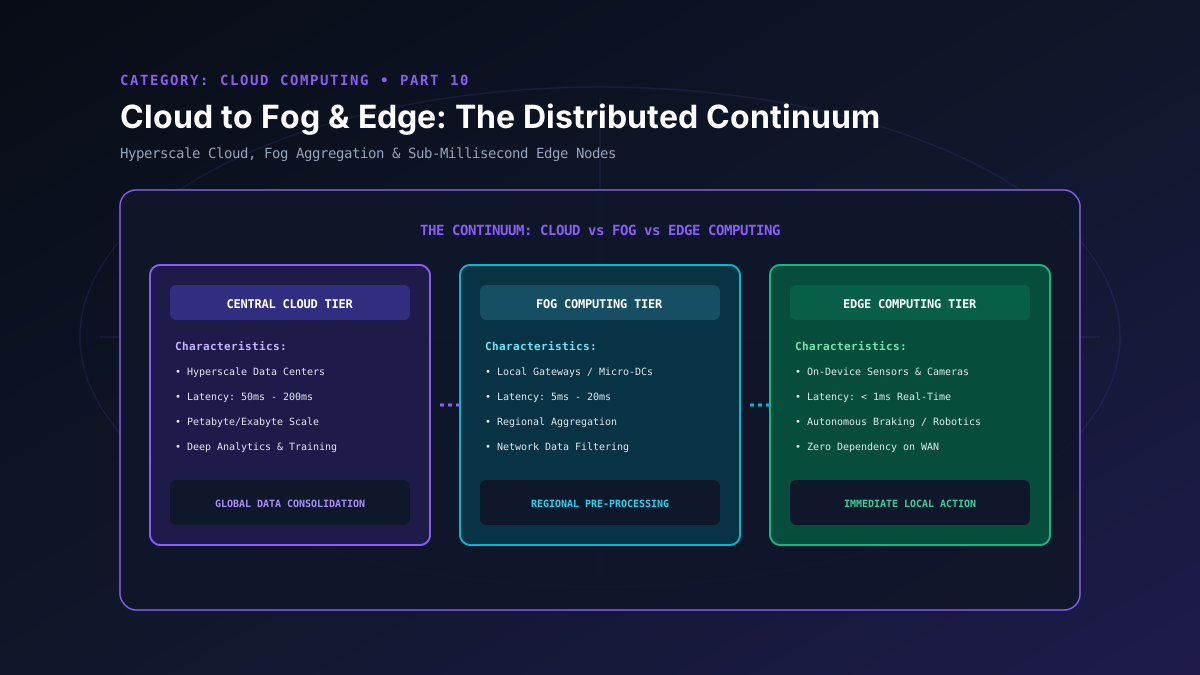
Explore the distributed computing continuum: compare centralized cloud, fog computing gateways, and real-time edge nodes for latency-critical IoT systems.
By Md. Harun-Or-Roshid
Part 10: Network Layer Addressing: IPv4 Subnetting, CIDR & IPv6 Architecture
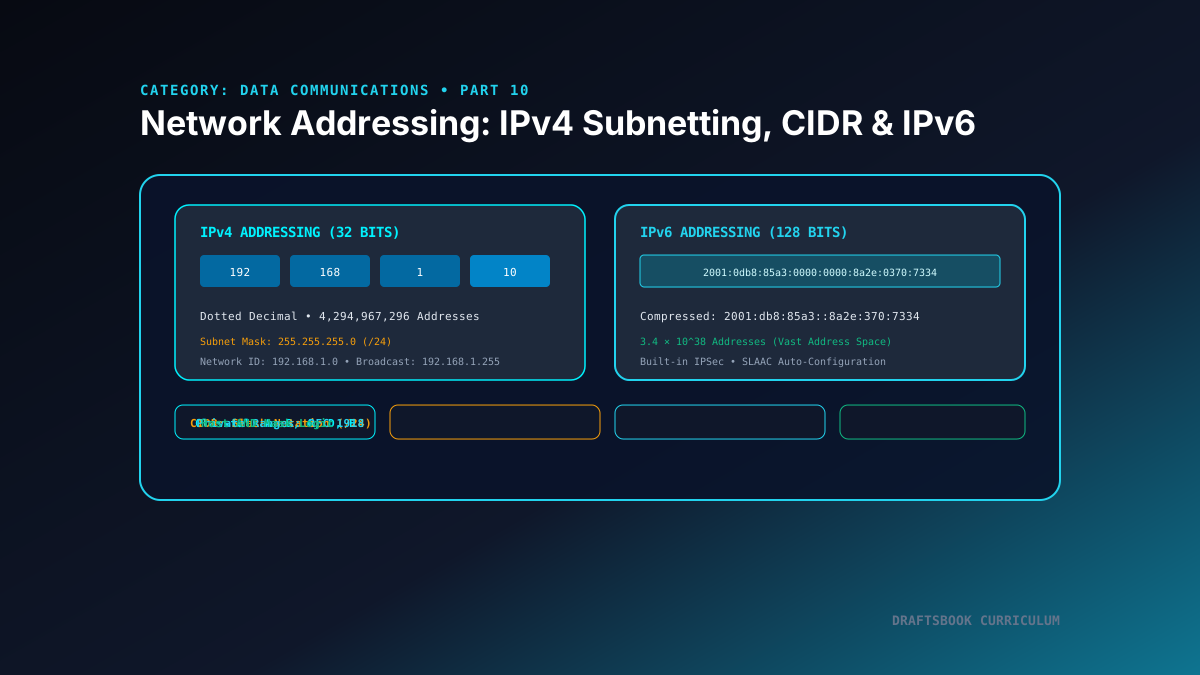
Master logical network addressing: explore IPv4 classful ranges, CIDR slash notation, subnet mask bitwise ANDing, and modern 128-bit IPv6 architecture.
By Md. Harun-Or-Roshid
Part 9: Load Balancing: Layer 4 vs Layer 7, Algorithms, Reverse Proxies & High Availability
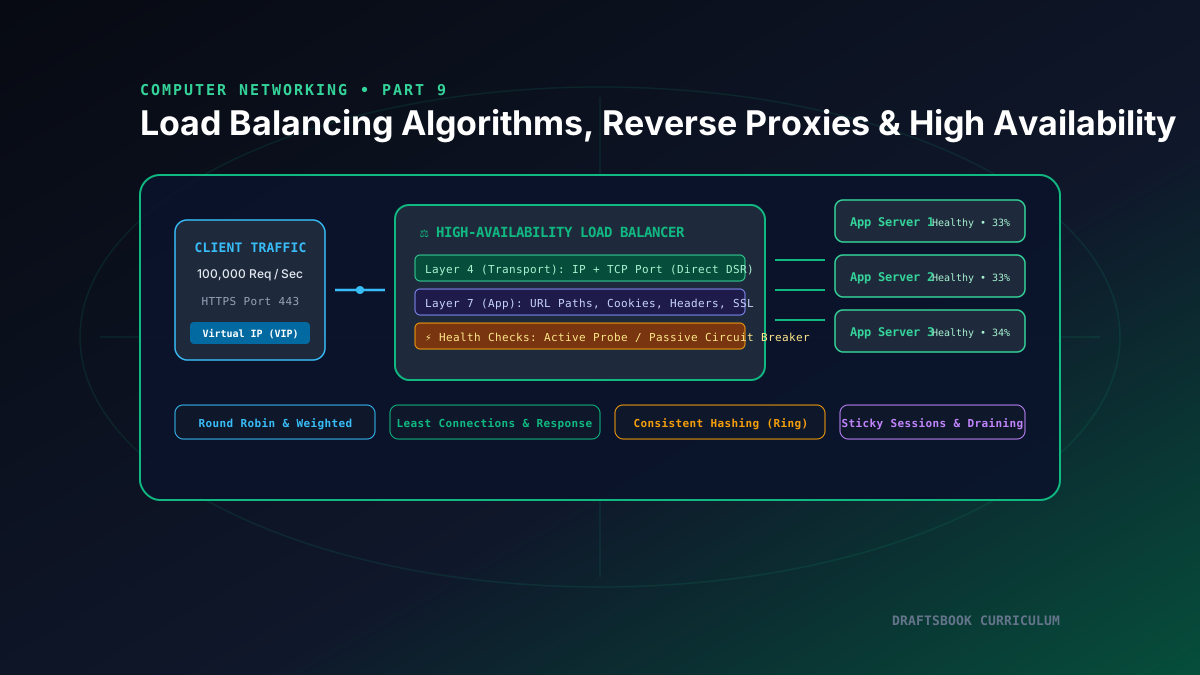
Master high-availability load balancing, comparing Layer 4 transport vs Layer 7 application routing, consistent hashing rings, and health checks.
By Md. Harun-Or-Roshid
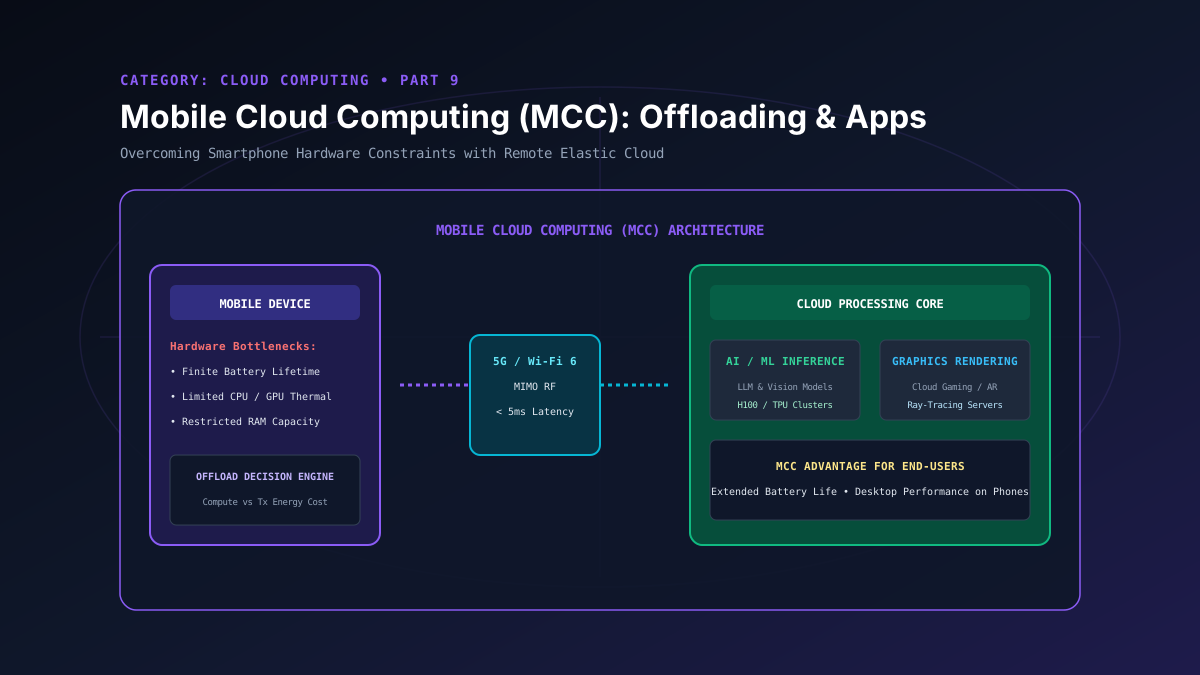
Part 9: Mobile Cloud Computing (MCC): Architecture, Offloading & Apps
Discover Mobile Cloud Computing (MCC): explore computation offloading algorithms, cloudlets, mobile edge nodes, 5G latency, and battery conservation.
By Md. Harun-Or-Roshid