Part 3: Cloud Computing Architecture: Front-End & Back-End Systems
Lesson Focus & Objectives
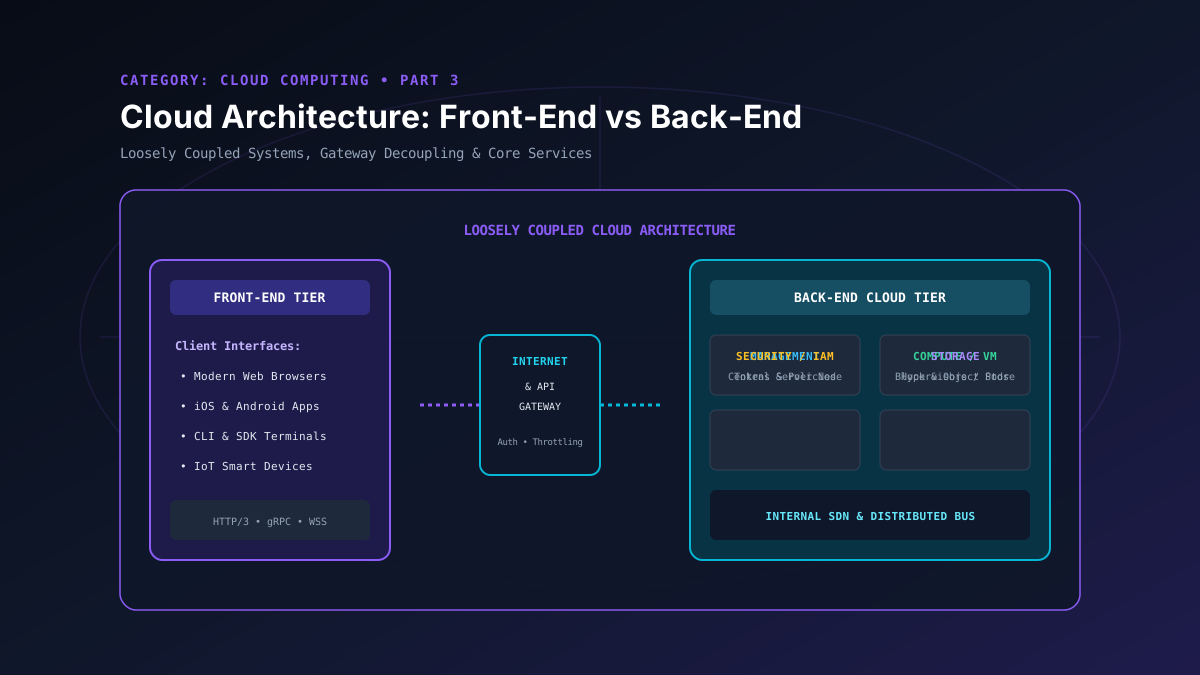
Cloud computing systems are fundamentally loosely coupled, highly distributed architectures. Unlike monolithic enterprise mainframes where user interfaces and database storage run on the same chassis, cloud environments cleanly partition the user-facing Front-End from the scalable Back-End through decoupled network gateways. In Part 3, we analyze the architectural anatomy of modern cloud platforms, dissecting ingress gateways, central management orchestration nodes, compute runtime engines, and persistent storage fabrics.
1. The Loosely Coupled Cloud Paradigm
At the architectural level, a cloud computing environment is divided into two primary sub-systems connected via an asynchronous or HTTP-based transport network (typically the public Internet or a software-defined WAN):
The Front-End System
The client-facing boundary through which users interact with cloud services. Includes client software, user interfaces, browser Single Page Applications (Next.js/React), mobile native apps (iOS/Android), and terminal CLIs interacting over standard HTTP/3, WebSocket, or gRPC endpoints.
- • Web Browsers (Chrome, Firefox, Safari)
- • Mobile Operating Systems & Hybrid Apps
- • Enterprise CLI Tools & SDKs (AWS CLI, kubectl)
- • Thin Clients & Virtual Desktop (VDI) Receivers
The Back-End System
The core cloud data center infrastructure providing computing power, storage capacity, operating virtual machines, services, security mechanisms, and traffic orchestration.
- • Central Management Server & Provisioning Engine
- • Compute Hypervisors & Container Clusters (Kubelet, KVM)
- • Distributed Storage Fabrics (Ceph, EBS, S3 Object Store)
- • Traffic Load Balancers & Ingress Gateways
2. Ingress & The API Gateway Decoupling Layer
The bridge connecting the Front-End to the Back-End is the Cloud API Gateway (e.g., Kong, Envoy Proxy, AWS API Gateway). The gateway serves as the single point of entry, terminating external client TLS connections and handling cross-cutting operational concerns:
- Token Verification & Authentication: Validates JWT bearer tokens and OIDC session cookies before admitting requests into internal virtual networks.
- Rate Limiting & DDoS Throttling: Implements token-bucket algorithms to protect backend microservices from traffic surges.
- Protocol Translation: Translates incoming HTTP/1.1 or HTTP/2 JSON REST calls into high-performance internal binary gRPC calls traversing service mesh sidecars.
- Dynamic Request Routing: Resolves path patterns (
/api/v1/auth,/api/v1/courses) to internal Kubernetes ClusterIP service endpoints.
3. Back-End Architectural Subsystems
1. Central Management Server
The brain of the cloud operating system (e.g., OpenStack Nova/Neutron, Kubernetes control plane). Monitors cluster health, schedules worker pods across physical compute racks, balances traffic loads, and executes provisioning API calls.
2. Compute & Virtualization Runtime
The physical servers running Type-1 hypervisors (KVM, Xen) or lightweight container runtimes (containerd, runc). Allocates isolated CPU cores, virtual RAM pages, and network interfaces to tenant workloads.
3. Storage & Persistence Tier
Stores virtual machine disk images, application binaries, and user data across clustered redundant storage nodes. Employs erasure coding and multi-zone replication to ensure eleven-nines (99.999999999%) data durability.
4. Internal Software-Defined Network (SDN)
Creates isolated virtual private clouds (VPCs) using VXLAN overlay encapsulation. Prevents packet snooping between competing tenants sharing identical physical top-of-rack (ToR) network switches.
Related reading
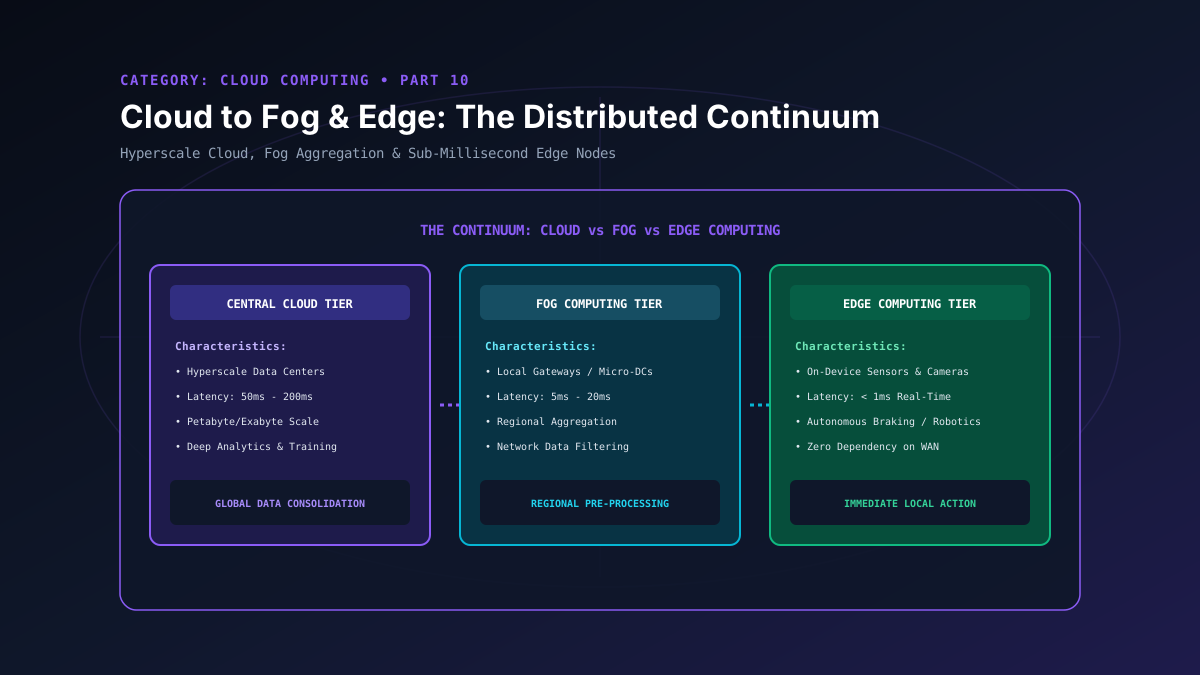
Part 10: Cloud to Fog & Edge: Architecting the Distributed Continuum
Explore the distributed computing continuum: compare centralized cloud, fog computing gateways, and real-time edge nodes for latency-critical IoT systems.
By Md. Harun-Or-Roshid
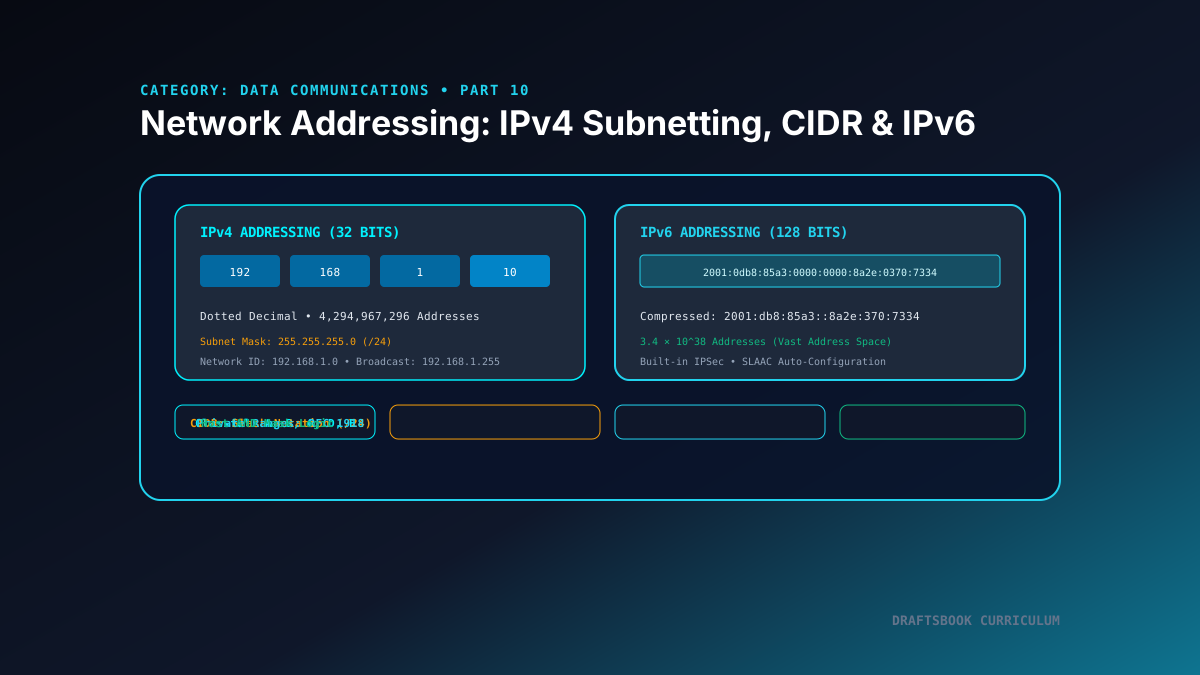
Part 10: Network Layer Addressing: IPv4 Subnetting, CIDR & IPv6 Architecture
Master logical network addressing: explore IPv4 classful ranges, CIDR slash notation, subnet mask bitwise ANDing, and modern 128-bit IPv6 architecture.
By Md. Harun-Or-Roshid
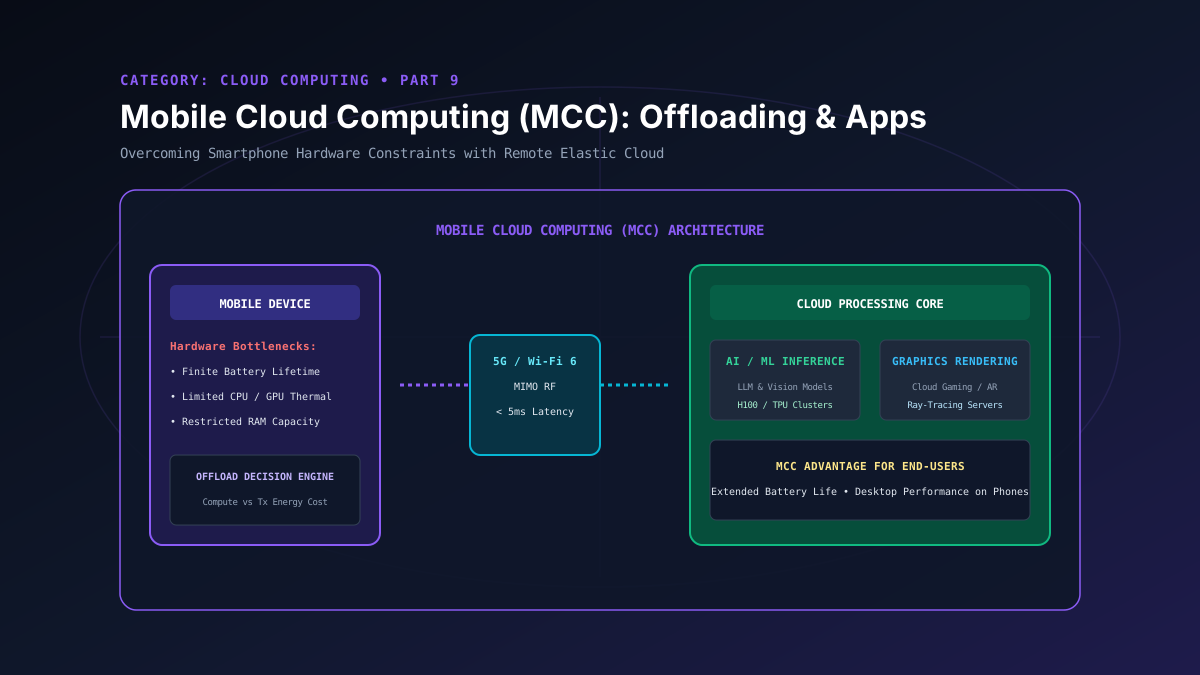
Part 9: Mobile Cloud Computing (MCC): Architecture, Offloading & Apps
Discover Mobile Cloud Computing (MCC): explore computation offloading algorithms, cloudlets, mobile edge nodes, 5G latency, and battery conservation.
By Md. Harun-Or-Roshid

Part 9: Load Balancing: Layer 4 vs Layer 7, Algorithms, Reverse Proxies & High Availability
Master high-availability load balancing, comparing Layer 4 transport vs Layer 7 application routing, consistent hashing rings, and health checks.
By Md. Harun-Or-Roshid