Part 4: Cloud Service Models: IaaS, PaaS & SaaS Architecture Explained
Lesson Focus & Objectives
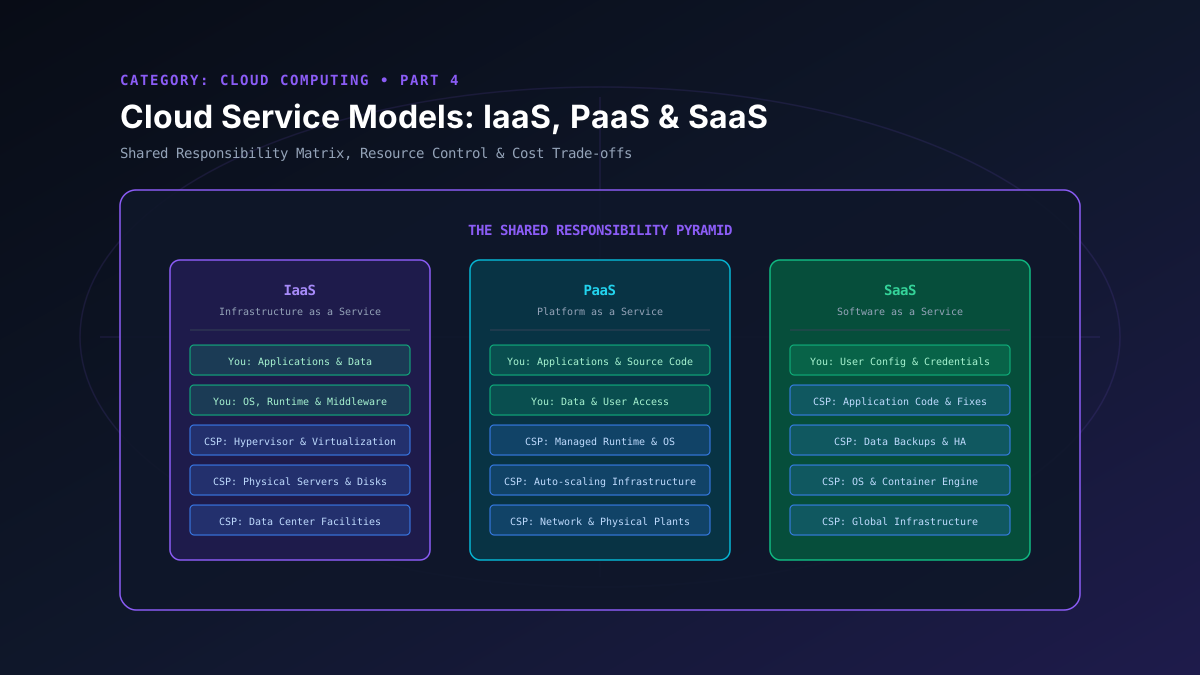
The cloud services industry organizes offerings into three hierarchical abstraction tiers: Infrastructure as a Service (IaaS), Platform as a Service (PaaS), and Software as a Service (SaaS). Understanding where the boundary of engineering responsibility lies between your organization and the cloud provider is essential for compliance, operational efficiency, and cost optimization. In Part 4, we examine the technical mechanics of each service model and dissect the formal Shared Responsibility Security Model.
1. The Cloud Service Pyramid Explained
1. Infrastructure as a Service (IaaS)
Lowest Abstraction / Maximum ControlProvides the consumer with raw compute resources (virtual or bare-metal CPU, RAM), raw storage capacity, and virtual networking components (subnets, routers, firewalls). The consumer has full administrative root access to install, configure, and operate arbitrary operating systems (Linux, Windows Server), database engines, and runtime dependencies.
2. Platform as a Service (PaaS)
Managed Runtime / Developer VelocityProvides consumers with a fully managed application development and runtime environment. The cloud provider automatically provisions, scales, and patches underlying operating systems, container engines, hardware virtualization, and middleware. The consumer only deploys application source code, configures environment variables, and manages database schema definitions.
3. Software as a Service (SaaS)
Turnkey Application / End-User ConsumptionProvides complete, fully managed applications delivered over the web browser or mobile client on a subscription basis. The provider manages 100% of the underlying infrastructure, code deployments, automated database backups, security patches, and hardware scaling. Consumers only manage user accounts, roles, and tenant-specific configuration settings.
2. The Shared Responsibility Matrix
| Infrastructure Layer | On-Premises | IaaS | PaaS | SaaS |
|---|---|---|---|---|
| Data & User Access | Customer | Customer | Customer | Customer |
| Application Code & Binaries | Customer | Customer | Customer | Cloud Provider |
| Runtime & Middleware (PHP, Node, Java) | Customer | Customer | Cloud Provider | Cloud Provider |
| Operating System & Security Patching | Customer | Customer | Cloud Provider | Cloud Provider |
| Hypervisor & Virtualization Layer | Customer | Cloud Provider | Cloud Provider | Cloud Provider |
| Physical Servers, Disks & Facilities | Customer | Cloud Provider | Cloud Provider | Cloud Provider |
Related reading
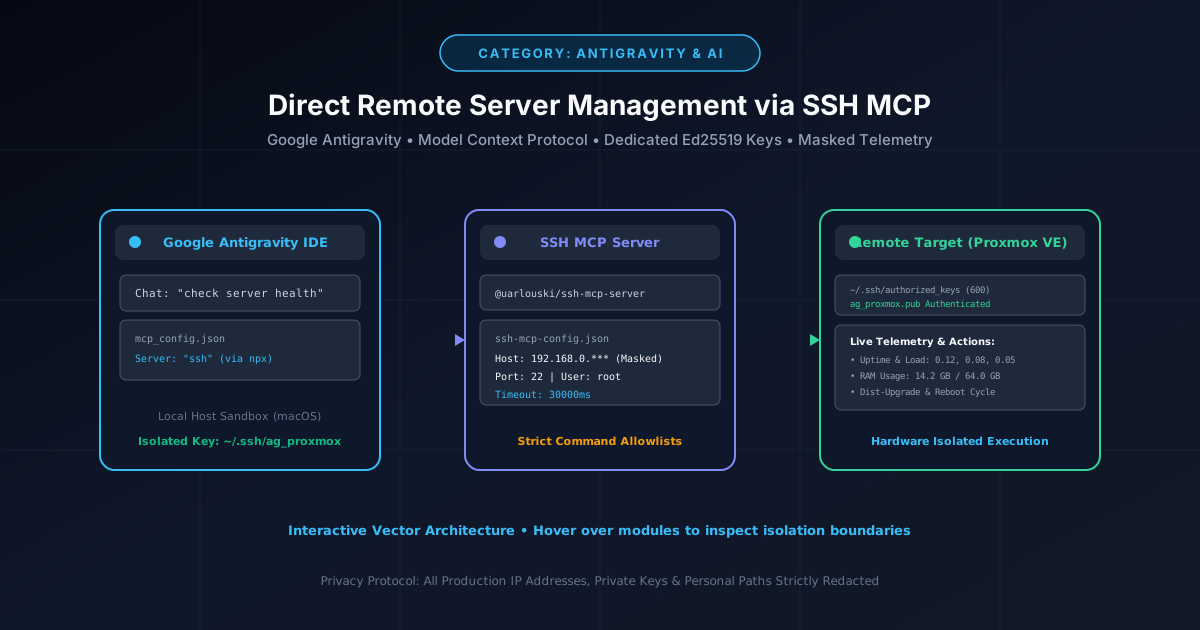
How to Give Google Antigravity Direct SSH Access to Remote Servers (Proxmox & Linux)
Connect Google Antigravity directly to Proxmox and Linux servers using the Model Context Protocol (MCP), dedicated Ed25519 keys, and automated updates.
By Md. Harun-Or-Roshid
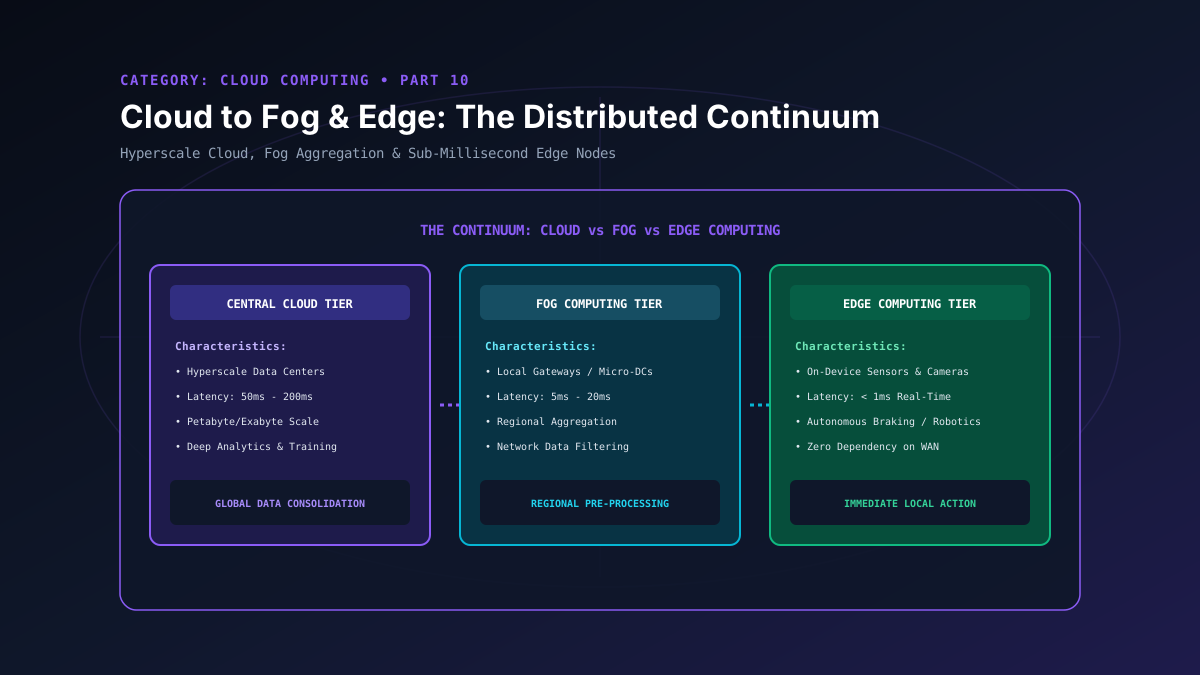
Part 10: Cloud to Fog & Edge: Architecting the Distributed Continuum
Explore the distributed computing continuum: compare centralized cloud, fog computing gateways, and real-time edge nodes for latency-critical IoT systems.
By Md. Harun-Or-Roshid

Part 9: Load Balancing: Layer 4 vs Layer 7, Algorithms, Reverse Proxies & High Availability
Master high-availability load balancing, comparing Layer 4 transport vs Layer 7 application routing, consistent hashing rings, and health checks.
By Md. Harun-Or-Roshid
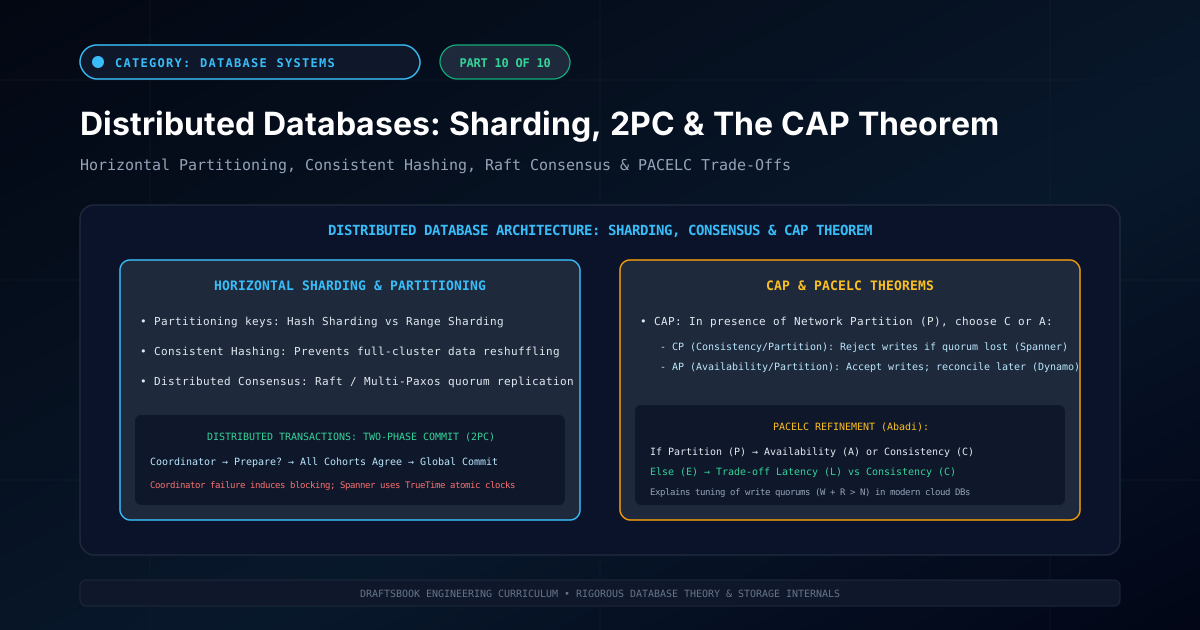
Part 10: Distributed Databases: Partitioning, Sharding, 2PC & CAP Theorem
Master distributed database architecture: horizontal sharding, consistent hashing, two-phase commit (2PC), CAP theorem trade-offs, and NewSQL engines.
By Md. Harun-Or-Roshid