Part 1: MIS Fundamentals, Organizational Theory & Strategic Alignment
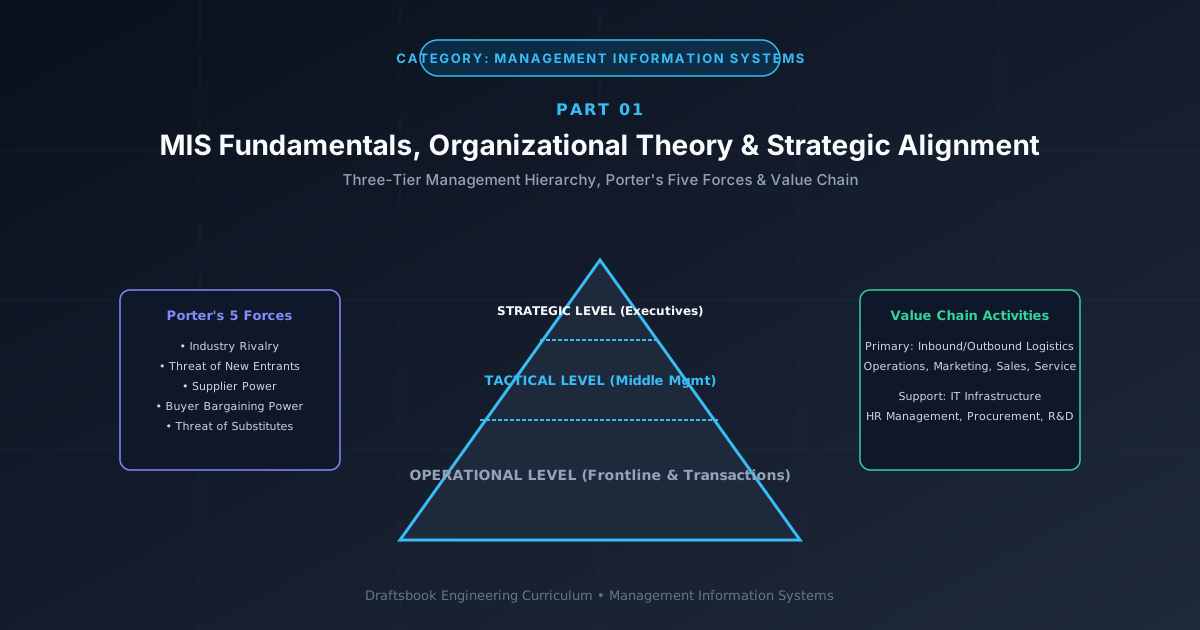
Series Overview & Learning Objectives
Welcome to Enterprise Management Information Systems (MIS) & Modern Architecture, an exhaustive 10-part professional engineering and technology management curriculum. Modern organizations no longer treat digital systems as auxiliary back-office utilities; rather, information systems serve as the core competitive engine that coordinates global supply chains, automates financial ledgers, and powers executive decision-making. In this inaugural installment, we explore the conceptual foundations of MIS: analyzing how information flows through organizational hierarchies, decomposing Michael Porter's Five Forces & Value Chain Models, and establishing strategic alignment between enterprise business objectives and modern IT architecture.
1. Deconstructing the Information Hierarchy: Data, Information, Knowledge & Wisdom
At the foundational level, information systems transform raw physical phenomena into actionable organizational intelligence via the DIKW Pyramid:
1. Data (Unprocessed Facts)
Discrete, unorganized raw facts without context. For example: 104.5, SKU_8819, or an isolated timestamp 14:22:01 UTC. In modern systems, data is captured continuously by IoT telemetry, Point of Sale (POS) terminals, and web clickstreams.
2. Information (Contextualized Data)
Data that has been structured, filtered, and contextualized to answer "Who, What, Where, and When". For example: "Server cluster US-East-1 experienced a 104.5°C thermal spike at 14:22:01 UTC".
3. Knowledge (Applied Understanding)
The synthesis of multiple information streams, cognitive frameworks, and operational experience answering "How". For example: recognizing that when server thermal spikes correlate with 95% CPU load, secondary cooling towers must be engaged to prevent component throttling.
4. Wisdom (Strategic Insight)
The ethical, long-term evaluative capacity answering "Why". Evaluating whether to invest \$50 million in transitioning existing regional data centers to liquid-cooled immersion facilities to support long-term enterprise AI workloads sustainably.
2. The Three-Tier Organizational Management Hierarchy
Enterprises partition their managerial responsibilities into three distinct organizational layers, each possessing unique information requirements, decision horizons, and dedicated IT systems:
| Organizational Level | Primary Decision Makers | Decision Horizon | Dedicated Information System |
|---|---|---|---|
| Strategic Level | C-Suite Executives (CEO, CTO, CIO, CFO) | 3 to 5+ Years (Long-term) | Executive Information Systems (EIS / ESS): High-level aggregated KPI scorecards, macro-economic forecasting, and merger simulation tools. |
| Tactical Level | Department Heads & Operations Managers | 1 Month to 1 Year (Mid-term) | Management Information Systems (MIS / DSS): Variance reports, quarterly budget allocations, capacity planning, and what-if sensitivity analyses. |
| Operational Level | Frontline Supervisors & Operations Staff | Day-to-day (Real-time) | Transaction Processing Systems (TPS / ERP): High-throughput order checkout, inventory barcode scanning, payroll check printing, and customer support tickets. |
3. Strategic Positioning: Porter's Competitive Forces & Value Chain
Information technology is not merely an operational cost center; it is an offensive weapon for securing market dominance. Harvard Business School economist Michael Porter formulated two foundational frameworks for analyzing strategic advantage:
A. Porter's Five Competitive Forces
An industry's profit potential is determined by five underlying structural forces. MIS alters these forces through technology:
- Threat of New Entrants: High initial investments in proprietary platforms, complex cloud ERPs, and automated logistics create massive digital barriers to entry.
- Bargaining Power of Buyers: Customer Relationship Management (CRM) and loyalty personalization programs increase customer switching costs, locking buyers into enterprise ecosystems.
- Bargaining Power of Suppliers: Business-to-Business (B2B) electronic procurement hubs and automated supplier auctions allow enterprises to aggregate demand and eliminate supplier monopolization.
- Threat of Substitute Products: Continuous software innovation and cloud feature deployments enable products to evolve faster than traditional analog substitutes.
- Rivalry Among Existing Competitors: Algorithmic dynamic pricing, real-time demand matching, and digital customer self-service provide acute differentiation.
B. The Value Chain Model
Porter divides enterprise operations into Primary Activities (Inbound Logistics, Operations, Outbound Logistics, Marketing & Sales, Customer Service) and Support Activities (Firm Infrastructure, HR Management, Technology Development, Procurement).
4. Strategic IT Alignment & The Henderson-Venkatraman Model
The primary reason enterprise IT transformations fail is strategic misalignment—where software engineering projects operate in technical isolation without directly advancing business goals. The Henderson-Venkatraman Strategic Alignment Model (SAM) identifies four quadrant dimensions that must remain synchronized:
- Business Strategy: Distinctive market competencies, strategic scope, and governance policies.
- IT Strategy: Technology scope, systemic competencies, and cloud/platform governance.
- Organizational Infrastructure: Administrative structural design, talent management, and operational workflows.
- IT Infrastructure & Processes: Architecture, microservices, networks, and CI/CD development methodologies.
Next in Curriculum
In Part 2: Enterprise IT Infrastructure: Cloud Platforms, Networks & Edge, we analyze the physical and virtual substrate of corporate computing: SaaS, PaaS, IaaS tiers, hybrid edge micro-datacenters, and FinOps cost governance.
Related reading
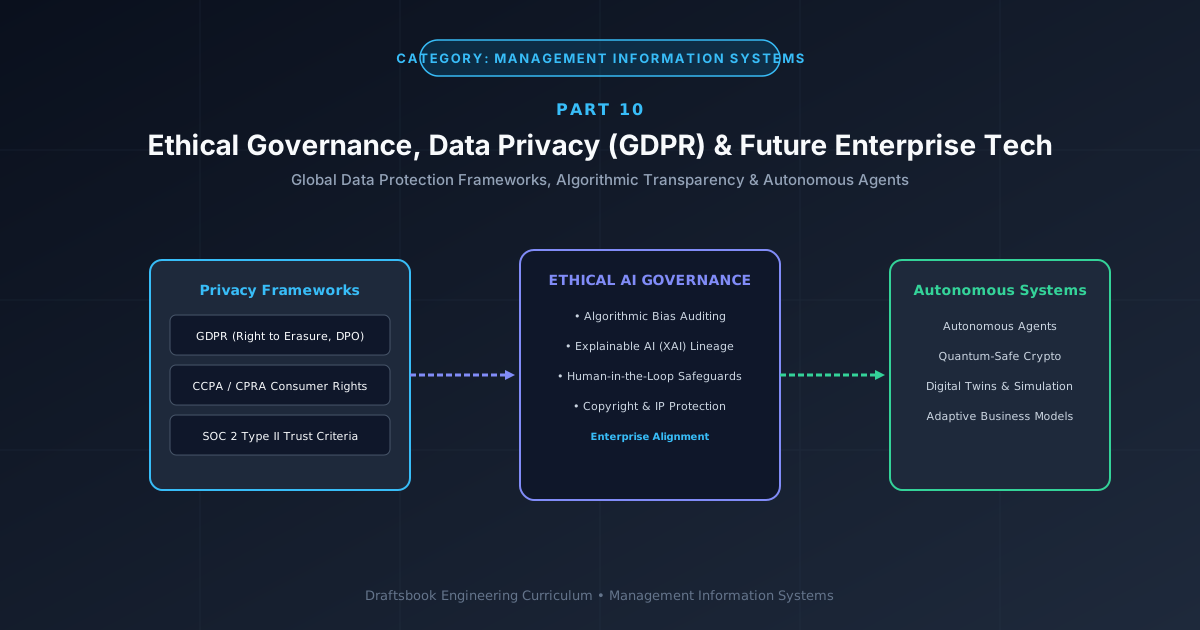
Part 10: Ethical Governance, Data Privacy (GDPR) & Future Enterprise Tech
Examine ethical information governance: GDPR/CCPA data privacy, algorithmic bias mitigation, explainable AI, autonomous digital agents, and quantum crypto.
By Md. Harun-Or-Roshid
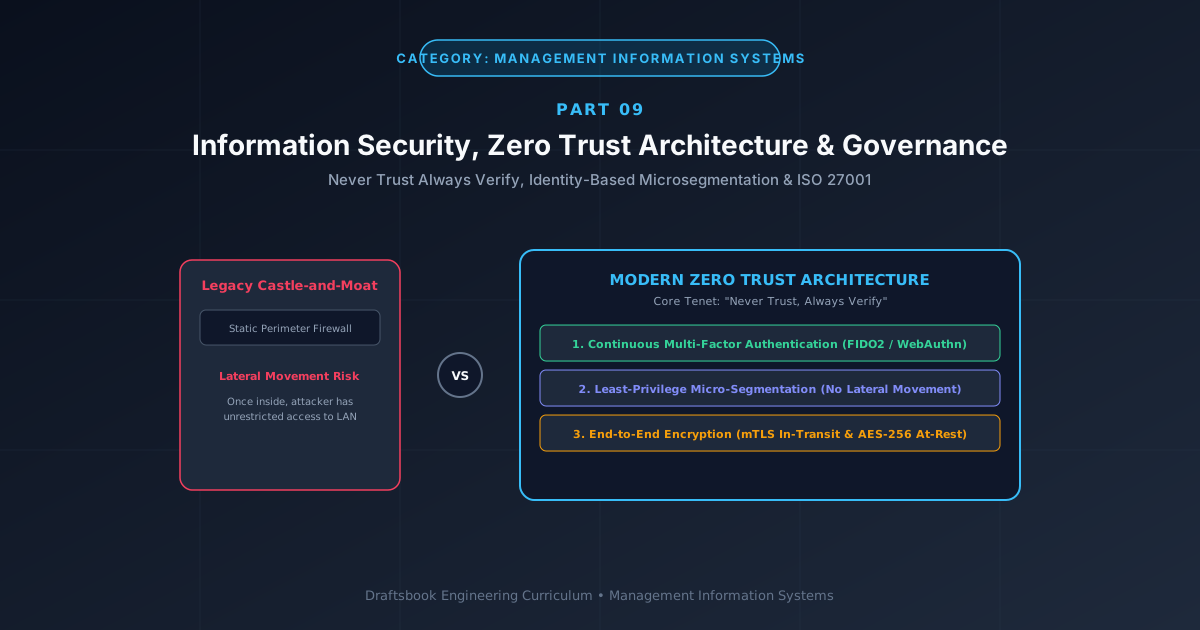
Part 9: Information Security, Zero Trust Architecture & Governance
Explore enterprise cybersecurity: the CIA triad, Zero Trust defense-in-depth, identity access management, SOC2/ISO 27001 compliance, and risk controls.
By Md. Harun-Or-Roshid
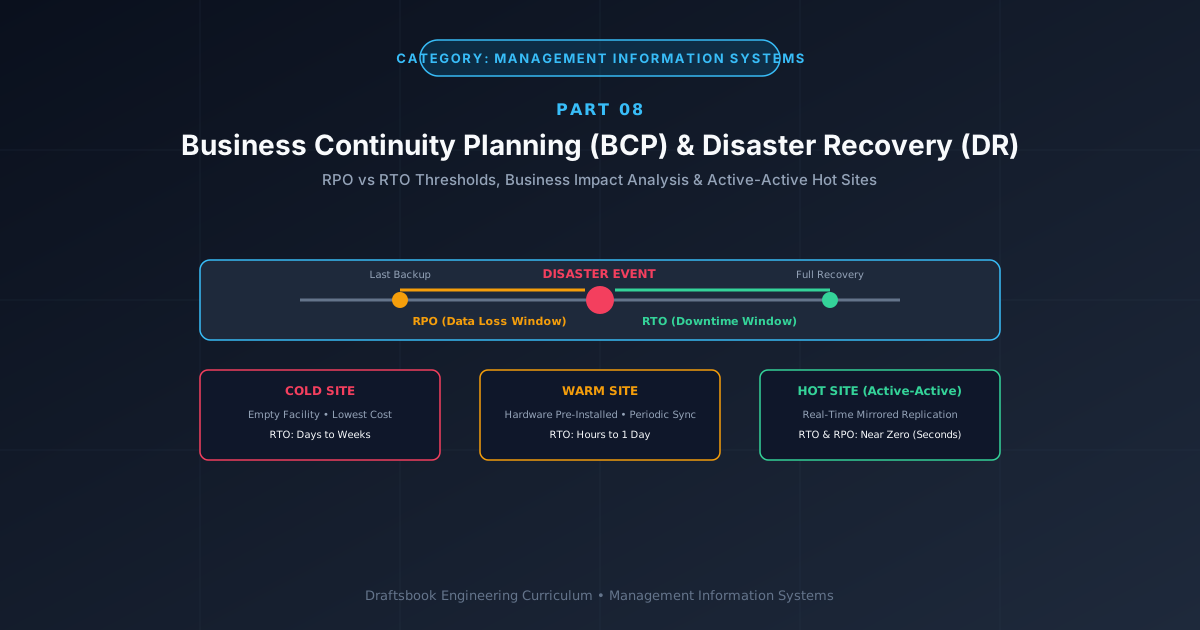
Part 8: Business Continuity Planning (BCP) & Disaster Recovery (DR)
Master Business Continuity Planning (BCP) and Disaster Recovery (DR): Business Impact Analysis, RPO vs RTO metrics, and cold vs hot failover sites.
By Md. Harun-Or-Roshid
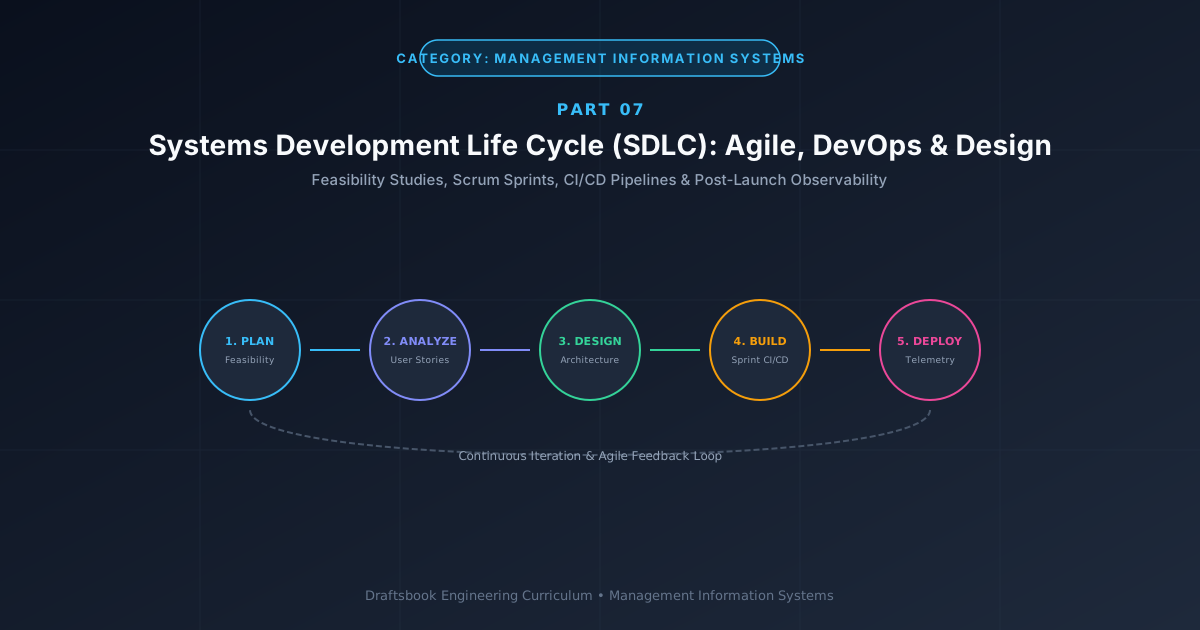
Part 7: Systems Development Life Cycle (SDLC): Agile, DevOps & Design
Master the Systems Development Life Cycle (SDLC): TELOS feasibility, Waterfall vs Agile Scrum, CI/CD automated deployment, and enterprise DevOps.
By Md. Harun-Or-Roshid