Part 2: DNS Lookup Explained: Hierarchical Resolution, Root Servers, Anycast & DNSSEC
Lesson Overview & Learning Objectives
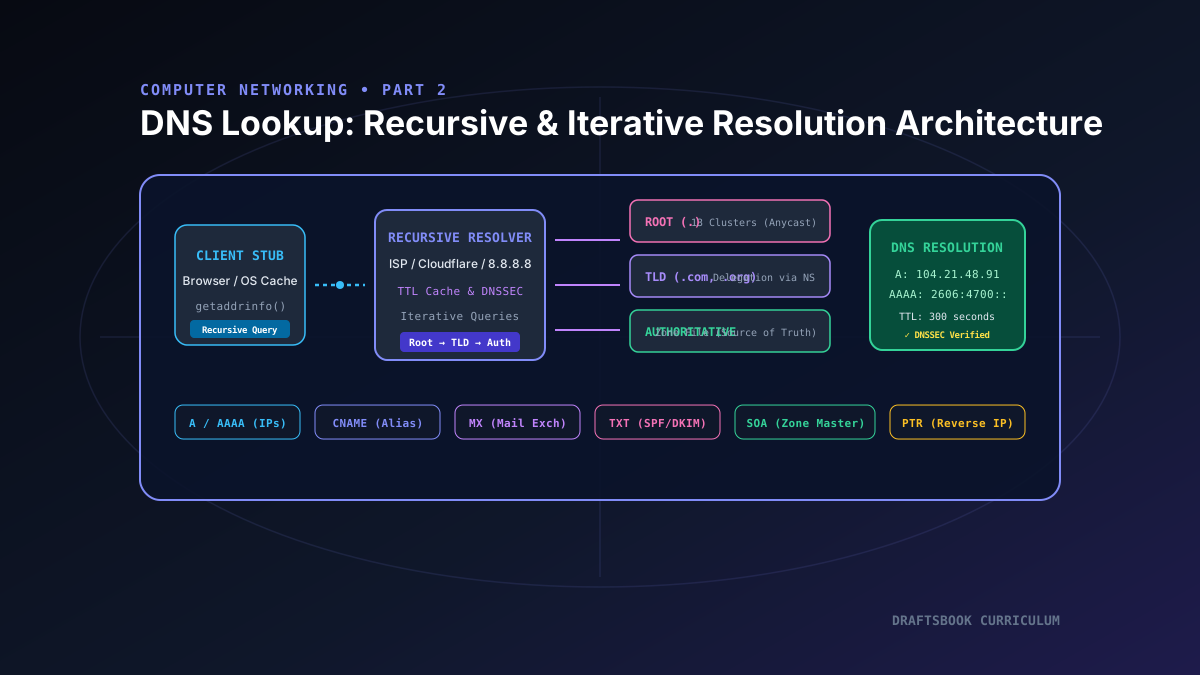
Before a single TCP packet can be routed across the internet, your client must answer a fundamental question: What is the numeric IP address of the target hostname? The Domain Name System (DNS) is a globally distributed, hierarchical, fault-tolerant key-value database designed to resolve human-readable domains into machine-routable IPv4 and IPv6 addresses. In this guide, we break down the distinction between recursive and iterative resolution, explore the thirteen root nameserver clusters, inspect critical DNS record types, and review cryptographic security with DNSSEC.
1. The DNS Hierarchy: From the Root Dot to Subdomains
Domain names are structured in an inverted tree hierarchy, parsed strictly from right to left. Every fully-qualified domain name (FQDN) implicitly terminates in a trailing dot (draftsbook.com.), representing the DNS Root Zone:
Root Zone (.)
13 logical root server addresses (A through M), mirrored across thousands of Anycast nodes globally by ICANN/IANA.
Top-Level Domain (TLD)
Managed by registries (e.g. Verisign for .com and .net, Nominet for .uk). Maintains delegations for all domains.
Authoritative NS
Hosted by DNS providers (Cloudflare, Route 53, NS1). Contains the definitive master zone records for your specific domain.
Subdomains & Hosts
Host-level records defined inside the zone (e.g., api.draftsbook.com, cdn.draftsbook.com).
2. Recursive vs. Iterative Queries: How Resolution Actually Works
Understanding the mechanics of DNS requires distinguishing between two query patterns:
Recursive Query (Client → Recursive Resolver)
Your browser or operating system stub resolver issues a recursive query to a configured recursive DNS server (such as your ISP's resolver, Cloudflare 1.1.1.1, or Google 8.8.8.8). A recursive query asks: "Fetch the final answer for me; do not return until you have the IP or a definitive error (NXDOMAIN)."
Iterative Queries (Recursive Resolver → Hierarchy Servers)
The recursive resolver performs the actual legwork through a sequence of iterative queries. An iterative query asks: "Give me the answer, or refer me to the next authoritative server down the tree."
- Query Root: Resolver asks Root Server (
.) fordraftsbook.com. Root responds with a referral to the.comTLD nameservers. - Query TLD: Resolver asks the
.comTLD server. TLD responds with a referral to the authoritative nameservers fordraftsbook.com(e.g.,ns1.cloudflare.com). - Query Authoritative: Resolver asks the authoritative server. Authoritative server consults its zone database and returns the final A or AAAA record.
- Cache & Return: Resolver caches the record for the designated Time-To-Live (TTL) and delivers the IP address back to your client stub.
3. Essential DNS Record Types
| Record | Name / Meaning | Sample Value | Engineering Use Case |
|---|---|---|---|
| A | Address (IPv4) | 104.21.48.91 | Maps a hostname directly to a 32-bit IPv4 address |
| AAAA | IPv6 Address | 2606:4700:3031::6815:305b | Maps a hostname to a 128-bit IPv6 address |
| CNAME | Canonical Name (Alias) | cdn.draftsbook.com → origin.aws.com | Aliases one domain to another. (Cannot coexist at apex/root @) |
| MX | Mail Exchange | 10 mail.google.com | Specifies inbound SMTP mail servers with priority weights |
| TXT | Text Record | "v=spf1 include:_spf.google.com ~all" | Email security (SPF, DKIM, DMARC) and domain verification tokens |
| NS | Name Server Delegation | ns1.draftsbook.test | Delegates a DNS zone to authoritative nameservers |
| PTR | Pointer Record | 91.48.21.104.in-addr.arpa | Reverse DNS lookup: resolves an IP address back to a hostname |
| SOA | Start of Authority | admin.draftsbook.com 2026030101 7200 | Zone administration parameters, serial numbers, refresh timers |
4. Security in DNS: DNSSEC & Cache Poisoning
Historically, DNS operated over unencrypted UDP on port 53 without cryptographic verification. This design permitted DNS Cache Poisoning (Kaminsky attacks), where attackers spoofed UDP response packets to trick recursive resolvers into caching malicious IP addresses.
To guarantee authenticity and data integrity, the internet standards introduced DNSSEC (DNS Security Extensions). DNSSEC signs DNS records using public-key cryptography (RRSIG records verified against DNSKEY records). Resolvers establish a unbroken Chain of Trust anchored at the Root Zone trust anchor, mathematically proving that a DNS response was generated by the legitimate domain owner and was not altered in flight.
Key Takeaway for Web Engineers
Modern web browsers also leverage DNS-over-HTTPS (DoH) and DNS-over-TLS (DoT) to encrypt DNS queries between your local computer and the recursive resolver, preventing local Wi-Fi eavesdroppers and ISPs from tracking domain names you visit.
Related reading
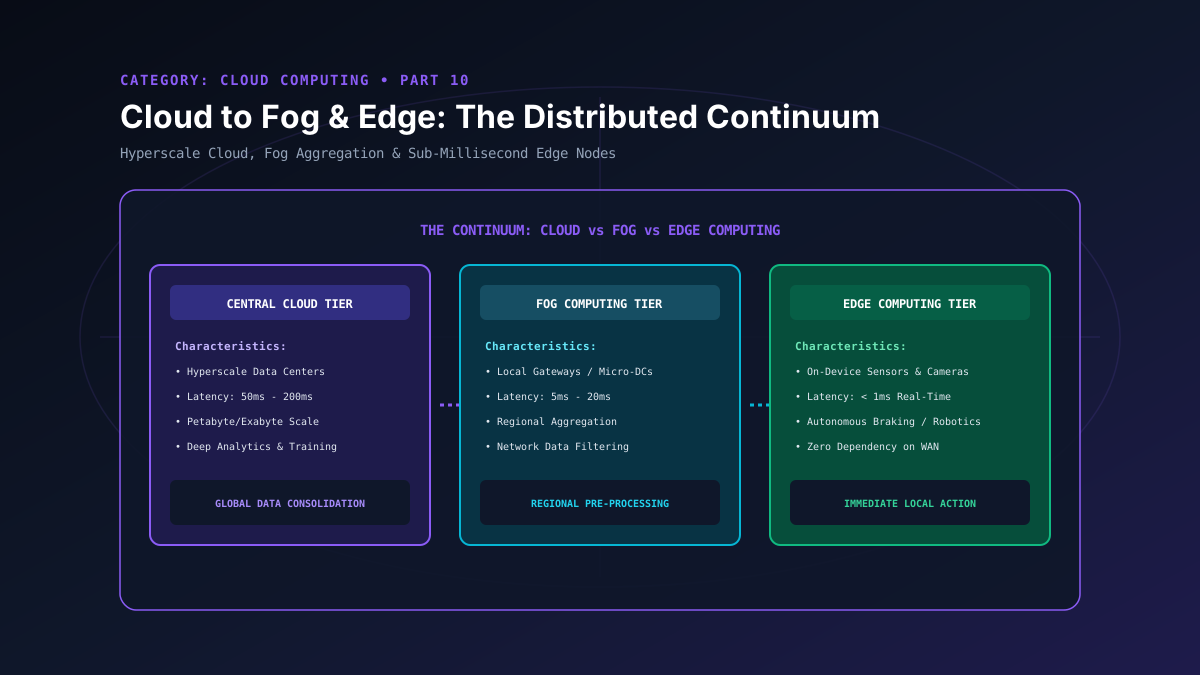
Part 10: Cloud to Fog & Edge: Architecting the Distributed Continuum
Explore the distributed computing continuum: compare centralized cloud, fog computing gateways, and real-time edge nodes for latency-critical IoT systems.
By Md. Harun-Or-Roshid

Part 9: Load Balancing: Layer 4 vs Layer 7, Algorithms, Reverse Proxies & High Availability
Master high-availability load balancing, comparing Layer 4 transport vs Layer 7 application routing, consistent hashing rings, and health checks.
By Md. Harun-Or-Roshid
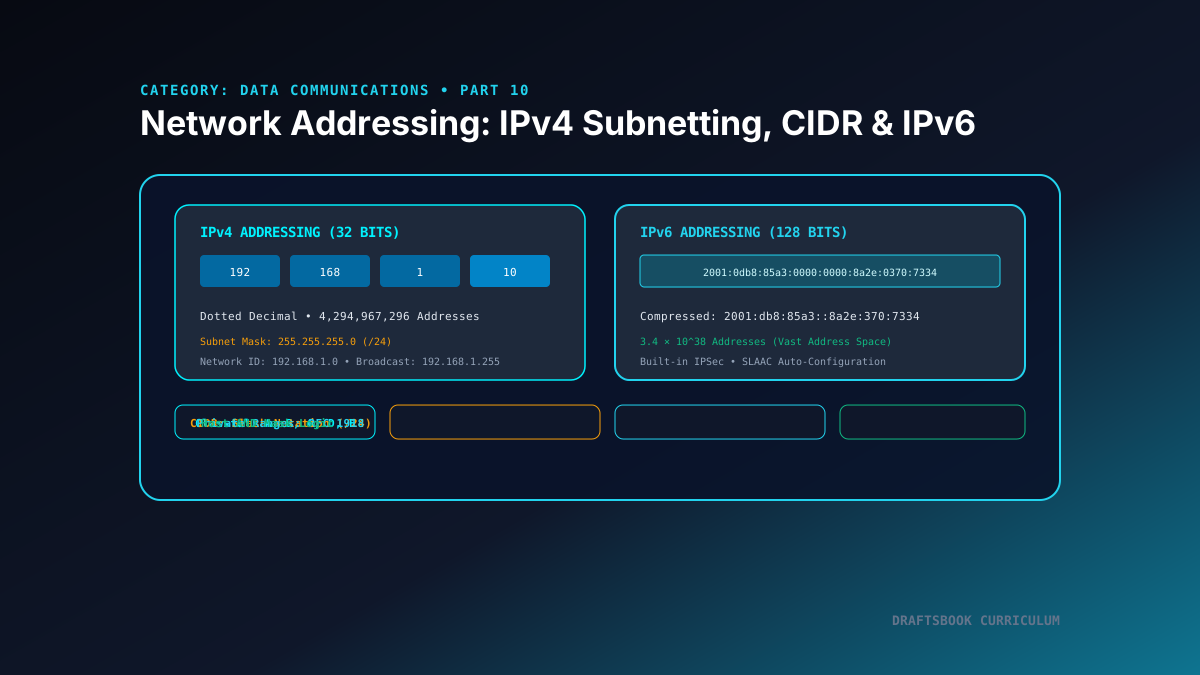
Part 10: Network Layer Addressing: IPv4 Subnetting, CIDR & IPv6 Architecture
Master logical network addressing: explore IPv4 classful ranges, CIDR slash notation, subnet mask bitwise ANDing, and modern 128-bit IPv6 architecture.
By Md. Harun-Or-Roshid
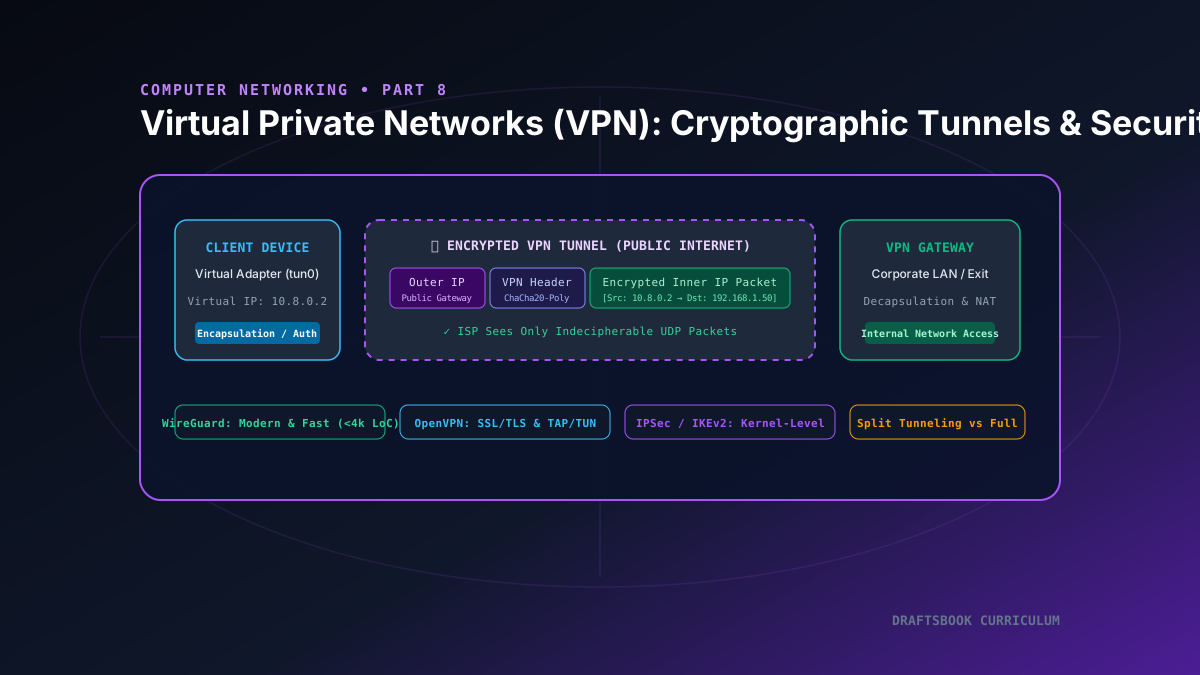
Part 8: VPN Explained: Cryptographic Tunnels, WireGuard, IPSec & Network Privacy
A deep dive into Virtual Private Networks, examining cryptographic packet encapsulation, virtual TUN/TAP adapters, WireGuard, and IPSec.
By Md. Harun-Or-Roshid