The Future of SEO: AI Overviews, Semantic Search, and Modern Traffic Strategies
The Architecture of Modern Organic Search
The fundamental mechanics of organic search are undergoing their most consequential transformation since Google's transition to mobile-first indexing. For more than two decades, search engine optimization followed a predictable, mechanical playbook: conduct keyword research, identify high-volume search phrases, place keywords into title tags and headings, build reciprocal backlinks, and compete for a spot among the traditional ten blue links.
Today, that playbook is rapidly becoming obsolete. Search engines are no longer passive keyword indexers; they are active synthesis and reasoning engines. With the rollout of Google AI Overviews, OpenAI Search, Perplexity AI, and Claude-powered discovery workflows, search engines consume raw web pages, synthesize their content into direct conversational answers, and surface authoritative sources as citations rather than simple directory listings.
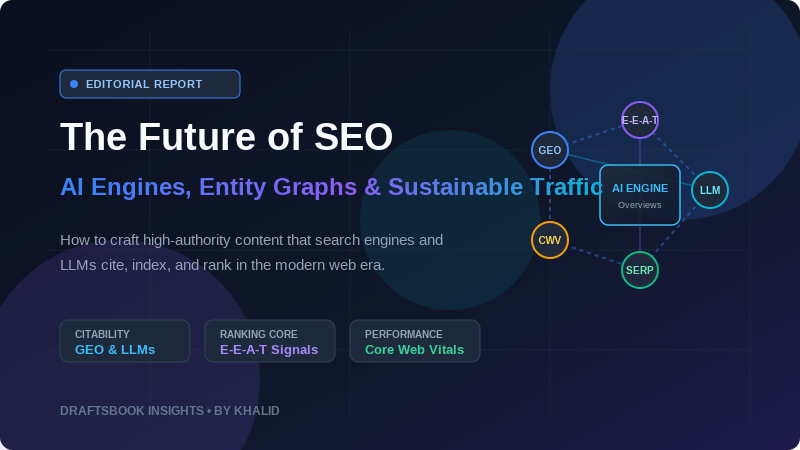
Figure 1: Architectural matrix — Generative Engine Optimization (GEO), Knowledge Graphs, E-E-A-T, and Core Web Vitals.
1. The Great Search Paradigm Shift: From Keywords to Entities
To understand how modern search engines rank and cite information, developers and content creators must understand the shift from lexical matching to semantic entity understanding.
Traditional Lexical Search
Query: "best lightweight relational database for php"
- • Token matching: "lightweight" + "relational" + "database" + "php"
- • Counts raw keyword frequencies and density
- • Vulnerable to keyword stuffing and superficial summaries
- • Ranks isolated ten blue links
Modern Semantic & Neural Retrieval
Vector Embedding & Intent Disambiguation
- • Entity Extraction: [SQLite, PostgreSQL, MySQL] + [PHP PDO, memory footprint]
- • Cross-references Knowledge Graph & Citational Authority
- • Evaluates Information Gain score relative to web corpus
- • Generative synthesis with grounded primary source citations
Understanding Entity-Based Indexing
Modern search algorithms map the web into a massive Knowledge Graph. Entities—such as people, programming languages, software architectures, companies, and concepts—have distinct nodes connected by relational edges. When a search engine indexes your article, it does not merely count word frequencies; it evaluates:
- Entity Salience: How central is the primary topic to your article? Are related sub-entities logically represented?
- Information Gain: Does your document introduce net-new data, original benchmarks, fresh perspectives, or unique code implementations that do not exist elsewhere on the web?
- Semantic Proximity: Are related concepts contextualized accurately within modern engineering realities?
Google holds an explicit patent on Information Gain Scores (US Patent 10,956,482). Under this mechanism, when an algorithm analyzes multiple documents covering the same query, it measures the novelty and incremental value each document provides relative to previously read sources. Articles that merely summarize existing top-ranking pages receive a near-zero information gain score and are systematically demoted or omitted from AI summaries.
2. Generative Engine Optimization (GEO): Engineering for Citability
In the era of AI-driven search, getting indexed is only half the battle. The true prize is becoming a primary cited source in AI Overviews, Perplexity cards, and conversational search answers.
Direct Answer Snippets
Position direct, objective, declarative answers immediately following section headings (the "inverted pyramid" method). Avoid introductory fluff.
Structured Tabular Data
Present quantitative comparisons, benchmarks, and statistical findings in clean tables. AI models parse tabular data with superior confidence.
Authoritative Attribution
Cite primary sources, official RFCs, package repositories, and verified benchmarks. AI engines cross-check factual claims against external knowledge bases.
Embedding clean JSON-LD metadata directly into your document head provides immediate semantic clarity to both traditional crawlers (Googlebot, Bingbot) and AI web scrapers (GPTBot, ClaudeBot, PerplexityBot):
{
  "@context": "https://schema.org",
  "@type": "TechArticle",
  "headline": "The Future of SEO: AI Overviews, Semantic Search, and Modern Traffic Strategies",
  "alternativeHeadline": "How to optimize technical content for Generative Engine Optimization (GEO)",
  "image": "https://draftsbook.com/images/covers/future-of-seo-ai-content-traffic.svg",
  "author": {
    "@type": "Person",
    "name": "Khalid",
    "jobTitle": "Lead Software Architect & Technical Editor",
    "url": "https://draftsbook.com/authors/khalid"
  },
  "publisher": {
    "@type": "Organization",
    "name": "Draftsbook",
    "logo": {
      "@type": "ImageObject",
      "url": "https://draftsbook.com/logo.png"
    }
  },
  "mainEntityOfPage": {
    "@type": "WebPage",
    "@id": "https://draftsbook.com/blog/future-of-seo-ai-content-traffic-strategies"
  },
  "keywords": "SEO future, GEO, AI Overviews, semantic search, E-E-A-T, Core Web Vitals"
}
3. The E-E-A-T Defense: Why First-Party Experience Trumps Synthetic Content
As automated text generation has exploded, the web has been flooded with billions of generic, unverified articles. In response, search engines have aggressively reinforced their E-E-A-T (Experience, Expertise, Authoritativeness, Trustworthiness) quality evaluation frameworks.
| Signal Category | Weak / AI-Generated Pattern | High E-E-A-T Technical Benchmark |
|---|---|---|
| Code Examples | Generic "Hello World" snippets with no error handling | Production-grade code with error handling, strict types, and dependency versions |
| Case Studies | Theoretical examples ("Imagine a company that...") | Real system telemetry, query logs, bottleneck discoveries, and measured latency drops |
| Visual Assets | Stock photography or generic clip art | Original architectural SVG vector diagrams, benchmark charts, and annotated schema graphs |
| Tradeoff Analysis | Uncritical praise or superficial summaries | Honest discussions of drawbacks, edge cases, failure states, and migration challenges |
4. Technical Foundations: Core Web Vitals & Crawler Accessibility
Content architecture is only as effective as the technical foundation carrying it. A search engine cannot index or recommend content that it cannot render, parse, and verify efficiently.
1. Serve Pre-Rendered Semantic HTML
Modern frameworks like Next.js and Laravel Blade must deliver complete semantic markup on initial server response. Never rely on client-side client-only hydration to render your article's core content.
2. Prioritize Largest Contentful Paint (LCP)
Hero vector graphics and critical fonts must be preloaded. SVG vectors hosted on the same origin (such as /images/covers/) eliminate external DNS lookup latency and render instantaneously.
3. Clean Document Object Model (DOM) Tree
Search crawlers assign higher relevance to text located higher in the DOM hierarchy. Avoid deep wrapping divs, unsemantic spans, and layout shifts.
<article class="article-container" itemscope itemtype="https://schema.org/TechArticle">
  <header class="article-header">
    <h1 itemprop="headline">The Future of SEO: AI Overviews and Modern Traffic</h1>
    <div class="meta-row">
      <time datetime="2026-11-23" itemprop="datePublished">November 23, 2026</time>
      <span itemprop="author" itemscope itemtype="https://schema.org/Person">
        <span itemprop="name">Khalid</span>
      </span>
    </div>
  </header>

  <figure class="article-cover">
    <img
      src="/images/covers/future-of-seo-ai-content-traffic.svg"
      alt="The Future of SEO Architectural Vector Blueprint"
      width="800"
      height="450"
      fetchpriority="high"
      loading="eager"
    />
  </figure>

  <div class="article-prose" itemprop="articleBody">
    <!-- Structured H2, H3, and code samples -->
  </div>
</article>
5. Modern Traffic Multiplication: The Hub-and-Spoke Cluster Strategy
One of the most persistent mistakes engineering teams and content authors make is publishing isolated, disconnected articles. A single great post on “Docker multi-stage builds” might rank for a few weeks, but without surrounding topical authority, search algorithms will eventually displace it in favor of recognized domain hubs.
Structured Data & Schema
Core Web Vitals & INP
AI Crawlers & Robots
- Create Pillar Masterpieces: Develop comprehensive, definitive guides exceeding 1,500 words that provide the broad architectural landscape of a domain.
- Author Deep-Dive Satellite Articles: Link your pillar post to highly specific tutorials that solve concrete problems.
- Bi-Directional Internal Linking: Ensure satellite articles link back to the pillar hub using descriptive, entity-rich anchor text.
- Prune Stale Content Annually: Low-traffic, obsolete content dilutes your domain's aggregate crawl budget and topical authority score.
6. Actionable Implementation Checklist
Before publishing any technical article on Draftsbook or production web properties, run through this pre-flight verification checklist:
Includes original benchmarks, real-world experience, or unique architectural insights not found on competitors' top results.
Concepts structured with clear H2 and H3 headings matching verified user search intent.
The first 2-3 sentences of each section written concisely to facilitate direct quoting by AI Overviews and search answer engines.
Production-ready snippets featuring strict types, clear comments, and accurate syntax highlighting.
Valid JSON-LD metadata embedded with accurate author, publisher, and canonical URL references.
Diagrams and cover graphics rendered as lightweight, responsive SVGs with explicit width and height dimensions.
Summary & Future Outlook
The future of SEO is not an adversarial arms race against search engines; it is an alignment of incentives. Search engines and AI conversational models possess an insatiable demand for authoritative, accurate, well-structured, and original content that answers real questions for real human beings. By transitioning from superficial keyword tricks to Generative Engine Optimization (GEO), establishing deep E-E-A-T authority, and structuring content with rigorous semantic markup, you ensure your platform remains an indispensable destination for knowledge and traffic.
Related reading
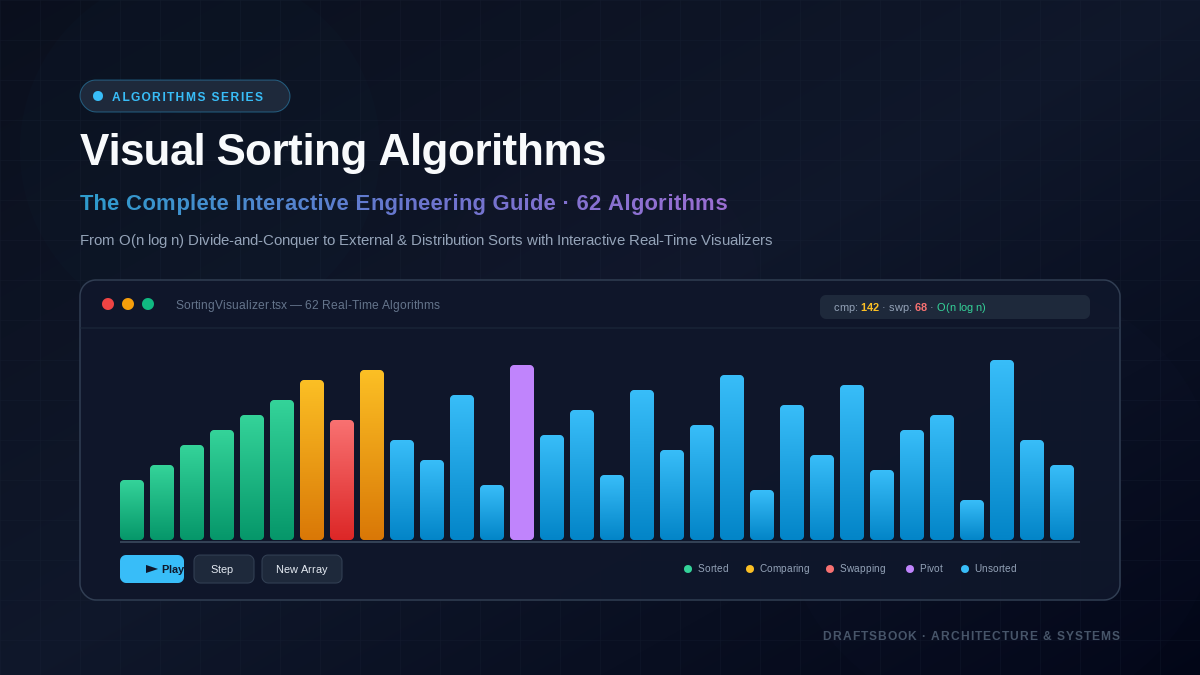
Sleep Sort: Mechanism, Complexity Analysis & Interactive Visualizer
A unique concurrency-based sorting algorithm: spawns a separate thread for each element, sleeping for a duration proportional to the element value before writing it to the output.
By Md. Harun-Or-Roshid
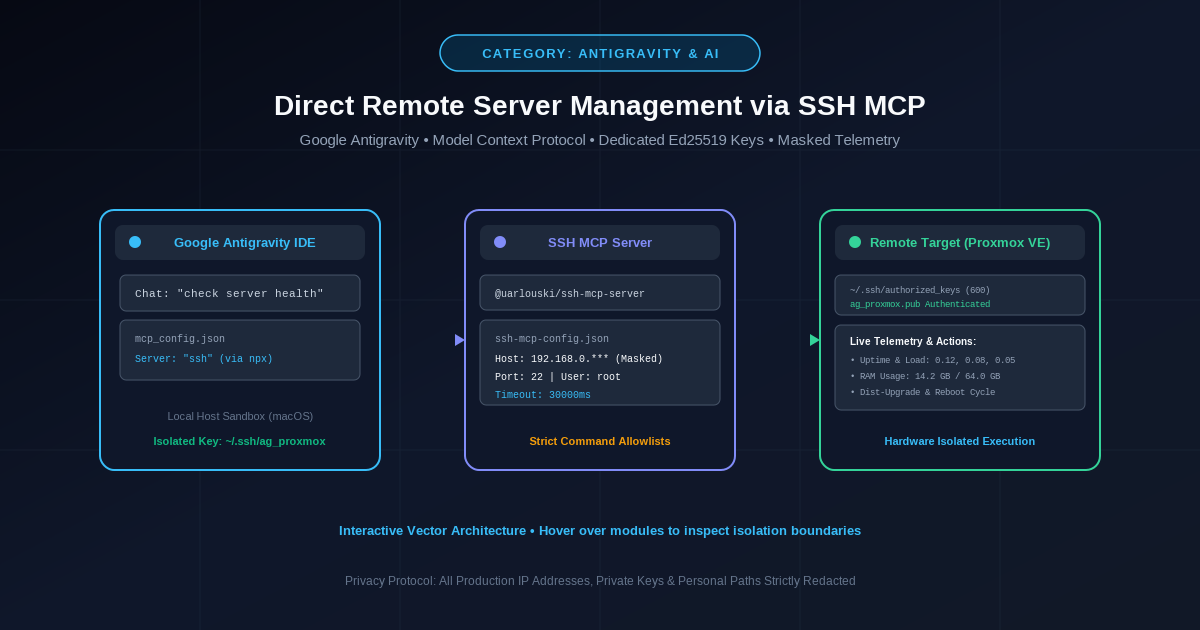
How to Give Google Antigravity Direct SSH Access to Remote Servers (Proxmox & Linux)
Connect Google Antigravity directly to Proxmox and Linux servers using the Model Context Protocol (MCP), dedicated Ed25519 keys, and automated updates.
By Md. Harun-Or-Roshid
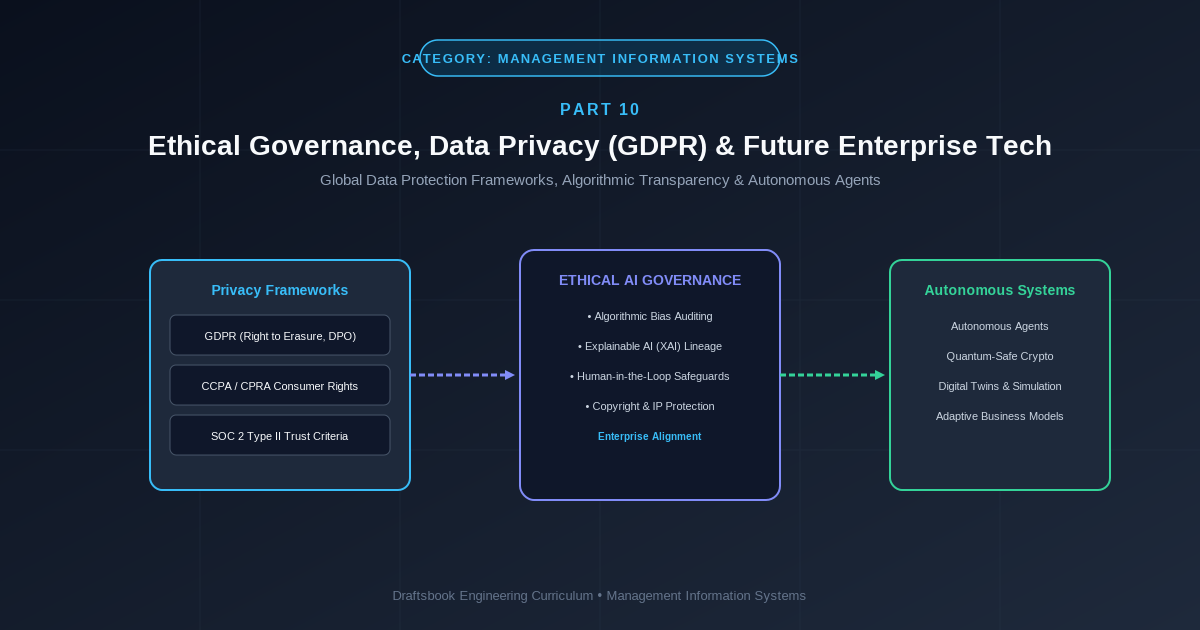
Part 10: Ethical Governance, Data Privacy (GDPR) & Future Enterprise Tech
Examine ethical information governance: GDPR/CCPA data privacy, algorithmic bias mitigation, explainable AI, autonomous digital agents, and quantum crypto.
By Md. Harun-Or-Roshid
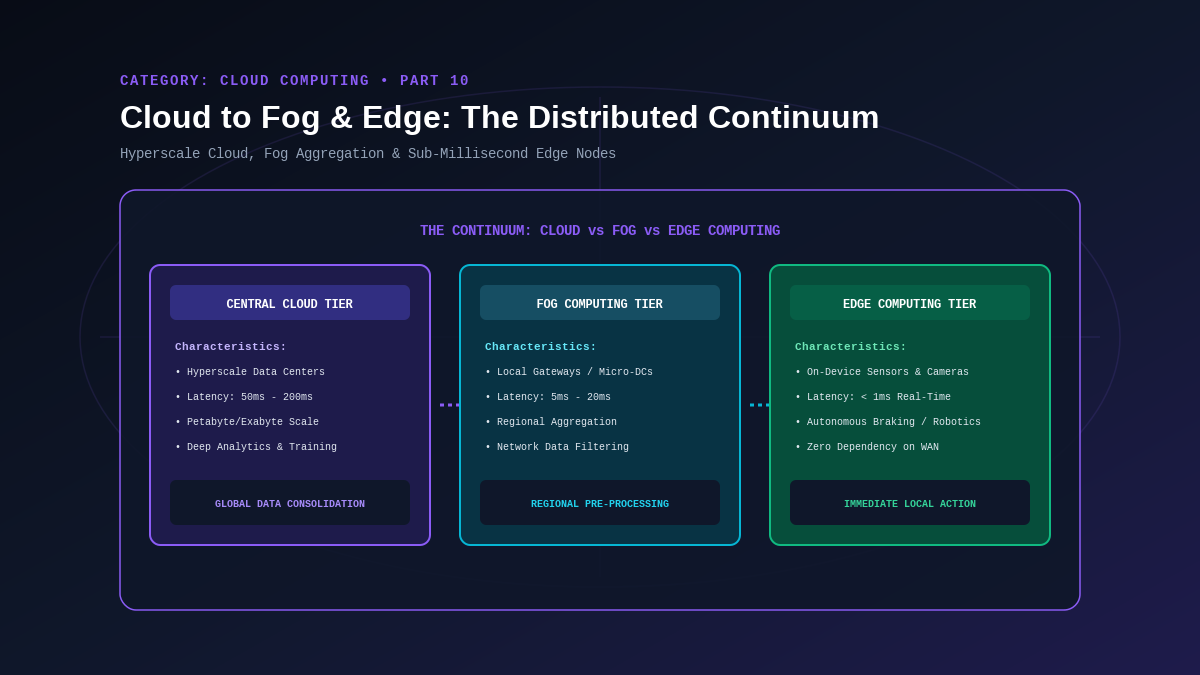
Part 10: Cloud to Fog & Edge: Architecting the Distributed Continuum
Explore the distributed computing continuum: compare centralized cloud, fog computing gateways, and real-time edge nodes for latency-critical IoT systems.
By Md. Harun-Or-Roshid