Part 1: Assembly Language Fundamentals, Computer Architecture & x86-64 Systems
Series Overview & Learning Objectives
Welcome to Mastering Modern Assembly Language, a comprehensive 11-part engineering curriculum designed for software engineers, systems programmers, security researchers, and computer science students. While high-level languages like C++, Rust, and Go provide expressive abstractions, all software ultimately executes as raw machine instructions on physical silicon. In this opening installment, we demystify the hardware-software boundary, trace the conversion from source code to machine opcodes, analyze the register hierarchy of the modern x86-64 (AMD64) architecture, and explore the internal lifecycle of an instruction inside the Central Processing Unit.
1. Why Learn Assembly Language in Modern Computing?
In an era dominated by high-level managed runtimes and optimizing compilers, engineers frequently ask: Why should I learn assembly language today? The answer lies in transparency, performance optimization, and systems security:
Systems Programming
Operating system kernels, bootloaders, context-switching routines, and device drivers require direct hardware manipulation that cannot be expressed in standard higher-order languages.
Security & Reverse Engineering
Vulnerability researchers, malware analysts, and binary exploitation specialists must analyze compiled software without access to original source code via disassemblers and debuggers.
Performance & SIMD
Mission-critical cryptographic routines, audio/video codecs, and high-frequency trading algorithms leverage handcrafted SIMD (AVX-512) assembly to maximize IPC and cache throughput.
Furthermore, understanding assembly dismantles the illusion of "magic" in software engineering. When you know how the stack pointer moves during a function call, how virtual addresses resolve through page tables, and how CPU branch predictors evaluate jump instructions, you write substantially faster, memory-efficient, and secure high-level code.
2. Computer Architecture: From High-Level Code to Silicon
Every computer architecture is founded upon the Von Neumann Architecture, consisting of a Central Processing Unit (ALU, Control Unit, Registers), a unified Memory subsystem (RAM) containing both instructions and data, and Input/Output interfaces.
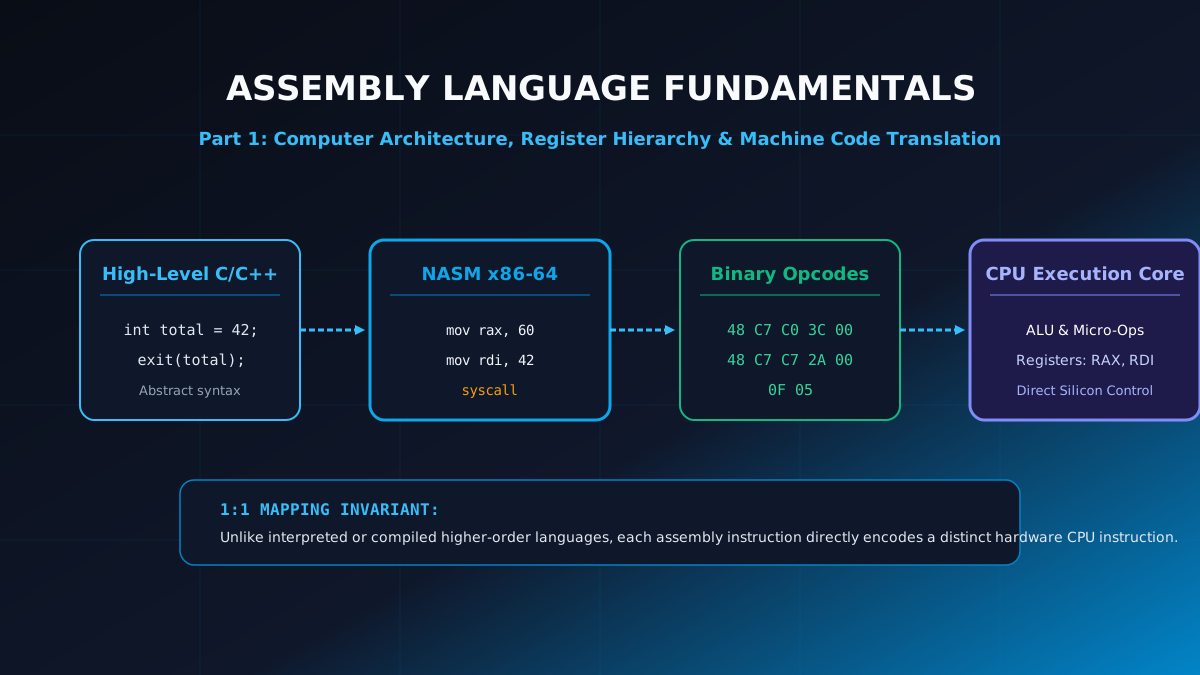
Unlike interpreted languages (like Python or PHP) or intermediate bytecode languages (like Java or C#), compiled languages transform source code down into machine instructions:
| Layer | Representation | Example Code | Executed By |
|---|---|---|---|
| High-Level Language | Structured abstractions (C, Rust, Go) | int status = 42; exit(status); | Compiler (Clang, GCC) |
| Assembly Language | Human-readable symbolic mnemonics | mov rax, 60 mov rdi, 42 syscall | Assembler (NASM, Yasm) |
| Machine Code | Binary bytes / Hexadecimal opcodes | 48 C7 C0 3C 00 00 00 48 C7 C7 2A 00 00 00 0F 05 | CPU Instruction Decoder |
| Hardware Micro-Ops | Internal RISC-like silicon primitives | UOP_LOAD, UOP_ALU_ADD | ALU Execution Ports |
The defining invariant of assembly language is its one-to-one relationship with machine code: each assembly mnemonic directly encodes a distinct binary machine instruction understood by the CPU silicon.
3. The x86-64 General Purpose Register (GPR) Hierarchy
Registers are the fastest storage locations in the computer hierarchy, located directly inside the CPU core and accessible with zero clock-cycle memory latency. Modern x86-64 processors feature sixteen 64-bit General Purpose Registers (GPRs). To maintain backwards compatibility with 32-bit (IA-32), 16-bit (8086), and 8-bit (8080) software, x86-64 registers can be addressed as smaller sub-registers:
| 64-Bit Register | 32-Bit Sub-Reg | 16-Bit Sub-Reg | 8-Bit (Low) | 8-Bit (High) | Primary Architectural Role |
|---|---|---|---|---|---|
| RAX | EAX | AX | AL | AH | Accumulator, Function return value, Syscall number |
| RBX | EBX | BX | BL | BH | Base register, Callee-saved general pointer |
| RCX | ECX | CX | CL | CH | Loop counter, 4th function argument, Shift count |
| RDX | EDX | DX | DL | DH | Data register, 3rd function argument, I/O port pointer |
| RSI | ESI | SI | SIL | - | Source index for strings/memory, 2nd function argument |
| RDI | EDI | DI | DIL | - | Destination index, 1st function argument in AMD64 ABI |
| RBP | EBP | BP | BPL | - | Base pointer, Stack frame reference base (callee-saved) |
| RSP | ESP | SP | SPL | - | Stack pointer, Always points to top of stack |
| R8 – R11 | R8D – R11D | R8W – R11W | R8B – R11B | - | New 64-bit general registers, Argument passing (R8, R9) |
| R12 – R15 | R12D – R15D | R12W – R15W | R12B – R15B | - | Callee-saved general-purpose work registers |
CRITICAL x86-64 ARCHITECTURAL INVARIANT: Zero-Extension Rule
In 64-bit mode, whenever an operation writes to a 32-bit sub-register (such as mov eax, 10), the hardware automatically zero-extends the upper 32 bits of the corresponding 64-bit register (RAX), clearing bits 32–63 to zero! However, writing to a 16-bit or 8-bit sub-register (AX or AL) preserves the remaining higher-order bits untouched.
4. The Instruction Execution Lifecycle
The Central Processing Unit continuously cycles through the Instruction Cycle at billions of cycles per second:
Instruction Fetch (IF)
The CPU places the Instruction Pointer (RIP) onto the address bus to retrieve the upcoming opcode from the Level 1 Instruction Cache (L1i) into the instruction queue.
Instruction Decode (ID)
Hardware decoders break the variable-length x86 instruction (1 to 15 bytes) into internal micro-operations (μops), resolving prefixes, opcodes, ModR/M, and SIB bytes.
Execution & ALU Operation (EX)
The execution ports dispatch μops to the Arithmetic Logic Unit (ALU), address generation units (AGU), or branch units, updating CPU status flags (RFLAGS).
Writeback (WB)
The computation result is committed back into the architectural register file or written out to the Level 1 Data Cache (L1d).
Summary & Next Step
With the register hierarchy and instruction fundamentals established, we are ready to assemble real software. In Part 2, we set up our Linux x86-64 development environment, install the NASM assembler, link ELF-64 binaries with LD and GCC, and inspect our first running program step-by-step using GDB and GEF.
Related reading
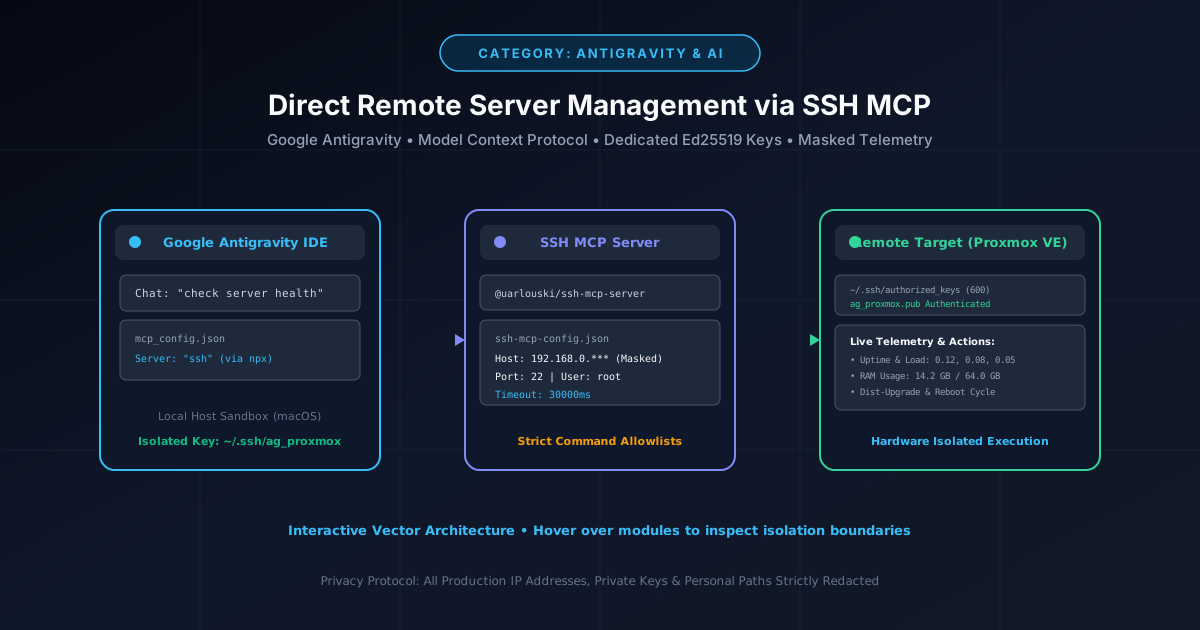
How to Give Google Antigravity Direct SSH Access to Remote Servers (Proxmox & Linux)
Connect Google Antigravity directly to Proxmox and Linux servers using the Model Context Protocol (MCP), dedicated Ed25519 keys, and automated updates.
By Md. Harun-Or-Roshid

Part 9: Load Balancing: Layer 4 vs Layer 7, Algorithms, Reverse Proxies & High Availability
Master high-availability load balancing, comparing Layer 4 transport vs Layer 7 application routing, consistent hashing rings, and health checks.
By Md. Harun-Or-Roshid
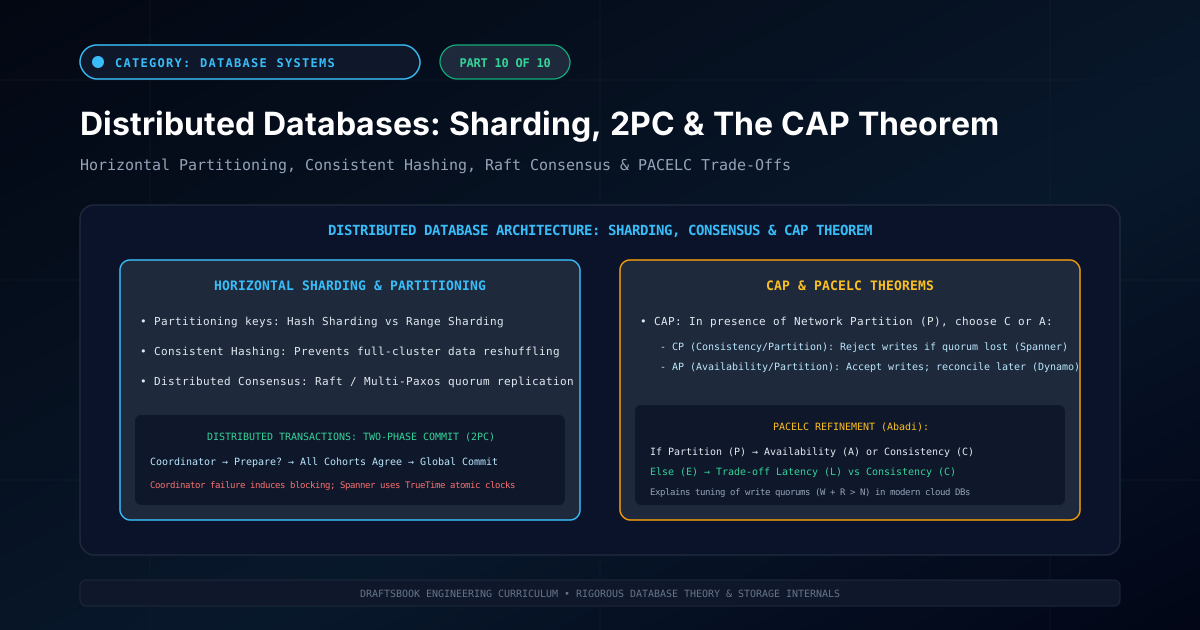
Part 10: Distributed Databases: Partitioning, Sharding, 2PC & CAP Theorem
Master distributed database architecture: horizontal sharding, consistent hashing, two-phase commit (2PC), CAP theorem trade-offs, and NewSQL engines.
By Md. Harun-Or-Roshid
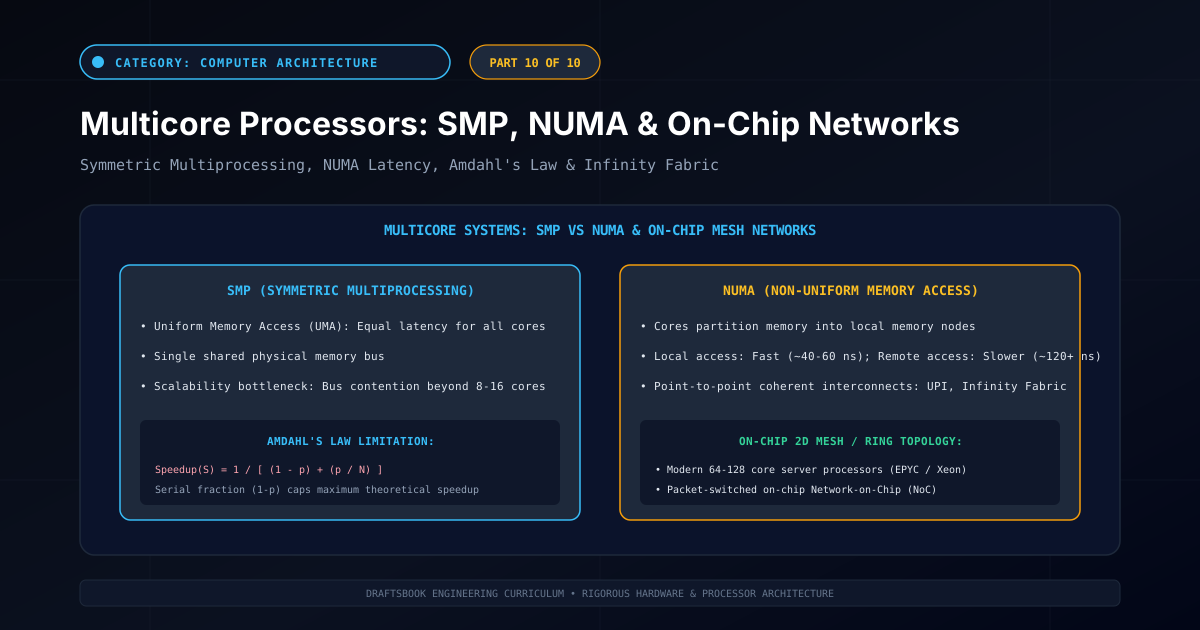
Part 10: Multicore Systems: SMP, NUMA Architecture & Amdahl's Law Scaling
A study of multicore scalability, exploring Symmetric Multiprocessing (SMP), Non-Uniform Memory Access (NUMA), Amdahl's law, and on-chip mesh Networks-on-Chip.
By Md. Harun-Or-Roshid