Part 1: Database Systems Overview & The ANSI-SPARC 3-Schema Architecture
Series Overview & Learning Objectives
Welcome to Fundamentals of Database Systems & Modern SQL, a comprehensive 10-part engineering curriculum exploring the design, internal algorithms, storage engines, transactional integrity, and distributed scaling of modern database management systems. In this opening installment, we investigate the architectural foundations of databases: analyzing why specialized Database Management Systems (DBMS) replaced legacy flat-file systems, decomposing the classical ANSI-SPARC Three-Schema Architecture, evaluating physical versus logical data independence, and examining the core internal subsystem modules that power enterprise database engines.
1. The Evolution: File-Processing Systems vs. Database Management Systems
Before the advent of modern DBMS architectures in the late 1960s and 1970s, organizational records were persisted using traditional operating system flat-file processing. Under this regime, individual application programs directly managed their own bespoke file formats (e.g., CSV, fixed-width records, or custom binary structs) written directly to magnetic tape or disk sectors.
While conceptually simple, file-processing systems suffered from systemic architectural pathologies that rendered enterprise data management brittle, insecure, and error-prone:
Data Redundancy & Inconsistency
Because different departments created disparate applications, the same real-world data (such as customer billing addresses) was duplicated across multiple file stores. When an address updated in one application, others remained stale, creating permanent data divergence.
Data Isolation & Retrieval Rigidity
Data scattered across disparate custom files could not be cross-queried without writing ad-hoc, throwaway programs in COBOL, C, or Fortran. Unanticipated analytical queries required manual extraction, sorting, and transformation routines.
Lack of Concurrent Access Control
If two programs attempted to update the same byte range or record within an open file simultaneously, uncoordinated interleaving caused lost updates, dirty writes, and silent memory corruption.
Absence of Crash Atomicity
A power interruption or hardware fault halfway through a funds-transfer operation left debit records persisted while credit records failed, leaving the persistent ledger in an invalid, half-committed state.
A Database Management System (DBMS) is a general-purpose software suite designed to facilitate the definition, construction, manipulation, and sharing of robust databases among various users and software applications. It enforces centralized structural control, multi-user isolation, transactional durability, and declarative query execution.
2. The ANSI-SPARC Three-Schema Architecture
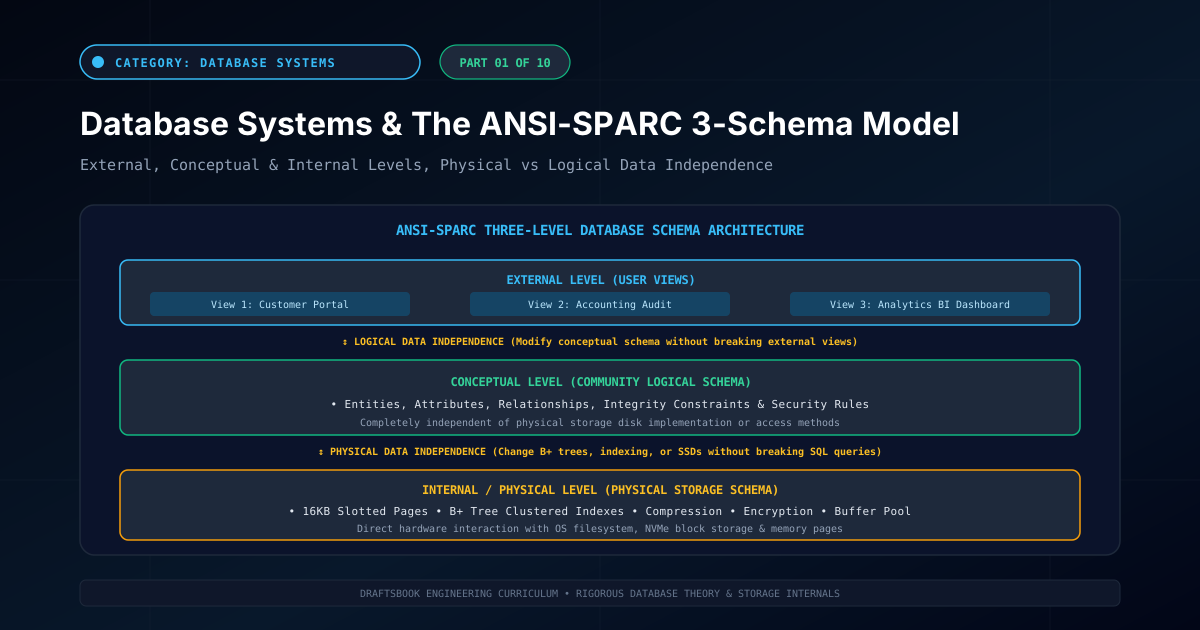
Proposed in 1975 by the American National Standards Institute Standards Planning and Requirements Committee (ANSI/X3/SPARC), the Three-Schema Architecture establishes a rigorous conceptual framework that decouples user applications from physical storage representations.
The Three Architectural Tiers
1. External Level (User Views)
The topmost abstraction layer describes only the specific subset of data required by individual user groups or client applications, concealing the rest of the database. Multiple distinct external views can coexist over the same underlying database (e.g., an e-commerce checkout service sees order items and masked payment tokens, while human resources sees employee payroll records). External schemas are defined using SQL views or tailored domain API boundaries.
2. Conceptual Level (Logical Schema)
The central tier describes the complete structure of the entire database for all users, representing the unified organizational model. It specifies all entities, attributes, relationships, user constraints, security policies, and semantic invariants without specifying any physical disk storage parameters. The conceptual schema is typically designed using Entity-Relationship (ER) modeling and realized in normalized relational Data Definition Language (DDL).
3. Internal Level (Physical Schema)
The lowermost layer describes the physical storage structure, access paths, and byte-level organization of the database on non-volatile media. It specifies page sizing, record layouts, slotted page structures, compression codecs, B+ tree index definitions, hashing schemes, and disk block allocations.
3. Data Independence: Logical vs. Physical
The primary motivation behind the ANSI-SPARC architecture is achieving Data Independence: the capacity to modify a schema definition at one level without requiring alterations to schemas at higher levels.
Logical Data Independence
The immunity of external schemas and application programs to modifications made in the conceptual schema.
loyalty_points or decomposing a table into two normalized entities does not break existing client applications whose queries target virtual SQL views mapping to the original columns.
Physical Data Independence
The immunity of the conceptual schema and application programs to modifications made in the internal schema.
4. Internal Subsystems of an Enterprise DBMS Engine
Modern database engines (such as PostgreSQL, MySQL InnoDB, or Oracle) decompose their internal runtime execution into two major cooperating subsystems: the Query Processor and the Storage Engine.
| Subsystem | Core Component | Primary Responsibility |
|---|---|---|
| Query Processor | DDL & DML Parser | Validates SQL syntax, parses statements into Abstract Syntax Trees (AST), and checks permissions against system catalog metadata. |
| Query Optimizer (CBO) | Transforms logical relational algebra trees into cost-estimated physical execution plans using catalog statistics (histograms, card estimates). | |
| Execution Engine | Executes physical plan operators (Hash Join, Index Scan, Sort) using pipelined iterator models (Volcano) or vectorized batching. | |
| Storage Engine | Buffer Pool Manager | Caches database pages in RAM, manages frame allocation, page pinning, dirty page tracking, and replacement policies (LRU, Clock, 2Q). |
| Transaction Manager | Enforces ACID transaction boundaries, coordinates commit and rollback commands, and oversees two-phase commit protocols. | |
| Concurrency Lock Manager | Maintains lock tables (Shared, Exclusive, Intent locks), tracks latch hierarchies, and resolves deadlocks via cycle-detection graphs. | |
| Log & Recovery Manager | Writes Write-Ahead Logging (WAL) records to non-volatile disk before dirty buffers flush, executing ARIES crash recovery upon restart. |
5. Modern Database Classification Taxonomy
Contemporary data architectures deploy purpose-built engines optimized for specific workload profiles:
- Relational DBMS (RDBMS): Strict tabular schema, strong normalization, declarative SQL, and full ACID guarantees (e.g., PostgreSQL, MySQL InnoDB).
- Document NoSQL: Schema-flexible, nested JSON/BSON structures optimized for rapid application iteration and horizontal read scaling (e.g., MongoDB).
- Key-Value Stores: O(1) hash-based primary key access optimized for high-throughput caching and ephemeral session states (e.g., Redis, DynamoDB).
- Graph Databases: Native pointer-based edge traversals optimized for highly connected networks, fraud detection, and social graphs (e.g., Neo4j).
- Distributed NewSQL: Horizontally partitioned distributed engines providing global ACID transactions and relational SQL interfaces (e.g., Google Spanner, CockroachDB).
Next in Curriculum
In Part 2: Data Models: Relational, Document, Key-Value & Graph Databases, we analyze how data models define conceptual schemas, examining relational tuples, document trees, key-value hashing, and graph topology.
Related reading
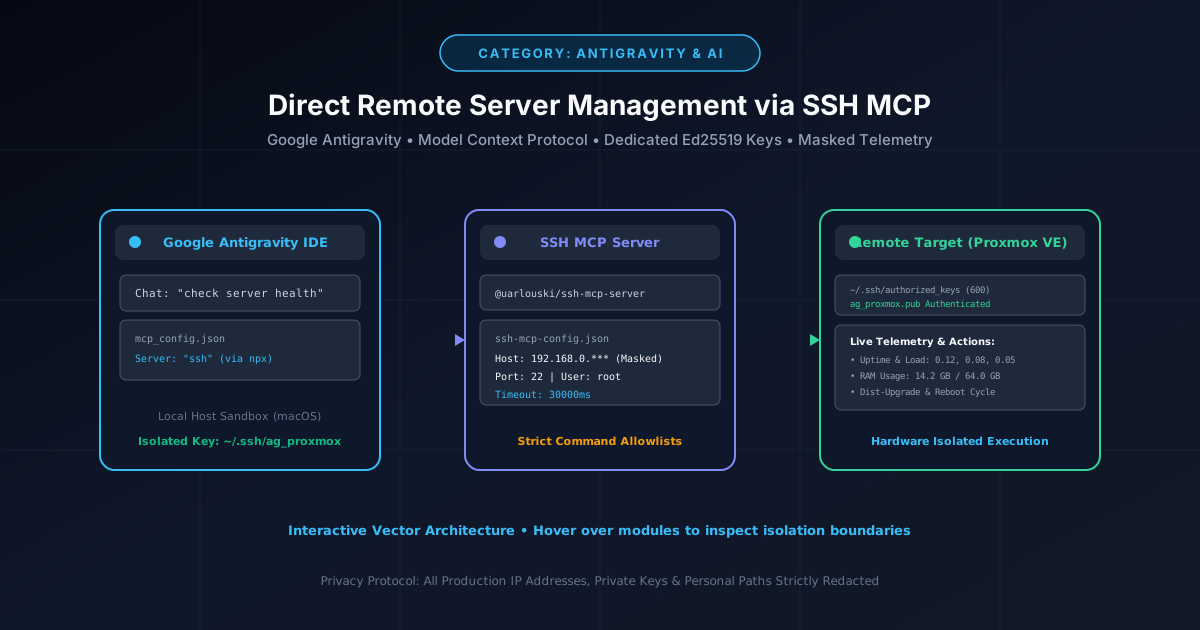
How to Give Google Antigravity Direct SSH Access to Remote Servers (Proxmox & Linux)
Connect Google Antigravity directly to Proxmox and Linux servers using the Model Context Protocol (MCP), dedicated Ed25519 keys, and automated updates.
By Md. Harun-Or-Roshid

Part 9: Load Balancing: Layer 4 vs Layer 7, Algorithms, Reverse Proxies & High Availability
Master high-availability load balancing, comparing Layer 4 transport vs Layer 7 application routing, consistent hashing rings, and health checks.
By Md. Harun-Or-Roshid
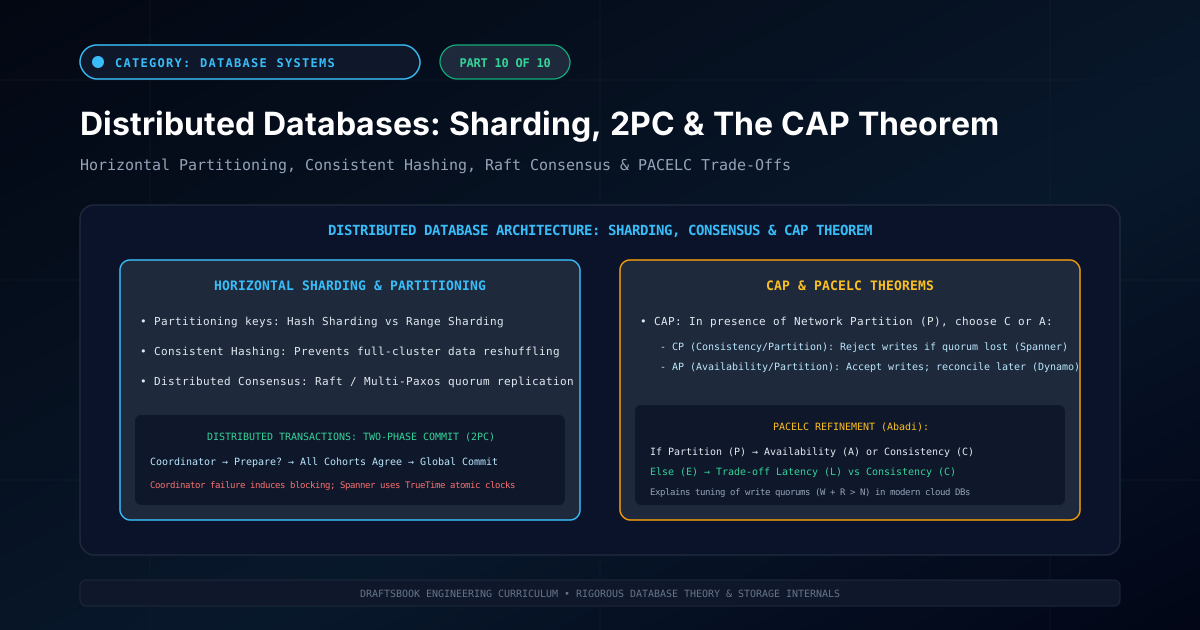
Part 10: Distributed Databases: Partitioning, Sharding, 2PC & CAP Theorem
Master distributed database architecture: horizontal sharding, consistent hashing, two-phase commit (2PC), CAP theorem trade-offs, and NewSQL engines.
By Md. Harun-Or-Roshid
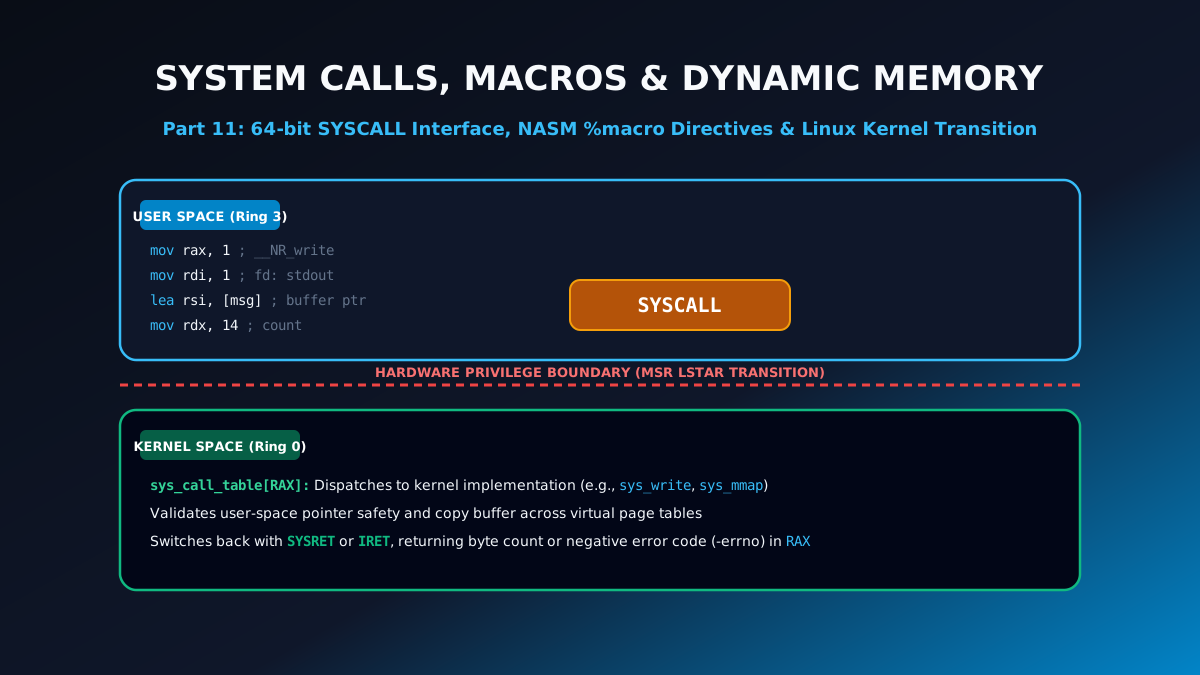
Part 11: Linux 64-Bit System Calls, NASM Macros & Dynamic Memory Allocation
Learn low-level systems programming: Linux 64-bit SYSCALL table, multi-argument NASM %macro directives, file I/O operations, and sys_mmap memory allocation.
By Md. Harun-Or-Roshid